


💡 Expert Insight:”How wooden stair handrails are made determines their durability, safety, and aesthetic appeal. In my 9 years at Meizstairs, I have seen beautiful staircases compromised by poorly made handrails—cracks from improper drying, warping from incorrect grain orientation, and premature finish failure from inadequate surface preparation.
A proper these handrails manufacturing process requires precise control of material properties (MC < 8%), dimensional tolerances (±0.2mm), and surface finish quality (Ra ≤ 1.6µm). This technical guide explains exactly how the handrails are made, from lumber selection to final installation.”
Introduction: How Wooden Stair Handrails Are Made
Understanding how stair handrails are made is essential for architects, contractors, and homeowners alike. Wooden stair handrails are not simply shaped pieces of wood—they are precision-engineered components that must meet strict structural, safety, and aesthetic standards.
This guide explains how the product are made from start to finish, covering every step in the your handrails manufacturing process.
Step 1: Wood Selection for Wooden Stair Handrails
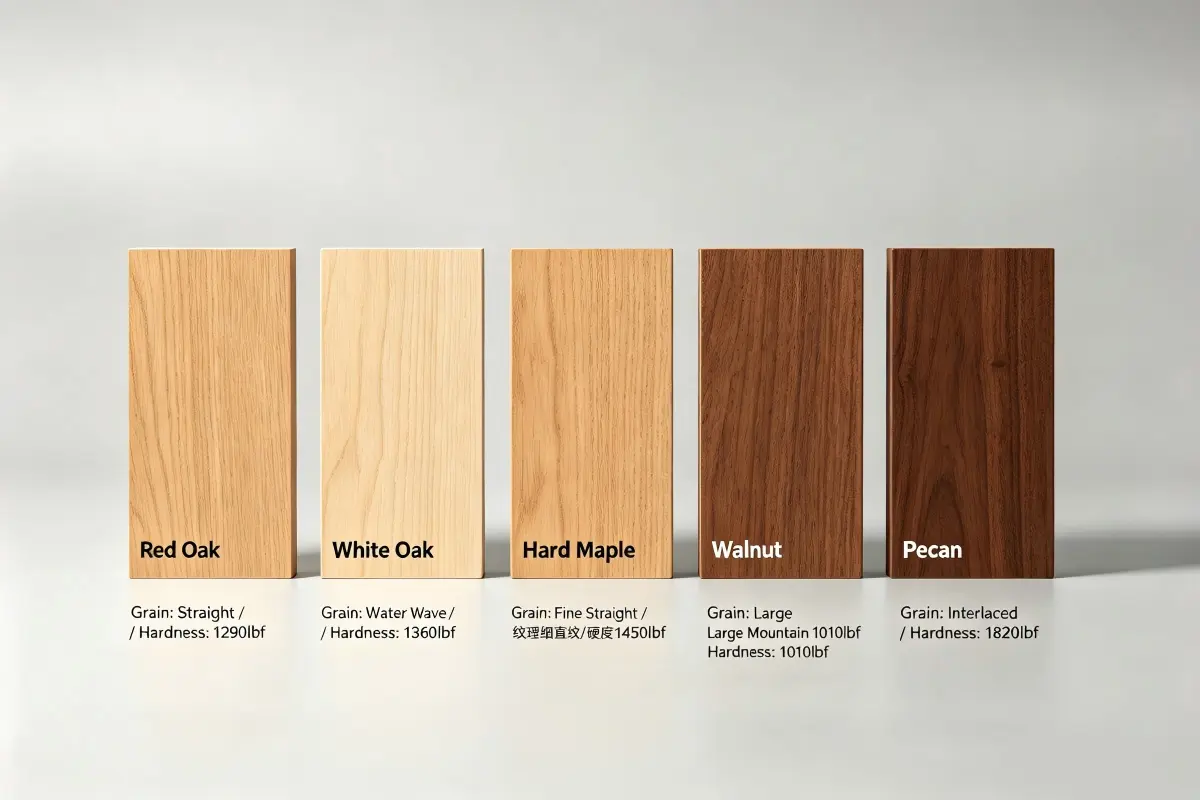
To begin with, we begin making these components by selecting the right wood species. Common species used in the wooden stair handrails manufacturing process include:
| Species | Janka Hardness (lbf) | Density (g/cm³) | MOR (psi) | MOE (10⁶ psi) | Best Application |
|---|---|---|---|---|---|
| White Oak | 1,360 | 0.75 | 14,300 | 1.72 | Premium, high-traffic |
| Hard Maple | 1,450 | 0.71 | 15,800 | 1.83 | Modern, contemporary |
| Black Walnut | 1,010 | 0.60 | 11,200 | 1.52 | Traditional, elegant |
| Cherry | 950 | 0.58 | 10,900 | 1.48 | Warm, residential |
| Red Oak | 1,290 | 0.69 | 13,700 | 1.68 | Cost-effective, versatile |
For making wooden stair handrails, we kiln-dry the wood to 6-8% moisture content (MC) per ASTM D4442. This ensures dimensional stability and prevents warping after installation.
Step 2: Kiln Drying and Moisture Control
Furthermore, understanding how we make the components requires appreciating the critical role of moisture control. The drying process is one of the most important factors in how we make wooden stair handrails successfully.
| Stage | MC Range | Duration | Purpose |
|---|---|---|---|
| Green | 30-60% | As received | Initial moisture after sawmilling |
| Air Drying | 15-20% | 30-90 days | Initial moisture reduction |
| Kiln Drying | 6-8% | 7-14 days | Final moisture control |
| Conditioning | 6-8% | 48-72 hours | Stress equalization |
Drying parameters:
- Temperature: Gradual ramp from 38°C to 71°C (100°F to 160°F) depending on species
- Relative Humidity: Controlled from 80% down to 30%
- Airflow: Minimum 300 ft/min across the lumber stack
- Verification: Every batch verified with pin-type moisture meter per ASTM D4442
Step 3: Rough Milling and Defect Removal
Subsequently, making wooden stair handrails involves precision milling to create accurate blanks. The the workpieces manufacturing process requires consistent dimensions for further processing.
| Operation | Equipment | Target Tolerance | Purpose |
|---|---|---|---|
| Flattening | Jointer (8″ capacity) | ±0.5mm | Create flat reference surface |
| Thicknessing | Planer (13″ capacity) | ±0.3mm | Consistent thickness |
| Edge Jointing | Jointer/Table saw | ±0.2mm | Square edges |
| Defect Removal | Table saw/Band saw | N/A | Remove knots, cracks, voids |
Defect removal criteria:
- Knots: Remove knots > 15mm diameter in load-bearing zones
- Checks: Remove surface checks > 0.5mm width
- Splits: Remove splits extending > 10% of length
Step 4: CNC Precision Shaping
Additionally Next, CNC technology has revolutionized how we make wooden stair handrails. In modern these items manufacturing, 5-axis CNC machines cut precise profiles with tight tolerances.
| Profile Type | Radius | Tolerance | Application |
|---|---|---|---|
| Square | N/A | ±0.2mm | Modern, contemporary |
| Bullnose | 6-12 mm | ±0.5mm | Traditional, safety |
| Ogee | Composite | ±0.5mm | Classic, decorative |
| Eased Edge | 1.5-3 mm | ±0.3mm | Residential, comfortable |
| Custom | Per spec | ±0.3mm | Architectural design |
Step 5: Multi-Stage Sanding Process
Then, making wooden stair handrails includes multi-stage sanding to achieve a finish-ready surface. This step is critical in making premium quality the stock.
| Stage | Grit | Target Ra (μm) | Purpose |
|---|---|---|---|
| Primary | 80 | ≤ 6.3 | Remove machining marks |
| Secondary | 120 | ≤ 3.2 | Initial smoothing |
| Fine | 180 | ≤ 1.6 | Pre-finish preparation |
| Final | 220 | ≤ 0.8 | Finish-ready surface |
Sanding parameters:
- Pressure: 2-3 N/cm² (excessive pressure causes burn marks)
- Feed direction: Always sand with the grain
- Between grits: Vacuum dust thoroughly to prevent cross-scratching
Step 6: Finishing Wooden Stair Handrails
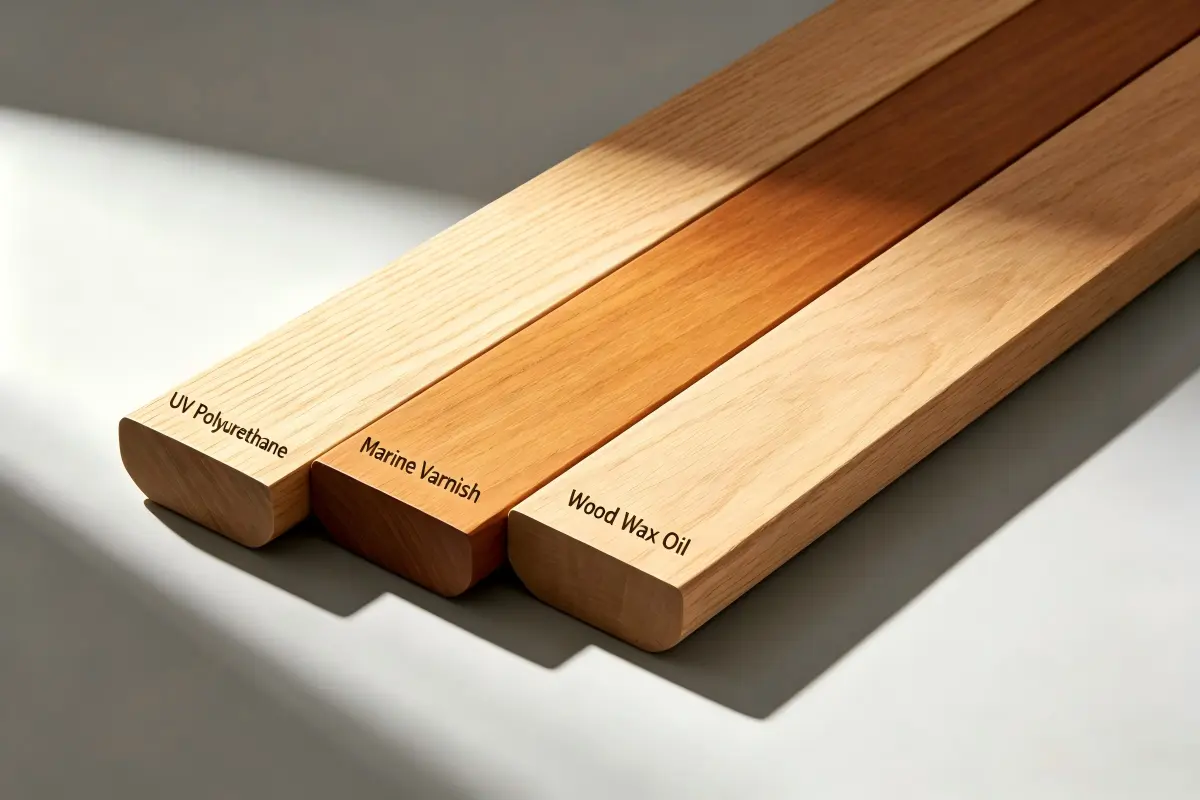
Moreover,We offer several finish options in the wooden stair handrails manufacturing process, based on durability and appearance requirements. The finishing process represents the final stage of our manufacturing before quality control.
| Finish Type | Film Thickness | Taber Wear | Application | Best Use |
|---|---|---|---|---|
| Conversion Varnish | 75-125 μm | ≤ 30 mg | Spray (HVLP) | Commercial, high-traffic |
| Oil-Based Polyurethane | 100-150 μm | ≤ 45 mg | Brush/Spray | Residential, classic |
| Water-Based Polyurethane | 80-120 μm | ≤ 55 mg | Brush/Spray/Roller | Residential, low odor |
| Hard Wax Oil | 30-50 μm | ≤ 70 mg | Hand wipe | Natural, matte finish |
Application conditions:
- Temperature: 20-25°C
- Relative Humidity: 40-50%
- Airflow: 0.5-1.0 m/s
- Number of coats: 2-3
- Between coats: Light sanding with 320-grit, dust removal
Step 7: Quality Control and Inspection
Lastly Finally, quality control ensures our wooden stair handrails manufacturing meets industry standards. The manufacturing process includes systematic inspection at defined control points.
| Inspection Point | Parameter | Acceptance Criteria | Method |
|---|---|---|---|
| Raw Material | MC | 6-8% | Pin meter (ASTM D4442) |
| After Milling | Thickness | ±0.3mm | Digital caliper |
| After Profiling | Profile radius | ±0.5mm | Profile gauge |
| After Sanding | Surface roughness | Ra ≤ 0.8 μm | Profilometer |
| After Finishing | Film thickness | 75-150 μm | Coating thickness gauge |
| Final | Dimension | Per shop drawing | Full measurement |
Technical Summary: How wooden stair handrails are made requires systematic control across all manufacturing stages. First, select quality lumber meeting species and hardness specifications. Next, kiln-dry to 6-8% MC for dimensional stability. Then, mill accurately to ±0.3mm tolerances. Furthermore, CNC-profile consistent shapes. Moreover, multi-stage sanding achieves Ra ≤ 0.8 μm surface quality. Subsequently, apply finish under controlled conditions. Finally, perform systematic quality control at every stage. Therefore, a rigorous stair handrails manufacturing process delivers products that meet or exceed all performance, safety, and aesthetic requirements for residential and commercial applications.
Ready to Order Custom Wooden Stair Handrails?
Contact Meizstairs today. We will help you design, engineer, and fabricate custom wooden stair handrails to exact specifications. Our expert team is ready to assist with technical guidance, material recommendations, and production planning.