


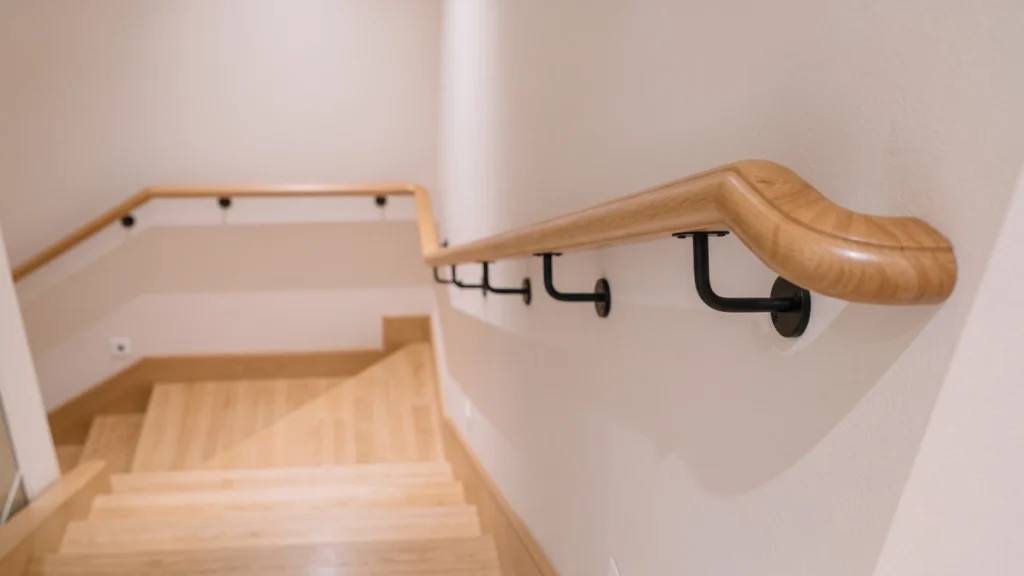

Stair handrail brackets are essential components of a secure and functional railing system. They connect the handrail to a wall, post, or supporting structure. Other hardware components join rail sections, anchor posts, and finish exposed ends. Choosing compatible stair handrail brackets and hardware helps create a stable installation, a clean appearance, and reliable long-term performance.
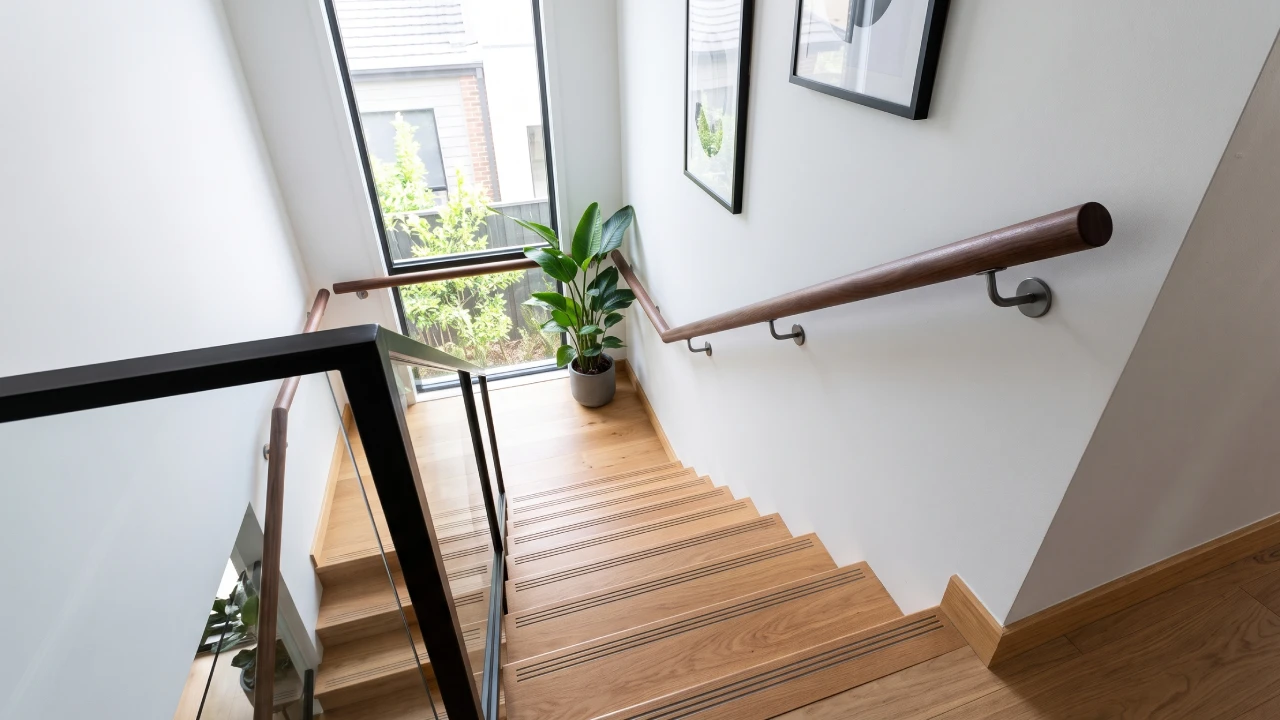
Whether you are building a new staircase, upgrading an existing handrail, or sourcing replacement components, understanding the available hardware can help you make better purchasing decisions. The right selection depends on several factors, including the handrail profile, mounting surface, material, installation environment, and manufacturer’s specifications.
In this guide, we explain the main components of a stair handrail hardware system, compare common bracket types and materials, and show you what to check before purchasing.
1. Essential Components of a Stair Handrail Hardware System
A complete handrail installation may require several types of hardware. However, not every project needs every component. Understanding each part’s function makes it easier to plan a compatible system and avoid ordering unnecessary fittings.
Phần khung tay vịn
Handrail brackets connect a handrail to a wall or supporting post. They hold the rail in position and transfer forces from the handrail to the mounting structure.
Common configurations include wall-mounted brackets, post-mounted brackets, and adjustable brackets for angled stair sections.
Each bracket must match the handrail’s shape, dimensions, mounting method, and intended application. For example, a bracket designed for a round metal tube may not fit a rectangular timber handrail.
The mounting structure also matters. Even a well-matched bracket cannot provide reliable support if the wall or post lacks suitable structural backing.
For more information about specific designs, explore our guides to adjustable handrail brackets và brass handrail brackets.
Mounting Flanges and Post Bases
Mounting flanges and post bases connect vertical railing posts to floors, decks, landings, or other supporting surfaces.
Most designs use a base plate with mounting holes. Some also include a cover that conceals the fixing hardware and creates a cleaner finish.
A post base serves a different purpose from a wall-mounted handrail bracket. The bracket supports a handrail along a wall or post, while the base anchors a vertical post to the supporting surface. Therefore, you should not treat these components as interchangeable.
Before choosing a flange or post base, check:
The post dimensions and cross-sectional shape.
The base plate size and mounting-hole arrangement.
The thickness and strength of the supporting surface.
The required anchors or structural fasteners.
Whether the finished installation needs a cover plate.
Connectors, Elbows, and End Caps
Connectors and fittings join handrail sections or help the rail change direction.
Common fittings include:
Straight connectors: Join two handrail sections in a straight line.
Elbows: Connect rail sections at an angle or around a turn.
Corner fittings: Help create directional changes at landings or stair turns.
End caps: Cover exposed ends of hollow or tubular handrails.
Return fittings: Turn a handrail end back toward a wall or supporting surface when the design requires it.
Always match fittings to the handrail material, cross-sectional shape, dimensions, and connection method. Two fittings may look similar but still be incompatible because their internal diameters, insertion depths, or fastening arrangements differ.
Screws, Bolts, and Anchors
Fasteners secure brackets, flanges, posts, and connectors to their supporting structures. Their selection depends on the substrate and the connection requirements.
For example:
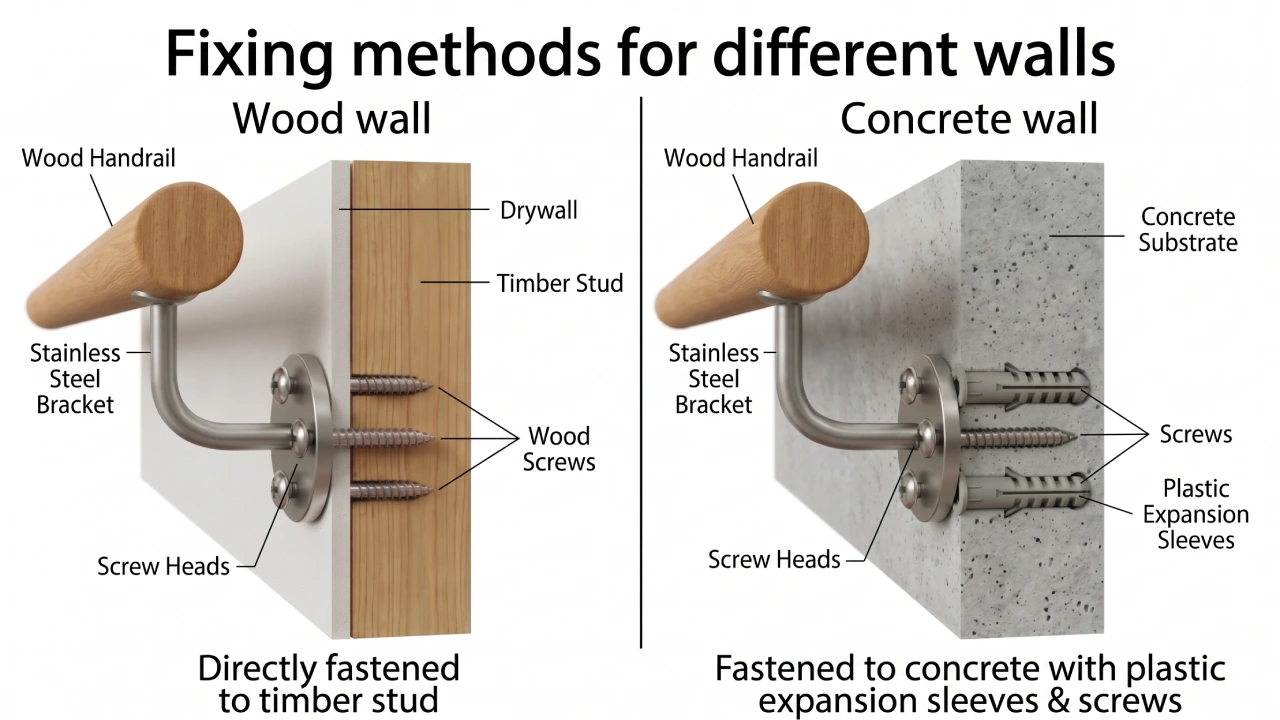
Wood framing: Use structural screws or other fasteners specified for the timber and connection.
Concrete: Select anchors designed for the concrete type, thickness, edge distances, and expected loads.
Masonry: Choose fasteners suitable for the specific masonry material and its condition.
Metal structures: Use compatible bolts, machine screws, or engineered connections.
Ordinary drywall alone cannot provide structural support for a handrail. Instead, the fixing arrangement must transfer loads into suitable framing or another adequately designed supporting structure.
For additional technical guidance, consult the Concrete Masonry & Hardscapes Association’s guide to fasteners for concrete masonry. It explains different fastener types and their applications in concrete masonry.
2. Types of Stair Handrail Brackets
Stair handrail brackets come in several mounting configurations. The right choice depends on where the handrail receives support and how the rail follows the staircase.
Fixed Stair Handrail Brackets
Fixed brackets hold the handrail at a predetermined angle and position.
Installers commonly use them on straight wall-mounted runs or where the mounting geometry already matches the handrail angle.
Their simple design makes them a practical option for straightforward installations. However, you should plan the bracket position and handrail angle carefully before fixing the components in place.
Adjustable and Swivel Handrail Brackets
Adjustable brackets use a joint or swivel mechanism that lets installers change the handrail connection angle.
They work well when the staircase pitch, mounting surface, or rail position requires adjustment. Depending on the design, the mechanism may accommodate different stair angles and installation conditions.
However, adjustment ranges, locking methods, and compatible handrail profiles vary by manufacturer. Always check these details before ordering.
For a closer look at adjustment mechanisms, applications, and installation considerations, read our dedicated guide to adjustable handrail brackets.
Wall-Mounted and Post-Mounted Stair Handrail Brackets
Wall-mounted brackets attach the handrail to a vertical wall or suitable structural backing. They commonly support handrails alongside residential stairways.
Post-mounted brackets connect the rail to a newel post or another vertical support. Depending on the design, the bracket may attach to the side, top, or another designated connection point.
When comparing these stair handrail brackets, consider the supporting structure first. A bracket’s appearance alone cannot determine whether it will work with the available mounting surface.
3. Handrail Hardware Materials and Finishes
The material of a bracket or fitting affects its appearance, corrosion resistance, maintenance requirements, and suitability for different environments. Therefore, consider both the installation location and the expected service conditions before choosing a finish.
Stainless Steel Handrail Hardware
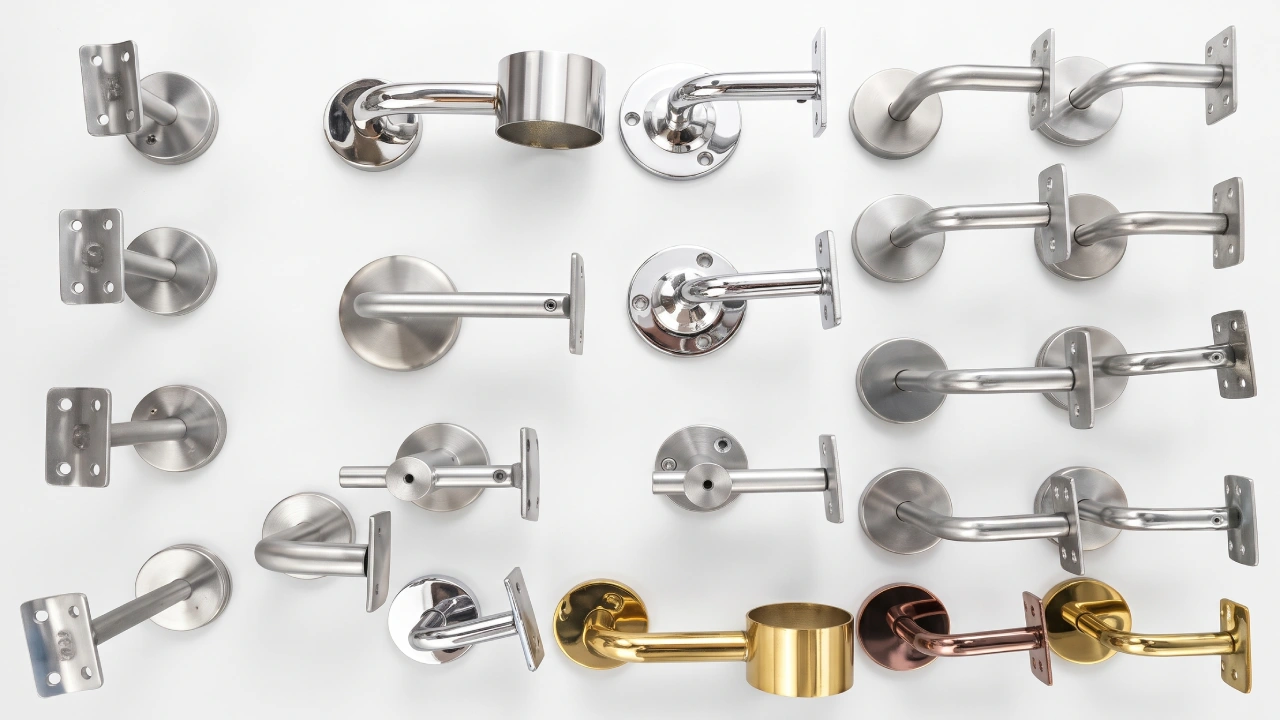
Stainless steel is widely used in modern handrail systems because it combines strength, a clean appearance, and corrosion resistance.
Common applications include:
Interior metal and glass railing systems.
Contemporary residential staircases.
Outdoor handrails with an appropriately selected stainless steel grade.
Projects that require durable hardware and straightforward maintenance.
Grades 304 and 316 are common options for architectural hardware. Grade 316 generally offers better resistance to chloride-related corrosion than Grade 304. For this reason, designers often consider it for coastal and other corrosive environments.
However, the stainless steel grade alone does not determine long-term performance. Surface finish, fabrication quality, installation details, exposure, and cleaning also matter.
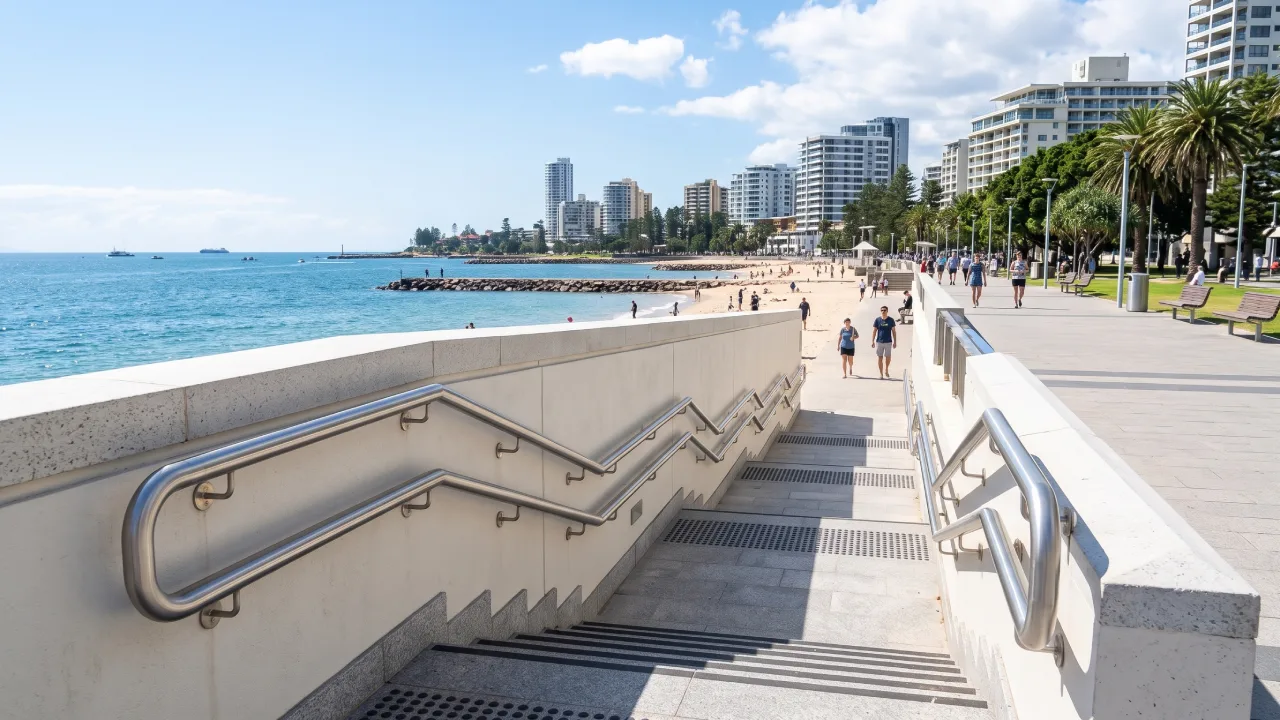
Các Australian Stainless Steel Development Association’s guide to preventing coastal corrosion explains how salt exposure, surface condition, material grade, and maintenance affect stainless steel performance.
Aluminum Handrail Hardware
Aluminum hardware is lightweight and naturally forms a protective oxide layer.
Manufacturers commonly use it in outdoor railing systems and applications where low weight and corrosion resistance are important.
However, check the compatibility of aluminum components with adjacent metals. When dissimilar metals come into direct contact in the presence of moisture, galvanic corrosion may occur. Suitable isolation materials and compatible fasteners can help reduce this risk.
Brass Handrail Brackets and Hardware
Brass offers a warm metallic appearance that suits traditional interiors and decorative staircase designs.
It is often selected for classic interiors, vintage-inspired staircases, and projects where the hardware forms part of the visible design.
Available finishes include polished, antique, brushed, and unlacquered appearances. However, each finish has different maintenance and aging characteristics. Confirm the alloy and finish before purchasing, especially when appearance consistency matters.
For a closer comparison of brass bracket styles and finishes, read our guide to brass handrail brackets.
Zinc Alloy and Other Handrail Hardware Finishes
Zinc alloy and die-cast hardware often provide a cost-conscious option for interior applications.
Manufacturers may offer these products in decorative finishes that coordinate with painted, plated, or coated railing systems.
However, decorative appearance does not guarantee outdoor durability. Check the base material, protective coating, manufacturing quality, and product rating before using zinc alloy hardware in damp or exposed locations.
Comparing Common Handrail Hardware Materials
| Vật liệu | Main Characteristics | Typical Applications | Selection Considerations |
|---|---|---|---|
| Thép không gỉ | Durable, modern appearance, corrosion-resistant | Interior and outdoor systems | Select a suitable grade and finish for the environment |
| Nhôm | Lightweight, naturally forms a protective oxide layer | Outdoor and lightweight railing systems | Check metal compatibility and connection details |
| Brass | Warm appearance and decorative finishes | Traditional and decorative interiors | Confirm finish and maintenance requirements |
| Zinc alloy | Economical and available in decorative finishes | Many interior applications | Check coating quality and environmental suitability |
4. How to Choose Compatible Stair Handrail Brackets and Hardware
Choosing the right hardware involves more than matching the finish to the handrail. Each component must fit the rail and work with the supporting structure.
Match Stair Handrail Brackets to the Rail Shape and Size
Start by identifying the handrail’s cross-sectional shape and dimensions.
Handrails may be round, oval, square, rectangular, or custom-shaped. The bracket’s cradle, fixing plate, or connection fitting must suit the corresponding profile.
Before ordering, check:
Handrail width and height.
Outside diameter for tubular rails.
Cross-sectional shape.
Bracket contact area.
Fixing-hole arrangement.
Required screws or connecting hardware.
Do not assume that brackets from different manufacturers are interchangeable. Similar product names do not necessarily indicate identical dimensions or connection systems.
Check the Mounting Surface and Fasteners
The supporting surface determines how installers can fix the bracket.
For example, a bracket attached to a timber-framed wall may need a different fastening arrangement from one installed on concrete or a steel support.
Before purchasing, establish:
Which material will support the bracket.
Whether suitable structural backing is available.
Which fasteners or anchors the manufacturer specifies.
Whether the mounting holes match the proposed fixing arrangement.
Whether the installation requires additional reinforcement.
Treat the bracket, fastener, and supporting structure as one connection system. A compatible bracket cannot compensate for an unsuitable anchor or weak substrate.
Evaluate Load Requirements and Bracket Spacing
Bracket spacing affects how the handrail receives support along its length. However, no single spacing value applies to every stair handrail system.
The appropriate distance depends on the bracket design, handrail material and dimensions, support conditions, intended loads, and manufacturer instructions.
When reviewing a product, check:
The manufacturer’s recommended bracket spacing.
The rated capacity and test conditions, where available.
The type and strength of the mounting substrate.
The number and position of required fixing points.
Whether joints or changes in direction need additional support.
A bracket’s published capacity does not establish the capacity of the entire installation. The fasteners, substrate, handrail, and connection details all affect overall performance.
Choose a Suitable Finish for Indoor or Outdoor Use
The installation environment affects both material and finish selection.
For interior staircases, appearance and coordination with the handrail, balusters, and surrounding finishes may be the main considerations.
Outdoor projects face additional challenges, including moisture, temperature changes, pollution, and coastal exposure. Therefore, choose products designed for the actual environment rather than relying on appearance or material names alone.
For coastal installations, also consider the stainless steel grade, surface finish, drainage, and cleaning requirements. These factors can influence corrosion performance over time.
5. Handrail Hardware Installation: What to Check Before Assembly
Installation procedures vary by product and mounting condition. Nevertheless, several checks can help prevent compatibility and fixing problems before assembly begins.
Verify the Supporting Structure for Handrail Brackets
Confirm that the wall, post, floor, or other support can accommodate the proposed fixing arrangement.
For wall-mounted brackets, locate suitable structural backing before drilling. For post bases, check the supporting surface, anchor positions, and required fixing configuration.
If the substrate or connection design is uncertain, obtain appropriate technical advice before installation.
Check Bracket Alignment and Hardware Compatibility
Before permanently fixing the hardware, check that the brackets align with the handrail and allow the rail to follow the intended staircase direction.
Also confirm that connectors, elbows, and end caps fit the selected rail profile. In addition, check that the fixing plates and holes match the planned mounting positions.
These checks can help you identify incompatible components before they become difficult to replace.
Confirm Fastener and Anchor Selection
Use fasteners specified by the manufacturer or suitable for the engineered connection.
Do not substitute ordinary screws for structural fasteners without confirming their suitability. Likewise, choose anchors that match the actual concrete or masonry substrate.
For a complete guide to the stair railing installation process, see Putting Up a Stair Railing.
6. Stair Handrail Brackets and Hardware Buying Checklist
Before placing an order, review the following checklist. It can help you avoid compatibility problems, missing components, and unnecessary replacement purchases.
Handrail and Bracket Compatibility
Confirm the handrail material and cross-sectional dimensions.
Check that the bracket supports the correct handrail profile.
Verify that connectors and end fittings match the rail dimensions.
Confirm whether the system requires special adapters or custom fittings.
Mounting and Fixing Requirements
Identify the mounting surface and supporting structure.
Confirm the required screws, bolts, or anchors.
Check the mounting-hole arrangement.
Review the manufacturer’s recommended bracket spacing.
Confirm whether the installation requires additional reinforcement.
Material and Finish Selection
Select materials suitable for the indoor or outdoor environment.
Check corrosion resistance for damp or coastal locations.
Coordinate the finish with the handrail and surrounding railing components.
Confirm whether the hardware requires special cleaning or maintenance.
Product Information and Order Details
Review product dimensions and technical drawings.
Check the manufacturer’s installation instructions.
Review rated capacity and test information where available.
Verify the quantity of brackets, connectors, fasteners, and finishing components.
Confirm that all parts work together before ordering.
A complete hardware list is especially useful for custom staircases. In these projects, handrail dimensions, mounting positions, and connection details may differ from standard products.
Frequently Asked Questions About Stair Handrail Brackets and Hardware
1. What hardware do I need for a stair handrail?
A typical wall-mounted handrail may require brackets, suitable screws or anchors, connectors for joining rail sections, and end caps or return fittings where needed. Systems supported by posts may also need mounting flanges or post bases. The exact components depend on the railing design.
2. How do I choose the right stair handrail brackets?
Start by checking the handrail profile, dimensions, mounting position, and supporting structure. Then confirm that the bracket suits the rail and that the fasteners and mounting arrangement meet the manufacturer’s requirements.
3. Are stair handrail brackets universal?
No. Brackets vary in mounting configuration, dimensions, material, fixing-hole pattern, and compatible handrail profiles. Therefore, always check the product specifications before combining components from different systems.
4. How far apart should stair handrail brackets be?
Bracket spacing depends on the product design, handrail material and dimensions, mounting conditions, and expected loads. Follow the manufacturer’s recommended spacing rather than applying one distance to every installation.
5. Can I use the same handrail hardware indoors and outdoors?
Not necessarily. Outdoor hardware must withstand moisture and environmental exposure. Stainless steel of an appropriate grade and suitably specified aluminum hardware are common options. However, you should check the complete product system and installation conditions before selecting components.
6. What is the difference between a handrail bracket and a mounting flange?
A handrail bracket supports a handrail by connecting it to a wall or post. A mounting flange or post base anchors a vertical post to a floor, deck, or other supporting surface. Because they perform different functions, these components are not interchangeable.
7. Do handrail brackets need special screws or anchors?
Yes. Fasteners must suit the mounting substrate and connection requirements. Timber framing, concrete, masonry, and metal supports may each require different fixing solutions. Always follow the manufacturer’s instructions and applicable project specifications.
Kết luận
Choosing the right stair handrail brackets and hardware involves more than selecting a matching finish. Brackets, mounting flanges, connectors, fasteners, and finishing components must work together and suit the handrail and its supporting structure.
By checking the rail dimensions, mounting surface, material, environmental conditions, and manufacturer specifications before purchasing, you can reduce installation problems and build a more reliable railing system.