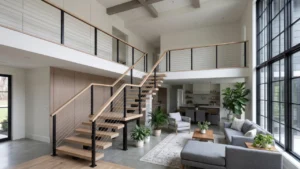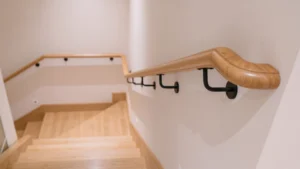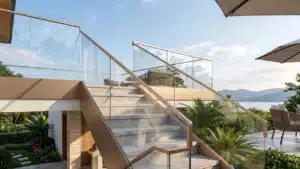


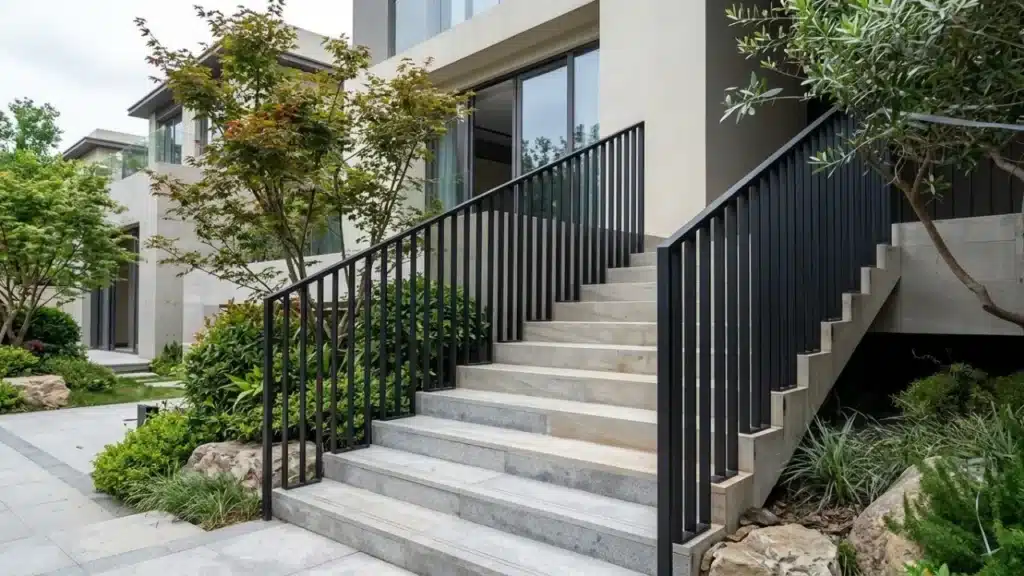

Handrails for outdoor steps provide essential support while helping protect people from losing their balance on exterior stairways. They also need to withstand rain, sunlight, temperature changes, and everyday use. Whether you are improving a front entrance, adding a railing to a porch, or planning stairs that connect a deck to a garden, choosing the right outdoor handrail involves more than appearance.
This guide explains the main types of handrails for outdoor steps, compares common materials, explores practical design ideas for porches and other outdoor spaces, and outlines what to check before buying.
For a broader overview of handrail materials, applications, and installation considerations, see our Ultimate Guide to Handrails.
What Are Handrails for Outdoor Steps?
Outdoor handrails are graspable rails installed alongside exterior stairs to help people maintain balance while going up or down. They are commonly used at front entrances, porches, patios, garden steps, deck stairways, and commercial building entrances.
A handrail is not necessarily the same as a guardrail. A lan can is designed to be held for support. A guardrail is a protective barrier along an open edge that helps prevent falls. Some outdoor railing systems combine both functions, but they must still meet the requirements that apply to each.
Before choosing a system, consider whether your project needs only a graspable handrail, a guardrail along an exposed edge, or a combined railing system.
Types of Handrails for Outdoor Steps
There are several types of handrails for outdoor steps, ranging from simple wall-mounted rails to complete post-mounted systems with metal, cable, or glass infill. The right configuration depends on the stair structure, available fixing points, desired appearance, and safety requirements.
1. Wall-Mounted Outdoor Handrails
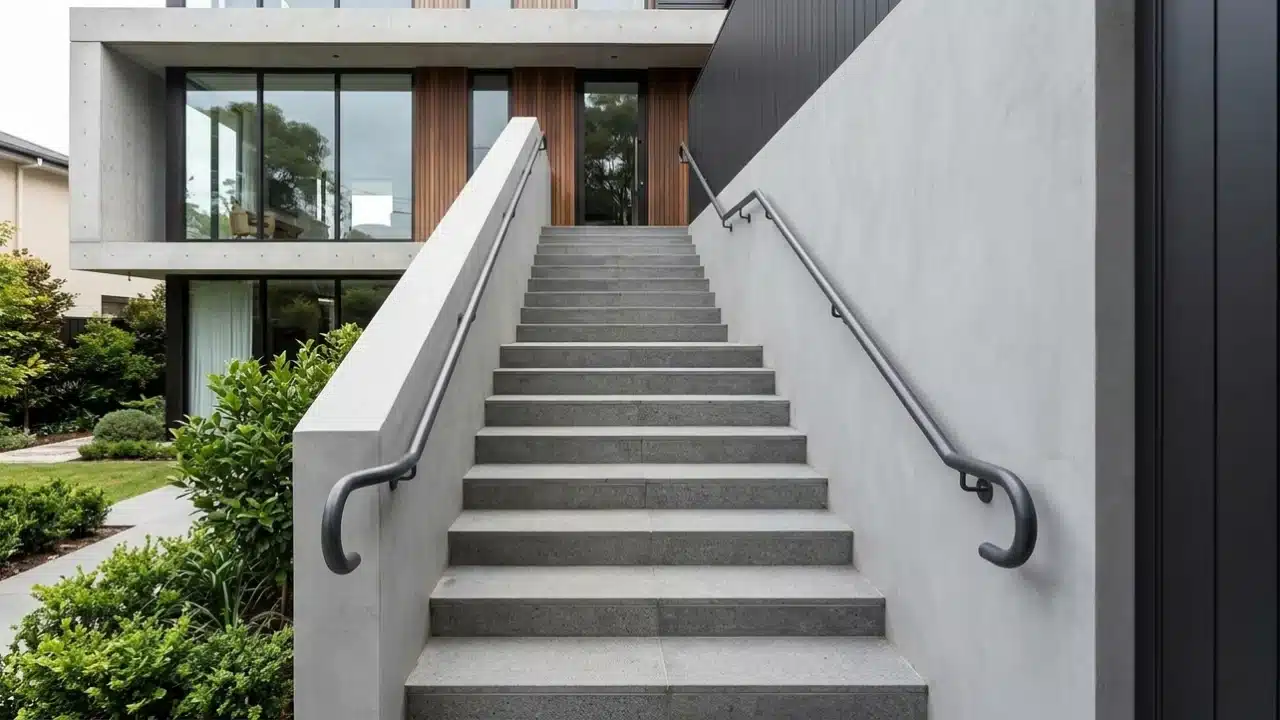
Wall-mounted handrails are fixed to a suitable exterior wall using brackets and appropriate anchors. They are useful for narrow stairways where one side is bordered by a wall or retaining structure.
They can be made from metal or treated timber. Before installation, check that the wall has enough structural strength to support the brackets and the expected loads. Exterior finishes such as render, cladding, or thin masonry veneer should not automatically be treated as structural fixing surfaces.
2. Post-Mounted Stair Railings
Post-mounted systems use vertical posts fixed to the stair structure, landing, deck, or concrete base. Rails and infill components are then attached between or around the posts.
This configuration is suitable for open-sided outdoor stairs, porch steps, and deck stairways where there is no adjacent wall. The post base, anchor arrangement, substrate, and connection details all affect the stability of the finished system.
3. Aluminum Outdoor Handrails
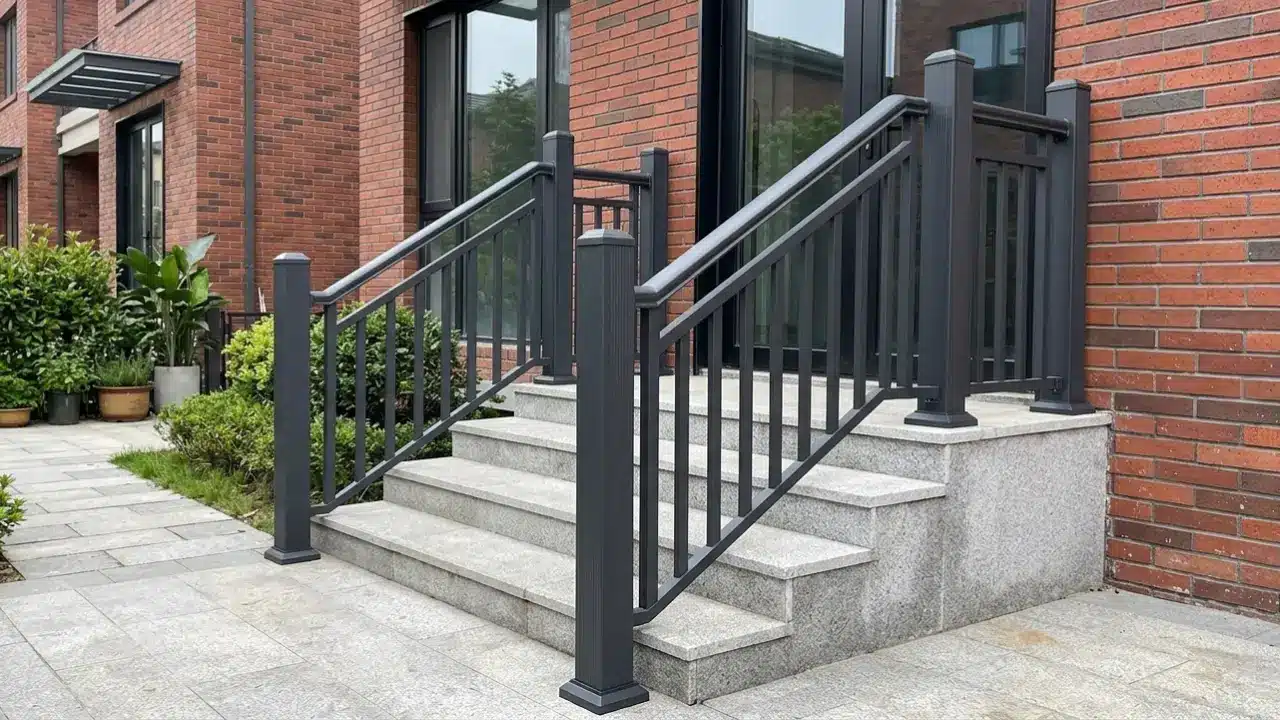
Aluminum is a popular option for exterior stairs because it is relatively lightweight and naturally forms a protective oxide layer. It does not develop red rust in the same way as ordinary carbon steel.
Aluminum systems are available in simple profiles, powder-coated finishes, and modular railing configurations. They can work well for residential entrances, garden steps, and deck stairs.
However, aluminum is not maintenance-free. Coating damage, dissimilar-metal contact, fastener selection, and exposure to salt or pollutants should all be considered.
For a more detailed comparison of aluminum options, surface finishes, and buying considerations, read our guide to aluminum handrails for outdoor steps.
4. Steel and Wrought-Iron Handrails
Steel handrails are suitable for projects that need a strong, rigid railing system or a more substantial architectural appearance. Common finishes include hot-dip galvanizing, primer and paint systems, and powder coating.
Wrought-iron-style railings are often selected for traditional homes, decorative porch steps, and properties with classic exterior details. Their appearance can be customized with curved rails, ornamental balusters, and decorative post caps.
The main consideration is corrosion protection. The steel grade, coating system, welds, cut edges, fasteners, and installation environment all affect long-term performance. Damaged coatings should be repaired before corrosion spreads.
For a closer look at steel and other metal options in exterior stair applications, see our guide to metal handrails for outdoor steps.
5. Wood Outdoor Handrails
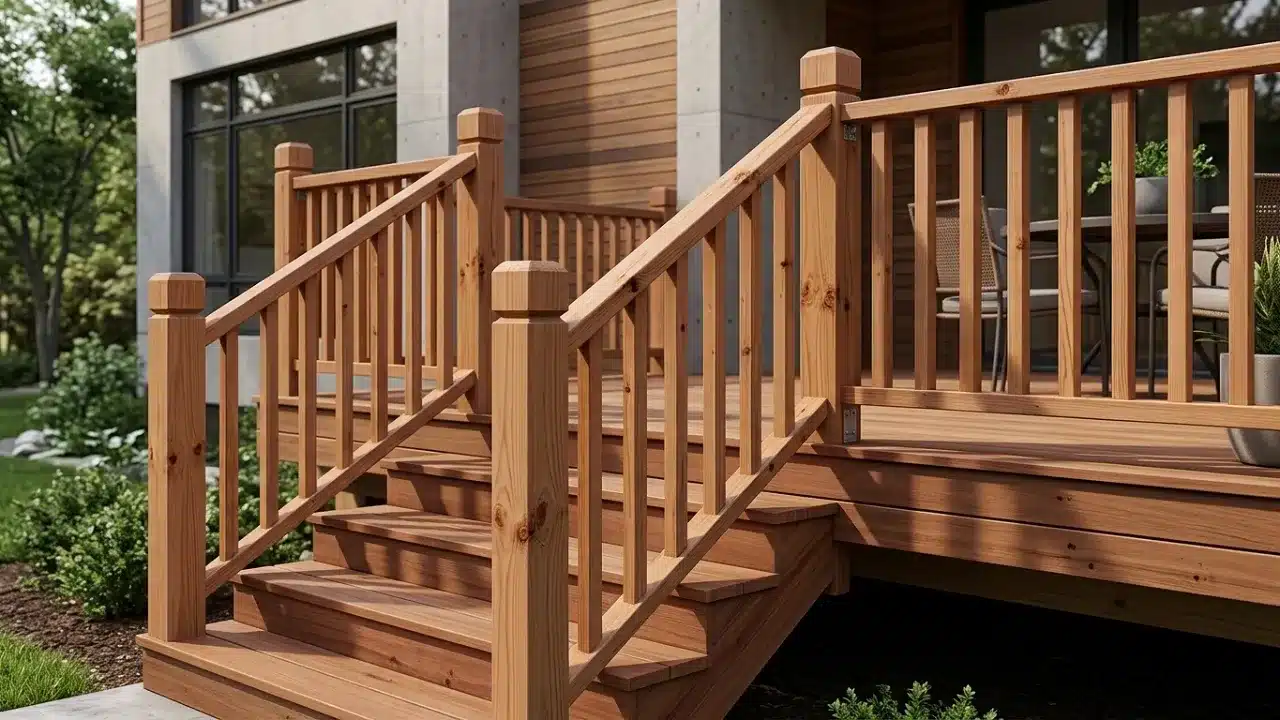
Wood handrails create a warm, natural appearance and can complement timber stairs, landscaped gardens, and traditional porches.
Suitable exterior timber depends on local availability, climate, exposure, and the finish system. Some projects use naturally durable hardwoods, while others use treated timber designed for exterior applications.
Wood needs regular inspection and maintenance. Moisture can cause movement, cracking, or decay, while sunlight can fade the finish. Check the condition of the timber, end grain, joints, and fixing points as part of routine maintenance.
6. Cable and Glass Railing Systems
Cable railing uses horizontal or vertical metal cables as infill between posts. It is often chosen for decks, terraces, and outdoor stairs where maintaining views is important.
Glass railing systems provide a more open appearance. Depending on the design, panels may be supported by posts, clamps, spigots, or a continuous base channel. A top rail or separate graspable handrail may also be required.
For either system, do not choose components based on appearance alone. The glass specification, cable layout, post spacing, anchorage, structural loads, and local safety requirements must be considered as a complete system.
Comparing Materials for Outdoor Stair Handrails
Different materials perform differently in outdoor environments. The following table provides a practical starting point for comparing common options.
| Vật liệu | Giao diện | Main Advantages | Main Considerations |
|---|---|---|---|
| Nhôm | Clean, modern, simple profiles | Lightweight, corrosion-resistant, relatively low maintenance | Coating quality, fasteners, and coastal exposure |
| Thép carbon | Modern, industrial, or traditional | Strong, versatile, suitable for many custom designs | Requires an appropriate corrosion-protection system |
| Thép không gỉ | Contemporary, refined | Good corrosion resistance when the correct grade is specified | Grade selection, finish, and exposure conditions |
| Gỗ | Warm, natural | Easy to coordinate with timber stairs and outdoor spaces | Weathering, moisture, finish maintenance |
| Cable | Minimal and open | Preserves views and creates a light appearance | Tensioning, post stiffness, and opening limitations |
| Kính | Transparent, contemporary | Maintains views and creates an open visual effect | Glass specification, engineered support, cleaning |
There is no single best material for every outdoor staircase. A sheltered porch, a coastal deck, and a commercial exterior stairway can have very different exposure and performance requirements.
Outdoor Stair Railing Ideas for Different Spaces
When comparing handrails for outdoor steps, consider how the railing will look alongside the building, staircase materials, and surrounding landscape. The following outdoor stair railing ideas cover several styles and applications.
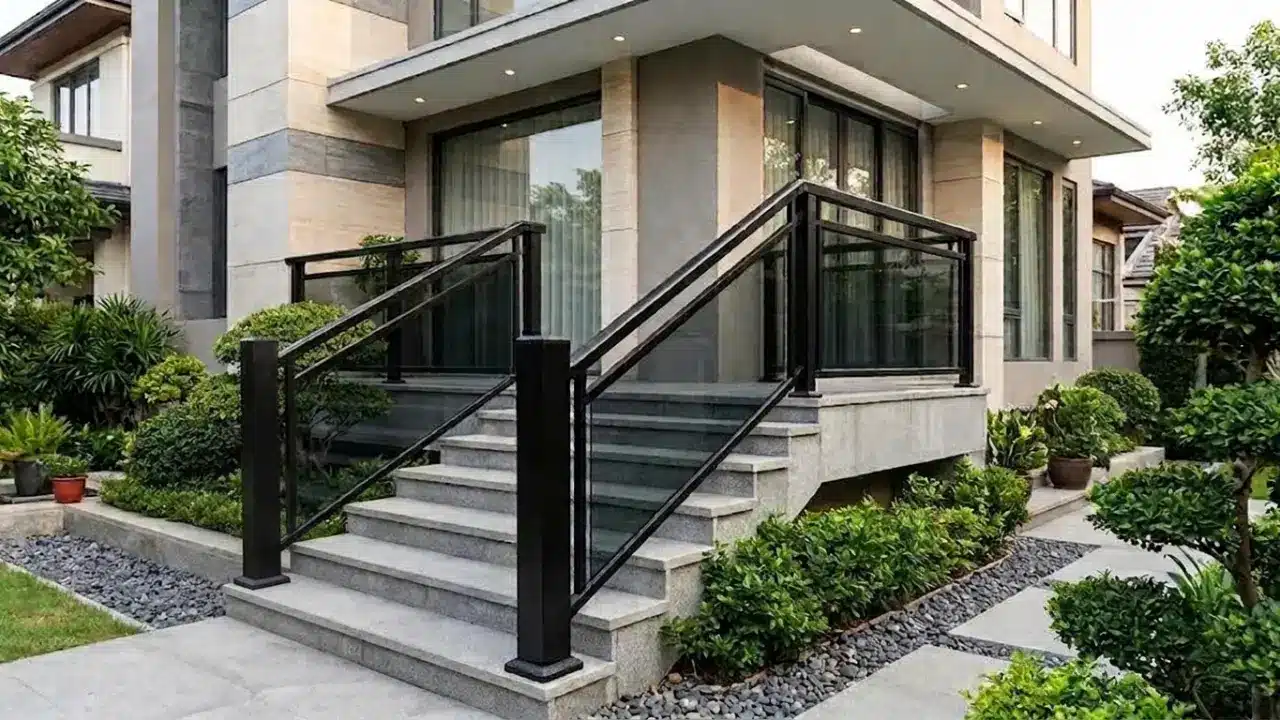
1. Simple Black Metal Railing
A black metal handrail creates a clear outline against light-colored walls, concrete steps, brickwork, and rendered entrances. It works particularly well with contemporary and industrial-style exteriors.
For a clean design, use simple vertical posts and an uncluttered top rail. Make sure the finish is specified for exterior exposure rather than assuming that any black coating will provide adequate corrosion protection.
2. Aluminum Railing for Modern Entrances
Aluminum railing systems suit modern homes with simple exterior lines. A dark powder-coated finish can coordinate with window frames, doors, and exterior lighting.
This option is especially practical when the project needs a relatively lightweight system with a consistent finish. The fixing method still needs to match the stair or landing substrate.
3. Wood Handrails with Natural Stone or Concrete Steps
A timber handrail can soften the appearance of concrete or stone steps. This combination works well for garden paths, landscaped entrances, and homes with natural exterior materials.
Choose a timber species and finish suitable for the local environment. The connections should also be designed to avoid water collecting around the post bases and joints.
4. Cable Railing for Deck Stairs
Cable railing is often used where the outdoor staircase connects to a deck or raised terrace. Its open infill can preserve views of a garden, landscape, or surrounding property.
The posts and supporting structure must be sufficiently rigid to maintain cable tension. Cable spacing and opening limitations must also comply with the applicable local requirements.
5. Glass Railing for Open Views
Glass railing can suit contemporary terraces, outdoor stairs, and elevated entrances where an unobstructed view is important.
The system may use a base channel, spigots, or other engineered supports. If the glass itself forms part of the protective barrier, the specified glass and support system must be suitable for that structural role. A separate graspable handrail may still be required.
6. Decorative Railing for Traditional Homes
For traditional houses, decorative metalwork or painted timber can complement brick, stone, and detailed exterior trim. Curved rails, ornamental balusters, and traditional post caps can create a more coordinated entrance.
The decorative details should not make the handrail difficult to grip or create openings that conflict with applicable safety requirements.
Porch Stair Handrail Ideas
Porch steps are one of the most common places where homeowners need an outdoor handrail. The design should relate to the porch structure while providing a safe and comfortable route between the entrance and the ground.
Handrails for Short Porch Steps
A short set of porch steps may use a simple handrail on one or both sides, depending on the layout and local requirements. A wall-mounted rail can be suitable where the steps run alongside a solid exterior wall.
Where the steps are open on both sides, a post-mounted system may be more appropriate.
Porch Railings for Raised Entrances
Raised porches may need both stair handrails and protective guarding around the open porch edge. These functions should be considered together when selecting post locations, rail heights, and infill.
A continuous design can make the porch and stair railing look like one coordinated system, but the handrail and guardrail requirements must both be satisfied.
Wood and Metal Combinations
A wood handrail with metal posts can combine a comfortable gripping surface with a more contemporary appearance. Alternatively, a fully metal system can create a consistent finish across the porch and stairs.
When combining materials, check the compatibility of the fasteners and the potential for corrosion at contact points.
How to Choose the Right Handrails for Outdoor Steps
Choosing handrails for outdoor steps requires more than selecting a material or finish. You should also consider the staircase dimensions, mounting surface, local climate, applicable building requirements, and long-term maintenance.
1. Measure the Staircase and Identify the Layout
Record the number of steps, stair width, total rise, stair angle, landing dimensions, and available fixing locations. Note whether the staircase is straight, curved, or changes direction at a landing.
Also identify whether the railing will be mounted to a wall, the side of the stair structure, the top of the steps, or a concrete landing.
2. Check the Mounting Surface
The mounting surface affects the type of anchors and brackets required.
| Mounting Surface | What to Check |
|---|---|
| Concrete | Concrete condition, thickness, edge distance, and suitable anchors |
| Brick or masonry | Masonry type, condition, joint location, and anchor suitability |
| Timber | Structural framing, timber condition, and connection depth |
| Steel structure | Steel thickness, connection design, and corrosion protection |
| Exterior wall | Whether the fixing reaches structural backing rather than only cladding or finish |
Do not select anchors based only on the visible surface. The connection must transfer the expected loads into a suitable supporting structure.
3. Consider Climate and Exposure
Outdoor railings are exposed to different environmental conditions:
Coastal locations: Salt spray can accelerate corrosion. Material grade, protective coating, and fastener compatibility are especially important.
Hot and sunny climates: UV exposure and surface temperature can affect coatings, timber finishes, and user comfort.
Wet or humid locations: Water drainage, trapped moisture, and corrosion protection need careful attention.
Cold climates: Freeze-thaw conditions and snow or ice accumulation can affect the stair surface, connections, and maintenance needs.
The material should be selected for the actual exposure conditions, not simply because it is marketed as an outdoor product.
4. Confirm Local Building Requirements
Handrail and guardrail requirements vary by country, state, local authority, building type, and project use. Residential stairs, commercial entrances, public buildings, and accessible routes may be subject to different provisions.
For example, US projects may need to consider the locally adopted edition of the International Residential Code (IRC) or International Building Code (IBC), together with state and local amendments. In England, Approved Document K provides guidance on protection from falling and stair handrails. Other countries and regions have their own building regulations and standards.
Useful official references include:
International Code Council – 2024 International Residential Code
International Code Council – 2024 International Building Code
These references are not interchangeable, and the applicable edition depends on the project location and approval authority. Confirm the requirements before finalizing the railing dimensions or ordering components.
5. Compare Maintenance and Long-Term Value
A low initial price does not always mean the lowest long-term cost. Consider the expected maintenance, replacement of finishes or hardware, cleaning needs, and accessibility of the railing for inspection.
A suitable system should balance purchase cost, durability, appearance, and the practical demands of the location.
How Much Do Outdoor Stair Handrails Cost?
The cost of handrails for outdoor steps depends on the material, system design, staircase dimensions, and conditions at the installation site. A simple straight rail is generally less complex than a custom railing with multiple turns, decorative infill, glass panels, or difficult fixing conditions.
The main cost factors include:
Material: Aluminum, steel, stainless steel, timber, cable, and glass have different material and fabrication costs.
Length and layout: Longer runs, angled sections, corners, and landings require additional materials and fabrication.
Mounting method: Wall brackets, post bases, side-mounted connections, and concrete anchors affect hardware and installation requirements.
Finish: Galvanizing, powder coating, paint systems, timber finishing, and specialist surface treatments affect the final price.
Infill and accessories: Glass panels, cable fittings, decorative balusters, end caps, and handrail connectors add to the overall cost.
Site conditions: Difficult access, uneven surfaces, structural reinforcement, and local installation labor can increase project costs.
For an accurate quotation, provide the supplier with measurements, photographs, the installation location, preferred material, finish, and any relevant drawings. Custom projects may also require structural details and local code information before the system can be specified.
Installation and Maintenance Considerations
Proper installation is essential to the long-term performance of handrails for outdoor steps. The supporting structure, brackets, posts, anchors, and connections all contribute to the stability and reliability of the completed system.
Before installation, confirm the substrate condition and the fixing method. Use anchors and fasteners suitable for the base material and exposure environment. Follow the system manufacturer’s installation instructions and any project-specific engineering requirements.
After installation, check that the rail is secure, connections do not rotate or loosen, and there are no sharp edges or unfinished ends that could catch clothing or cause injury.
For ongoing maintenance:
Inspect posts, brackets, anchors, and connections for movement or damage.
Check painted or powder-coated steel for scratches, chips, and corrosion.
Clean aluminum and stainless steel using products suitable for the specified finish.
Inspect timber for cracks, moisture damage, and deterioration of the protective finish.
Check cable systems for changes in tension and inspect glass systems for damaged panels, fittings, or seals.
Keep stair treads and landings free of leaves, moss, standing water, and other slip hazards.
Inspection frequency should reflect the climate, usage, material, and manufacturer’s recommendations.
Các câu hỏi thường gặp
What is the best material for handrails for outdoor steps?
There is no single best material for every project. Aluminum is a practical lightweight option, steel offers structural versatility, stainless steel can suit demanding environments when correctly specified, and timber provides a natural appearance. The right choice depends on climate, exposure, design, budget, and maintenance expectations.
Are aluminum handrails suitable for outdoor steps?
Yes. Aluminum is commonly used for outdoor handrails because it is lightweight and naturally resistant to red rust. However, coating quality, fasteners, installation details, and exposure to salt or pollutants still matter.
Are handrails required on outdoor steps?
Requirements depend on the location, number and configuration of steps, building type, height of the adjacent drop, and applicable local regulations. Do not assume that one rule applies to every residential or commercial staircase.
Do porch stairs need both a handrail and a guardrail?
They may. A handrail provides a gripping surface, while a guardrail protects an open edge. A raised porch may require guarding around the porch perimeter as well as a handrail along the stairs. Check the requirements that apply to the specific project.
Can I install an outdoor handrail on concrete steps?
Yes, provided the railing system and anchors are suitable for the concrete and the expected loads. The concrete condition, thickness, edge distances, and anchor specifications should be checked before installation.
How do I protect an outdoor metal handrail from rust?
Choose a suitable corrosion-protection system for the metal and environment. Depending on the product, this may involve galvanizing, a compatible primer and paint system, or a suitable powder-coated finish. Inspect damaged areas and repair the coating according to the manufacturer’s recommendations.
Are glass railings suitable for outdoor stairs?
Glass railing systems can be used outdoors when the glass, support system, connections, and installation are designed for the intended application and local requirements. Wind exposure, impact risk, drainage, cleaning access, and the need for a separate graspable handrail should all be considered.
Kết luận
The right handrails for outdoor steps should combine reliable support, suitable materials, secure connections, and a design that fits the building. Aluminum, steel, stainless steel, wood, cable, and glass each offer different advantages, but their suitability depends on the climate, mounting surface, project layout, and local regulations.
Before choosing a system, measure the staircase, assess the fixing structure, compare material and maintenance requirements, and confirm the applicable building rules. For projects with unusual layouts, exposed locations, or custom architectural requirements, a coordinated railing system designed around the actual site conditions is often a better choice than selecting components separately.
A well-planned outdoor railing should look right, perform reliably, and remain practical to maintain throughout its service life.