



Guardrail height is regulated differently around the world. In the Vereinigte Staaten, the standard is 36 inches (914 mm) for residential, 42 inches (1,067 mm) for commercial, and 34 inches (864 mm) for stair rails. However, if you are designing for the EU, Australia, the Middle East, or Southeast Asia, the requirements vary—and in some regions, such as the UAE, they are significantly higher (1,200 mm). This guide breaks down the codes for five major global markets to help you specify compliant, safe, and globally adaptable glass railings.
Global Guardrail Height Standards at a Glance
Before diving into the specific codes, here is a quick comparison of the most common international requirements. While the fundamental physics of fall prevention are universal, the exact numbers vary by jurisdiction.
North America and Europe (US, UK, EU)
The US relies on imperial measurements with a split between residential and commercial, whereas European nations use metric and generally require higher barriers.
| Region / Standard | Residential Guard Height | Commercial Guard Height | Key Standard Reference |
|---|---|---|---|
| Vereinigte Staaten | 36 in (914 mm) | 42 in (1,067 mm) | IRC R312.1.2 / IBC 1015.3 |
| United Kingdom | 1,100 mm (43.3 in) | 1,100 mm (43.3 in) | BS 6180 / Building Regs |
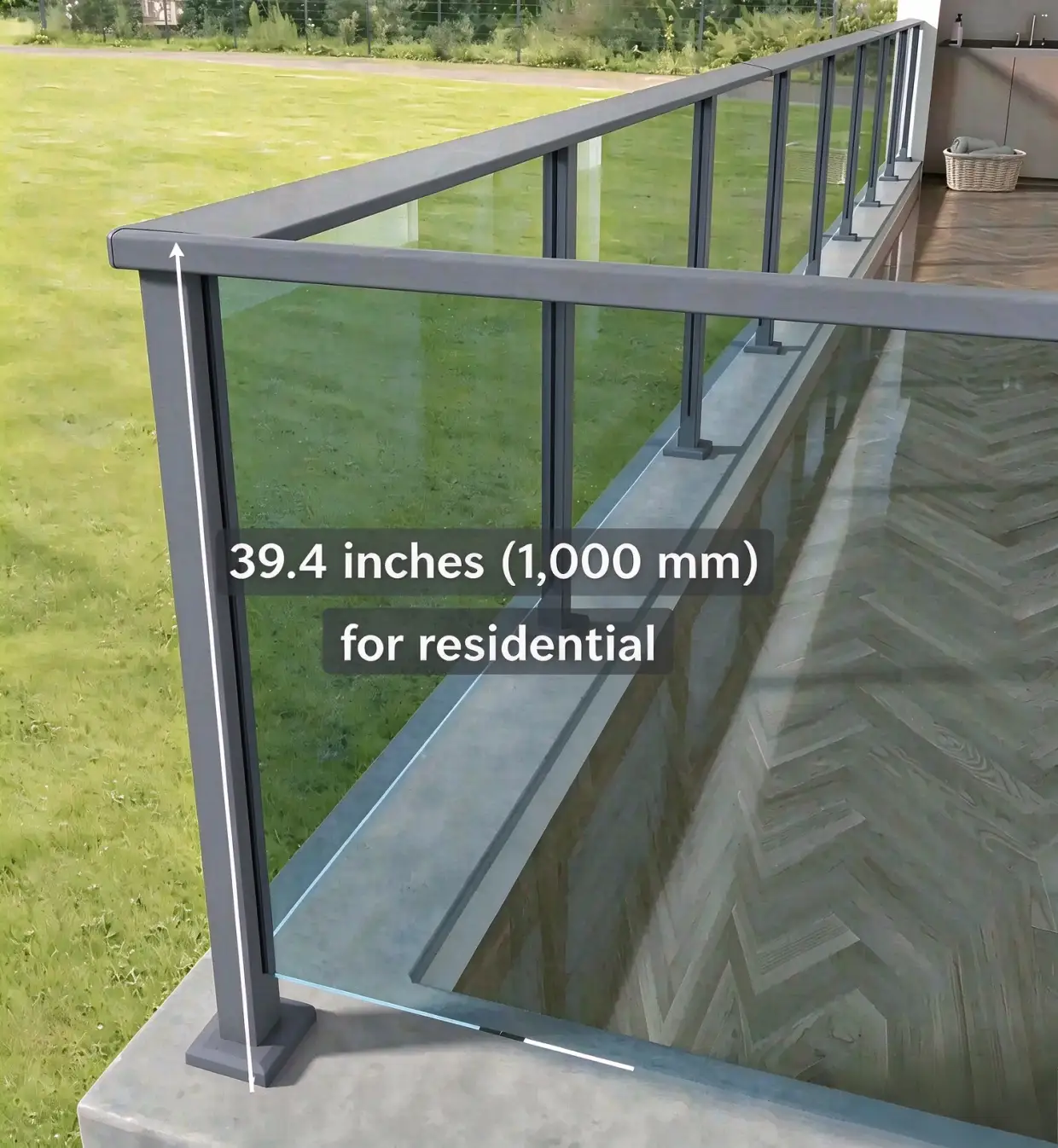
| European Union | 1,000 mm (39.4 in) | 1,100 mm (43.3 in) | EN 1991-1-1 (Eurocode 1) |
Asia Pacific and the Middle East (AU, UAE, MY)
In contrast, the Asia Pacific and Middle East regions often enforce uniform heights for both residential and commercial spaces. Notably, the UAE sets one of the highest global benchmarks due to its density of high-rise buildings.
| Region / Standard | Residential Guard Height | Commercial Guard Height | Key Standard Reference |
|---|---|---|---|
| Australia / NZ | 1,000 mm (39.4 in) | 1,000 mm (39.4 in) | AS 1170.1 / NCC |
| UAE (Dubai / Abu Dhabi) | 1,200 mm (47.2 in) | 1,200 mm (47.2 in) | Dubai Building Code / UAE Fire Code |
| Malaysia | 1,000 mm (39.4 in) | 1,000 mm (39.4 in) | UBBL 1984 |
US Guardrail Height Requirements (IBC, IRC)
If your project is located in the United States, it must comply with local building codes, typically adopting the International Building Code (IBC) oder International Residential Code (IRC).
IBC Commercial Requirements
For instance, the IBC sets guardrail height at 42 inches (1,067 mm) minimum, measured vertically from the walking surface to the top of the guard. Außerdem, it limits openings so that a 4-inch (102 mm) sphere cannot pass through.
IRC Residential Requirements
The IRC governs one- and two-family dwellings and sets guardrail height at 36 inches (914 mm) minimum. Building codes require a guard on any surface located more than 30 inches(762 mm) above the floor or grade below.
EU and UK Guardrail Height Requirements (EN & BS Standards)
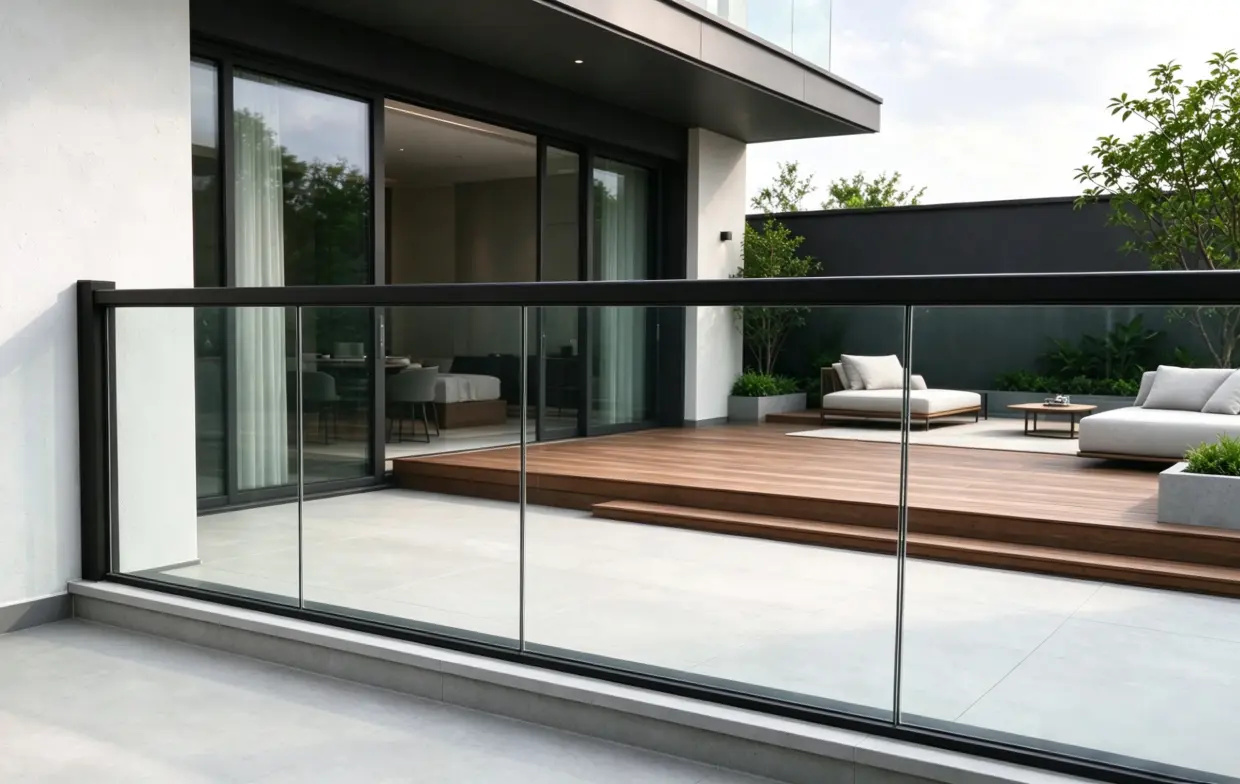
Allerdings, For projects in the EU and UK, guardrail heights are generally higher than in the US.Daher, Glass railings must often meet specific structural requirements under Eurocode 1 (EN 1991-1-1) and BS 6180.
United Kingdom (BS 6180)
Allerdings, if you are building in the UK, BS 6180 and the Building Regulations require a minimum height of 1,100 mm(43.3 inches) for most residential and commercial applications to prevent falls. The load requirement for light access (like domestic balconies) is typically 0.36 kN/m at the top edge, which is lower than the US 200 lbs concentrated load, but the height is significantly higher.
European Union (Eurocode & DIN)
Across the EU, EN 1991-1-1 (Eurocode 1) dictates that guardrails must generally be 1,000 mm (39.4 inches) high for residential and 1,100 mm (43.3 inches) for commercial buildings. Line load requirements are typically 0.5 kN/m to 1.0 kN/m depending on occupancy.
Australian and New Zealand Guardrail Height Standards (AS/NZS)
Additionally,Australia and New Zealand follow the National Construction Code (NCC) and AS 1170.1. The standard height for both residential and commercial barriers is 1,000 mm (39.4 inches). However, for openable windows or specific high-risk areas, it may increase to 1,125 mm (44.3 inches). The uniform load requirement is typically 0.75 kN/m.
Middle East Guardrail Height Requirements (UAE Focus)
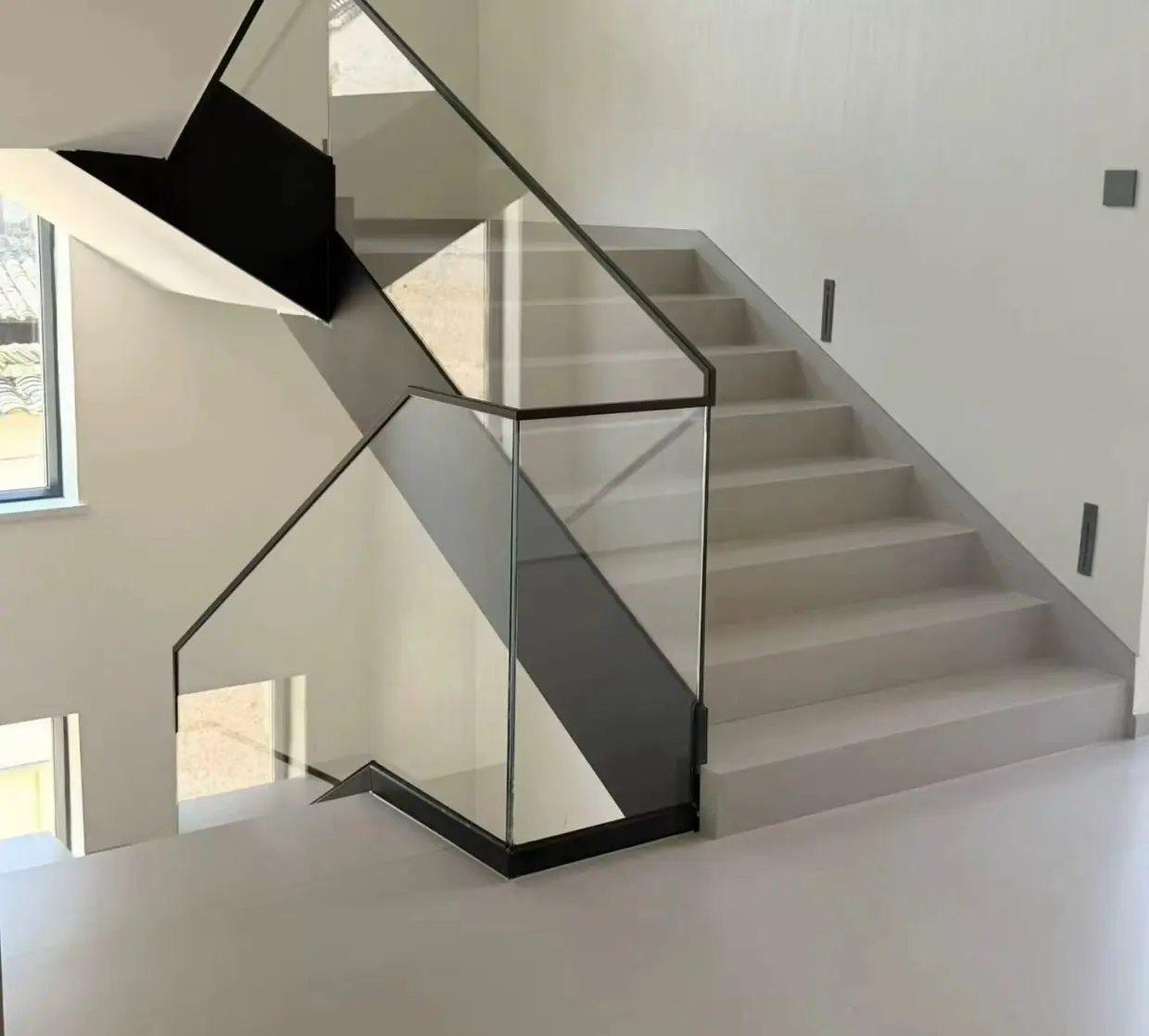
However, in the Middle East has some of the most stringent guardrail height requirements in the world. The UAE, in particular, requires 1,200 mm (47.2 inches) for balcony and terrace railings—significantly higher than the US and EU standards. This is driven by high-rise living density and a strong emphasis on child safety.
UAE (Dubai Building Code & UAE Fire Code)
According to the UAE Fire & Life Safety Code of Practice, guards are required for any space elevated 760 mm (30 inches) above finished grade. The height of balcony, terrace, and elevated space railings shall not be less than 1,200 mm (47.2 inches) measured from the finished floor level. The Dubai Building Code aligns with this requirement, and horizontal climbable elements are prohibited up to 760 mm from the finished floor.
Abu Dhabi
The Abu Dhabi International Building Code and associated design guidelines specify a minimum pedestrian guardrail height of 1,200 mm (47.2 inches) above ground level, consistent with the broader UAE approach.
Southeast Asia Guardrail Height Requirements
Southeast Asia has a mix of national codes and local amendments. Therefore, determining the exact height can be complex. However, Malaysia provides the clearest benchmark for the region.
Malaysia (UBBL 1984)
Under Malaysia’s Uniform Building By-Laws 1984 (UBBL), balcony railings in tall buildings cannot be less than 1 metre (1,000 mm) high. Because this rule is strictly enforced by local authorities, it applies broadly to residential high-rise buildings.
Singapore and Thailand
Singapore and Thailand also have strict safety mandates. For example, Singapore’s Building Control Act and Thailand’s Building Control Act both require fall protection barriers. However, the exact numeric heights are often specified in subsidiary regulations rather than the main act.
Indonesia and the Philippines
Similarly, Indonesia and the Philippines maintain their own local building codes. Because regulations can vary by city or project type, always verify the height requirement directly with the local building authority before specifying glass railing systems.
The Universal 4-Inch (102 mm) Sphere Rule
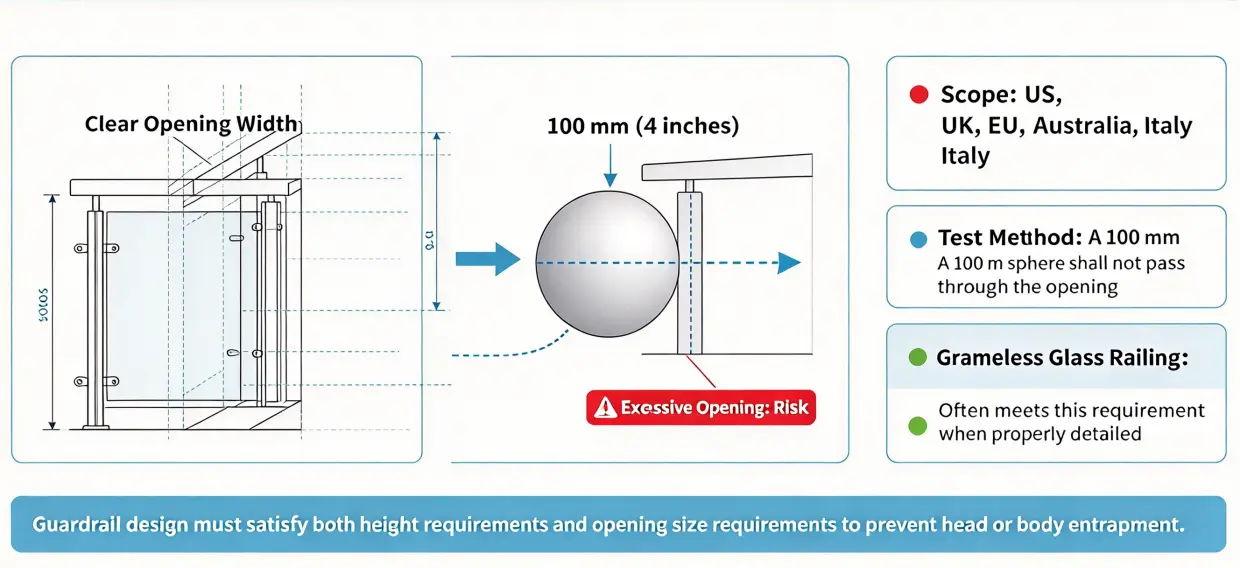
Despite the differences in height, most global building codes (including US, UK, EU, and AU) adopt a 100 mm to 102 mm (4-inch) sphere rule for guardrail openings. This ensures that a small child cannot pass through the barrier. Because of this,Frameless glass railings inherently satisfy this requirement because the panels are continuous.
Global Stair Guardrail Height Rules
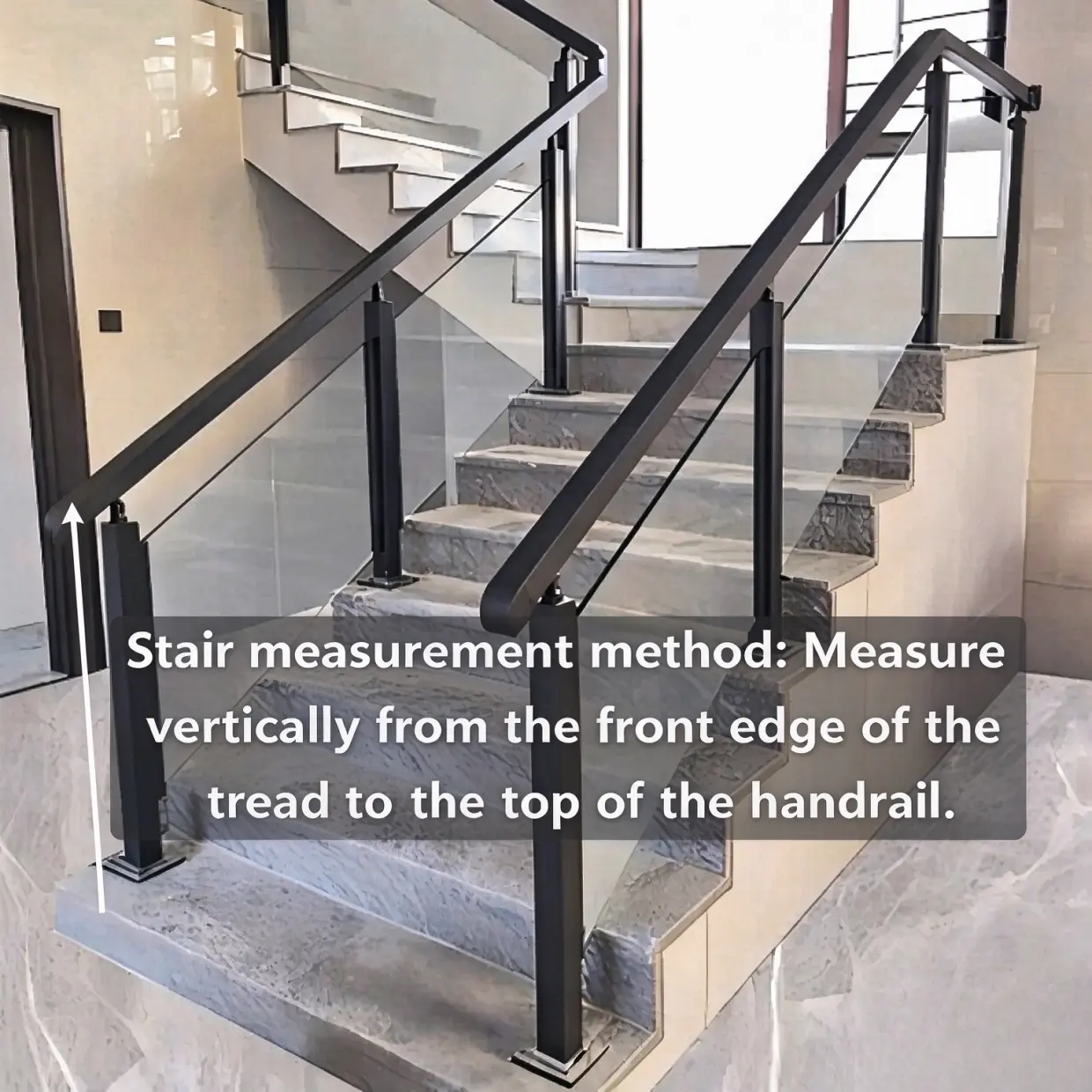
Stair handrails are distinct from horizontal guards. Zum Beispiel, on stairs, the height is measured vertically from the nosing of the tread to the top of the rail. Außerdem, this required height varies globally:
-
US: 34 inches (864 mm)
-
EU/UK: 900 mm to 1,000 mm
-
Australia: 865 mm to 1,000 mm
-
Middle East (UAE): 900 mm to 1,100 mm (varies by emirate and project type)
While meeting these height requirements is mandatory, the cost of these systems varies widely. See our full breakdown of Die Kosten für Glasgeländer pro linearem Fuß to budget your project.
Guardrail Height FAQ
Q: Which countries use the 42-inch (1,067 mm) guardrail standard?
A:The 42-inch standard is mainly used in the US for commercial buildings (IBC). The UK and EU use slightly taller metric equivalents (1,100 mm), while the UAE requires 1,200 mm.
Q: What is the difference between a guardrail and a handrail?
A:A guardrail prevents falls from elevated surfaces (e.g., 36–42 inches in the US). A handrail provides a graspable surface on stairs (e.g., 34 inches in the US). Both may be required.
Q: How is guardrail height measured correctly?
A:Measure from the finished walking surface to the top of the guard. On stairs, measure vertically from the nosing to the top of the rail. Never measure from the subfloor.
Q: How do I ensure my glass railing meets global standards?
A:Verify local standards. Glass systems must meet specific load requirements (e.g., ASTM E2353 in the US, EN 12150 in the EU). Ensure glass thickness is engineered for regional wind loads.
Q: Which region has the highest guardrail height requirement?
A:The UAE (Middle East) currently has one of the highest minimum requirements at 1,200 mm (47.2 inches) for balconies and terraces, driven by high-rise safety concerns and child protection regulations.
Fazit
Ultimately, global guardrail height requirements vary significantly: the US requires 36 to 42 inches (914 to 1,067 mm), while he EU requires 1,000 to 1,100 mm, Australia requires 1,000 mm, and the UAE requires 1,200 mm (47.2 inches). Malaysia sets the benchmark for Southeast Asia at 1,000 mm. However, the universal principle remains the same: barriers must prevent falls and block a 100–102 mm sphere.
for glass railing installations specifically, continuous panels automatically satisfy the sphere rule, making glass an ideal material for international projects. However, the load requirements—such as 200 lbs concentrated (US) or 0.36–1.0 kN/m uniform (EU/UK)—are the real engineering constraints. Before exporting or installing, verify local amendments and confirm the glass thickness and mounting system meet regional standards (e.g., ASTM E2353 standard in the US, EN 12150 in Europe).
With precision manufacturing equipment, rigorous quality control, and a complete quality assurance system, Meizhong Staircase delivers a variety of high-quality, cost-effective glass railings that can be customized to meet regional codes worldwide, including the strict 1,200 mm requirements in the Middle East. Contact us today for a quote!