

Wooden stair stringers are the angled structural board that carries the entire load of the staircase—treads, risers, railing, and every person who walks up and down. If the wooden stair stringer is undersized, over-notched, or poorly attached, the stair will flex, squeak, or fail inspection.
What Is a Wooden Stair Stringer?
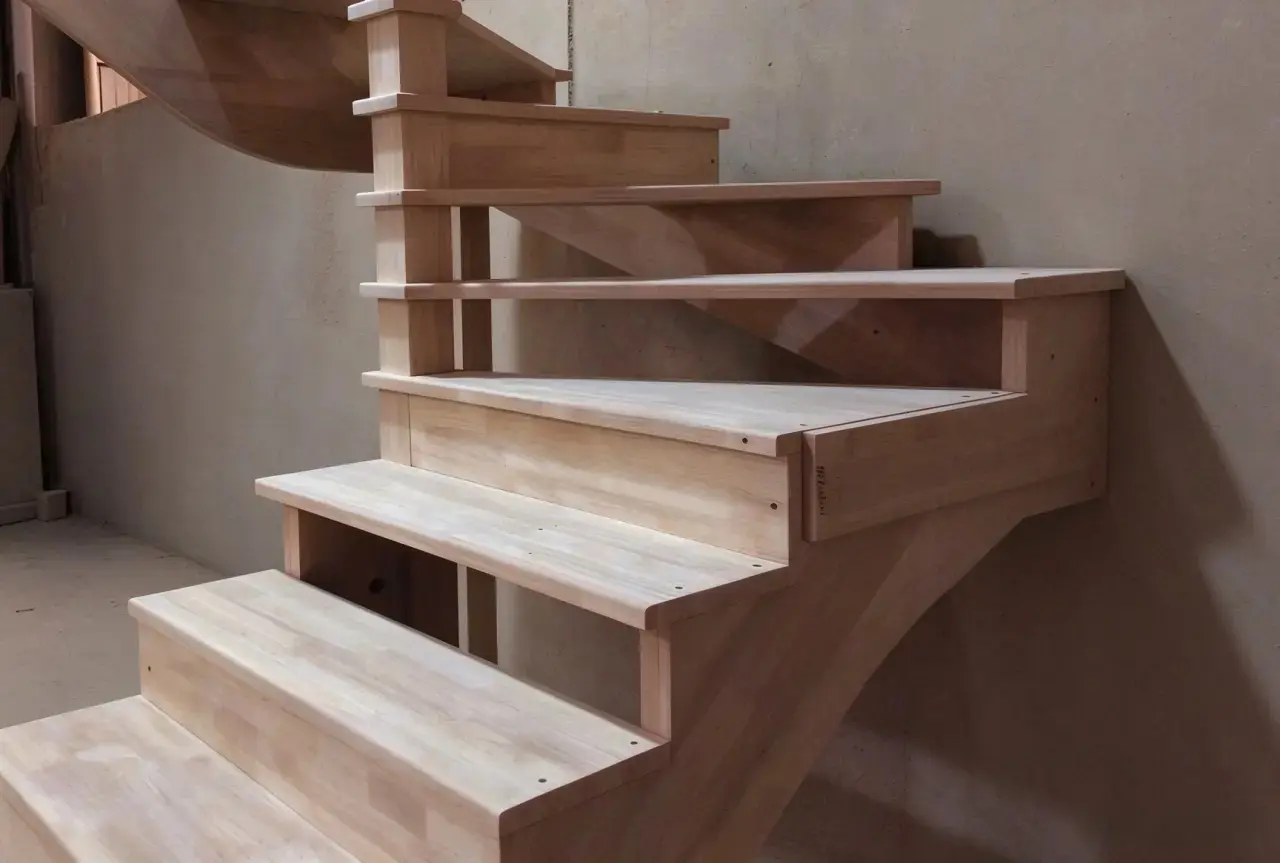
A wooden stair stringer is the inclined member that runs along each side of the stair (and sometimes down the center on wider stairs), notched to receive treads and risers. It transfers the stair load to the floor framing above and below. Most residential stairs use two wooden stair stringers, one on each side; stairs wider than about 36 in (914 mm) often require a third center wooden stair stringer.
The term is sometimes confused with “stringer” in deck framing, but wooden stair stringers are distinct: they are cut to a repeating pattern that matches the stair’s rise and run, and they must be cut from a single board—splicing a wooden stair stringer is not permitted.
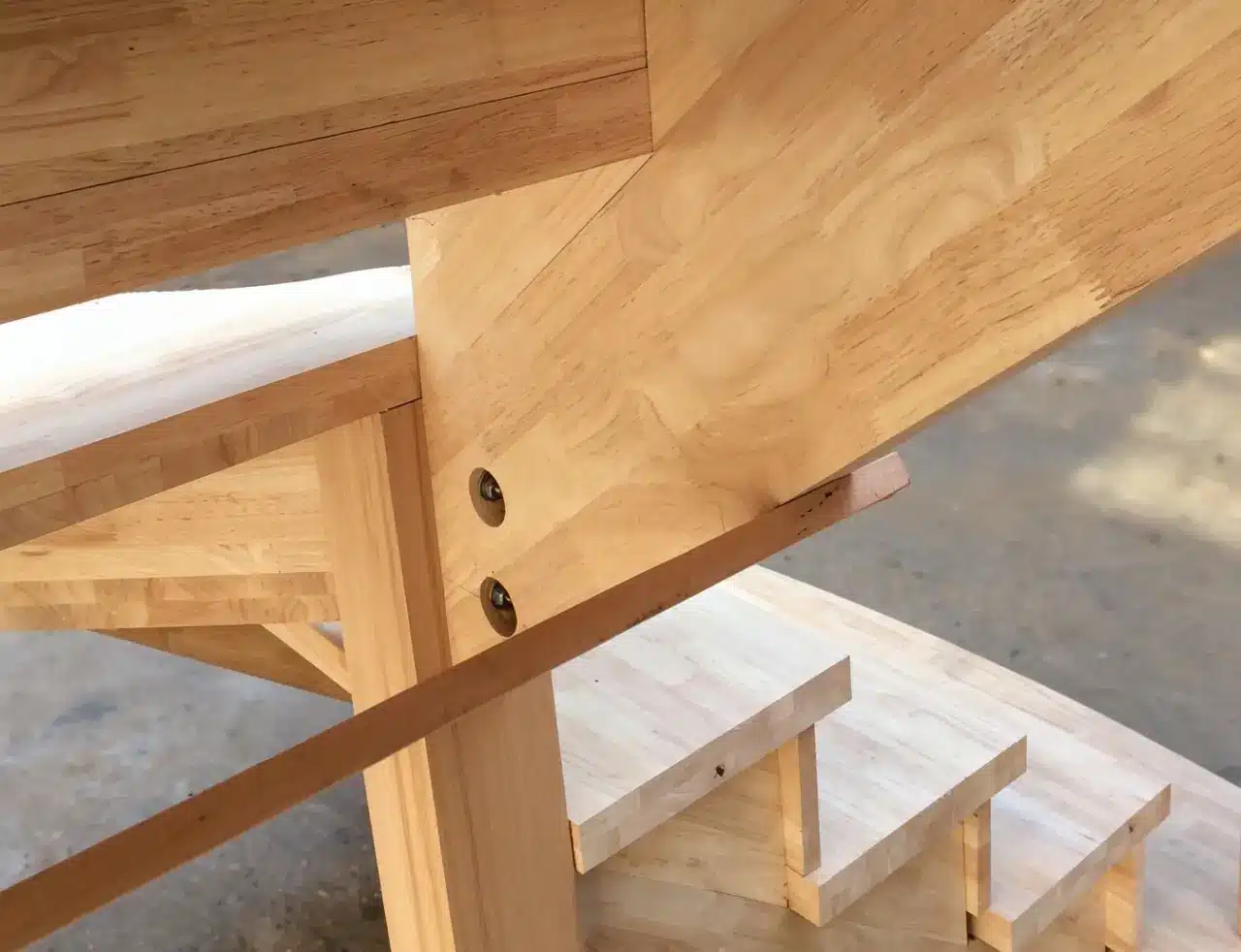
Types of Wooden Stair Stringer
Wooden stair stringer type affects both structure and appearance. The table below compares the four types most common in U.S. residential work.
Table 1: Wooden Stair Stringer Types — Structure and Appearance
| Type | How It Works | Giao diện | Tốt nhất cho |
|---|---|---|---|
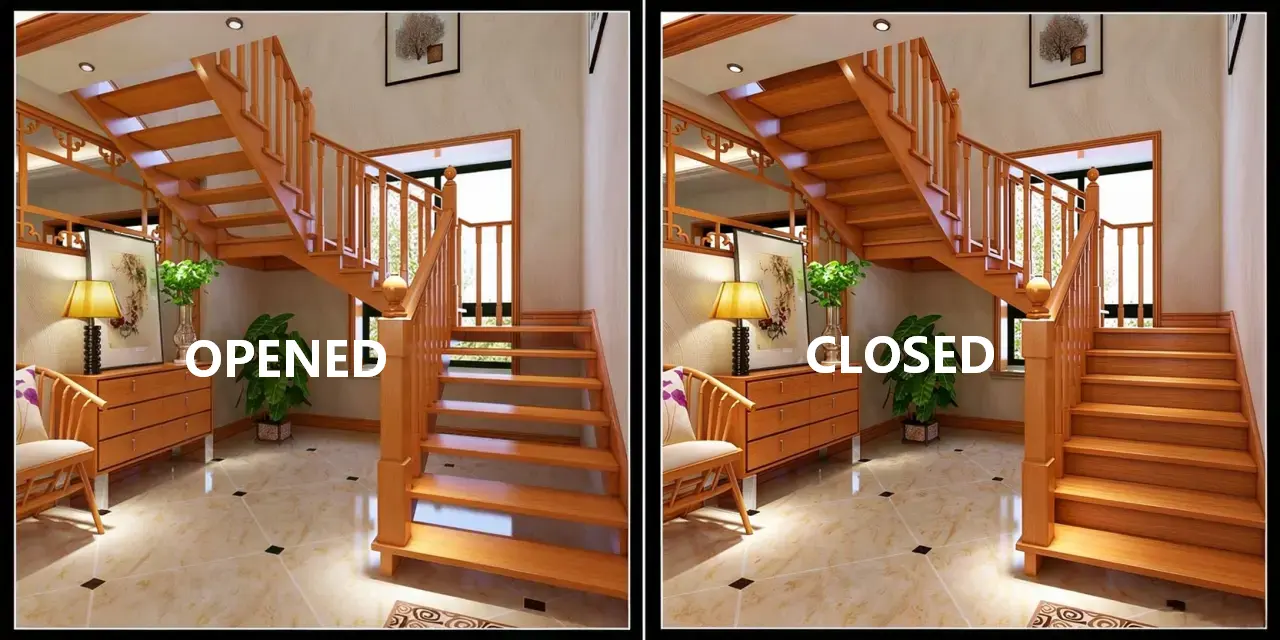
| Closed (housed) | Treads and risers sit in grooves cut into the board; no exposed ends | Clean, continuous line | Traditional homes, painted stairs |
| Open (sawtooth) | Top edge cut in a repeating step pattern; tread and riser ends visible | Architectural, exposed construction | Contemporary and loft interiors |
| Mono | Single central beam under treads; no visible side support | Steps appear to float | Modern high-end homes |
| Twin | Two beams, one per side, supporting open or closed treads | Balanced, versatile | Most residential and commercial stairs |
Closed wooden stair stringers hide hardware and suit painted or stained finishes where a continuous line is desired. Open wooden stair stringers expose the construction and are common in modern homes where the stair is a design feature. Mono wooden stair stringers require engineering because a single beam carries the full load. Twin wooden stair stringers are the default for most residential builds.
Wooden Stair Stringer Dimensions and Span Rules
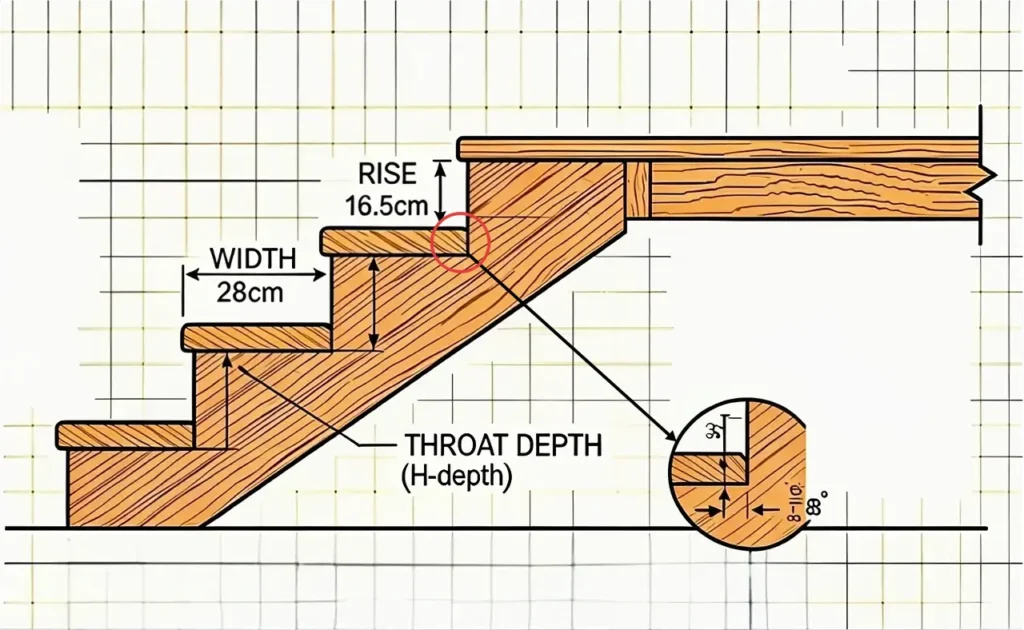
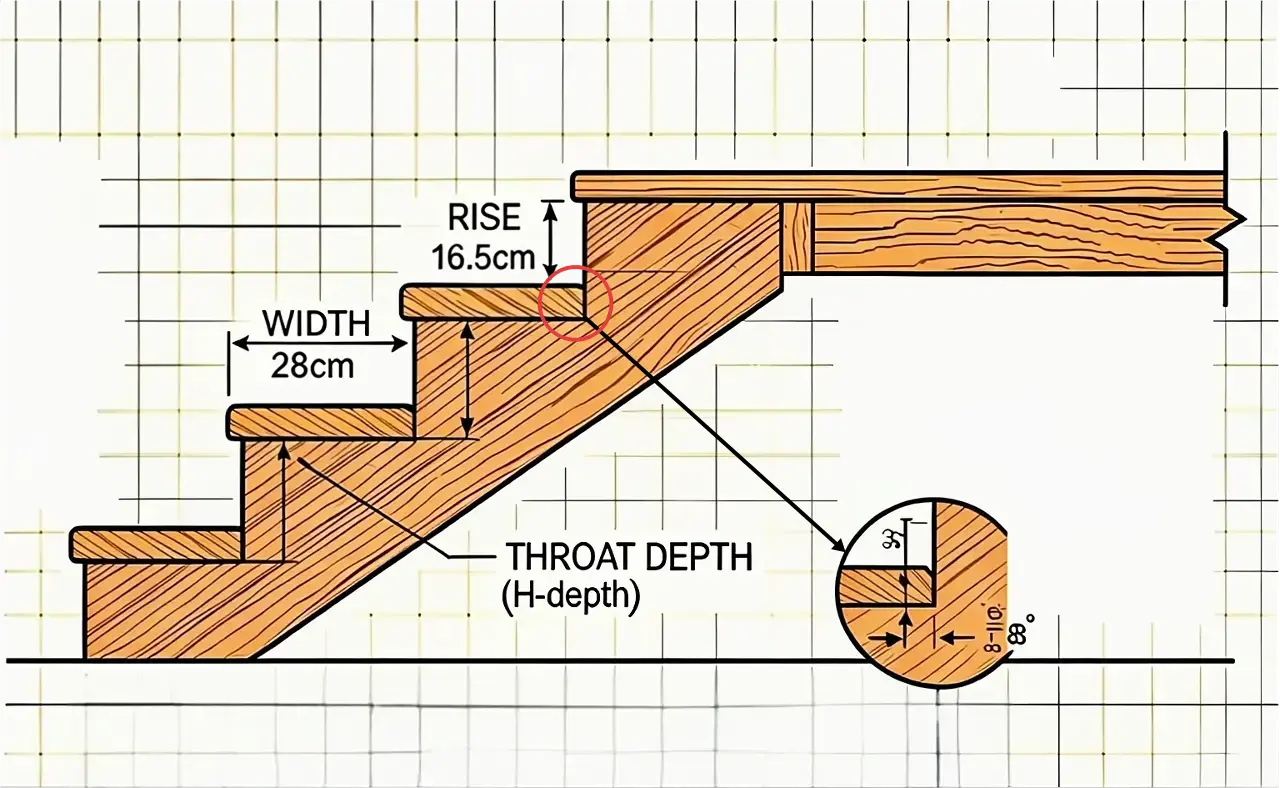
Wooden stair stringer size is governed by three variables: the depth of the board, the remaining “throat” after notching, and the span between supports. A common mistake is over-notching a 2×12: if the remaining throat drops below 3.5 in (89 mm), the board is too weak and will flex or split.
For engineered lumber wooden stair stringers, span tables are published by manufacturers. As a reference point, a 1¼ in (32 mm) LVL wooden stair stringer at 11¾ in (298 mm) depth can span up to about 9 ft 2 in (2,794 mm) under 40 psf live load with two wooden stair stringers at 36 in (914 mm) tread width, without reinforcement. At 100 psf live load (commercial), the same depth spans about 6 ft 5 in (1,956 mm).
Table 2: Reference Span Ranges for LVL Wooden Stair Stringers (40 psf Live Load)
| Stringer Depth | 2 Wooden Stair Stringers, 36 in Tread | 3 Wooden Stair Stringers, 42 in Tread | Ghi chú |
|---|---|---|---|
| 9¼ in (235 mm) | ~4 ft 7 in (1,397 mm) | ~5 ft 6 in (1,676 mm) | Short runs, deck stairs |
| 11¾ in (298 mm) | ~8 ft 3 in (2,515 mm) | ~9 ft 2 in (2,794 mm) | Typical residential interior |
| 14 in (356 mm) | ~11 ft 11 in (3,632 mm) | ~13 ft 9 in (4,191 mm) | Long runs, check headroom |
These are reference points, not design tables. Always verify against the manufacturer’s published span table and your local code. Deflection limits are typically L/360 for live load and L/240 for total load.
How to Measure and Cut Wooden Stair Stringers
Cutting a wooden stair stringer is a layout problem, not a cutting problem. The most common failure is skipping the layout check and cutting directly from a calculated number that has not been verified against the actual floor-to-floor height.
- Measure total rise from finished floor to finished floor, including flooring thickness.
- Divide by target riser height (7–7½ in / 178–191 mm for most U.S. residential stairs) to get the number of risers. Round to the nearest whole number.
- Calculate the exact riser height by dividing total rise by the number of risers. Do not assume the target height.
- Calculate total run using tread depth (10 in / 254 mm minimum in the U.S.; check regional differences in Table 3).
- Lay out the wooden stair stringer with a framing square and stair gauges, marking riser and tread cuts.
- Check throat depth before cutting; if it drops below 3.5 in (89 mm), use a deeper board or redesign.
- Cut and test-fit before installing. A wooden stair stringer cannot be spliced.
For the full step-by-step method including wooden stair stringer layout math and cutting diagrams, see the dedicated guide on how to cut wooden stair stringers. For the broader build sequence, see how to build stairs.
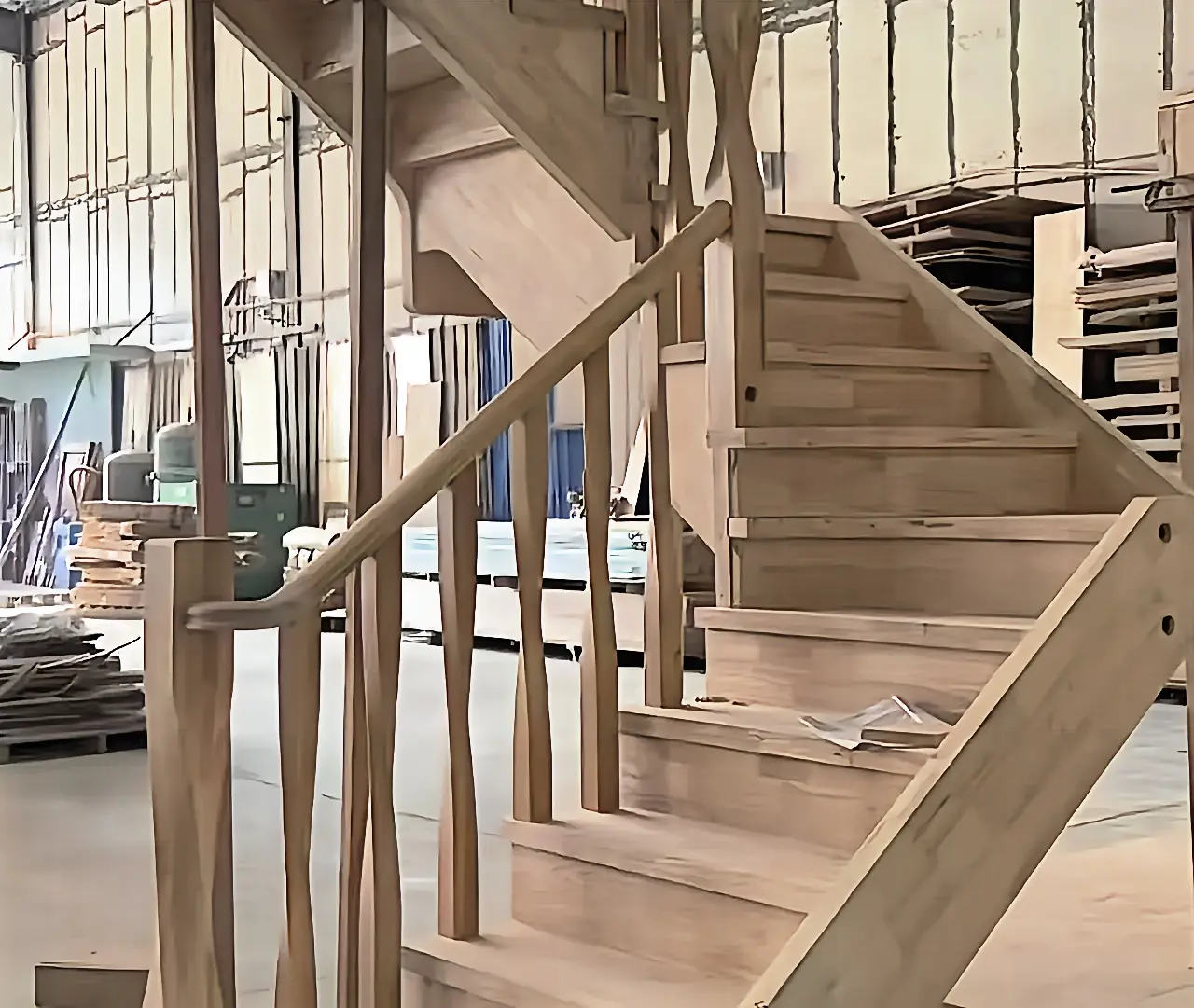
Code Limits That Affect Wooden Stair Stringer Design
Wooden stair stringer design is constrained by the stair code of the jurisdiction. The table below flags the limits most likely to affect wooden stair stringer layout and sizing.
Table 3: Stair Code Limits Affecting Wooden Stair Stringer Design
| Limit | USA (IRC) | UK (Part K, private) | Australia (NCC 2022) | UAE (Dubai, ADIBC) | Singapore (BCA) |
|---|---|---|---|---|---|
| Max riser | 7¾ in (197 mm) | 8⅝ in (220 mm) | 7½ in (190 mm) | 7¾ in (197 mm) | 6⅞ in (175 mm) |
| Min tread | 10 in (254 mm) | 8⅝ in (220 mm) | 9⅞–14 in (250–355 mm) | 10 in (254 mm) | 8⅞ in (225 mm) |
| Max risers per flight | No single cap; landing at 12 ft (3.7 m) vertical | 12 risers | 18 risers | No single cap in residential excerpts | 18 risers |
A stair designed to Singapore’s 175 mm (6⅞ in) riser cap will need more risers—and therefore a longer wooden stair stringer run—than the same floor-to-floor height in the UK at 220 mm (8⅝ in). Check the regional cap before calculating wooden stair stringer length.
Buying Guide: Lumber Grade, Species, and Steel Options
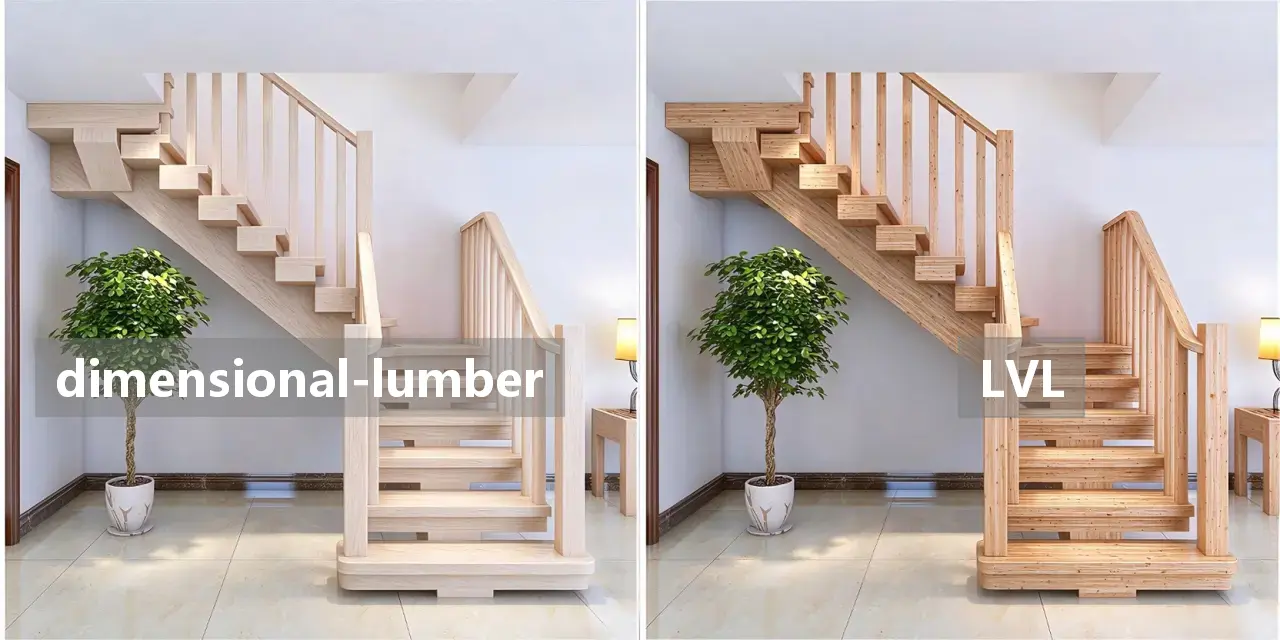
Wooden stair stringers are typically cut from 2×10 or 2×12 dimensional lumber for short to medium runs, or from LVL (laminated veneer lumber) for longer spans and consistent strength. Steel stringers are used for mono-stringer floating designs and commercial work.
Table 4: Wooden Stair Stringer Material Cost Ranges per Flight (USD equivalent, materials only)
| Option | USA | UK | Úc | UAE | SE Asia |
|---|---|---|---|---|---|
| 2×12 PT pine, pair | $60–$120 | £50–£100 (~$63–$125) | AU$90–$180 (~$59–$117) | AED 220–440 (~$60–$120) | RM 250–500 (~$56–$112) |
| LVL 1¼ in, pair | $150–$300 | £120–£240 (~$150–$300) | AU$230–$460 (~$150–$299) | AED 550–1,100 (~$150–$300) | RM 650–1,300 (~$145–$290) |
| Prefab steel pair, 36 in width | $180–$320 | £150–£270 (~$188–$338) | AU$280–$490 (~$182–$319) | AED 660–1,175 (~$180–$320) | RM 780–1,390 (~$174–$310) |
These ranges exclude treads, hardware, labor, and engineering. A mono-stringer steel design typically requires structural engineering sign-off, which adds cost. For the full stair cost picture including treads and railing, see the staircase cost guide.
Câu hỏi thường gặp
Q1: Can I use a 2×10 instead of a 2×12 for wooden stair stringers? Only for short runs. A 2×10 (9¼ in actual depth) leaves less throat after notching. If the remaining throat drops below 3.5 in (89 mm), the wooden stair stringer is too weak. For most interior stairs, 2×12 is the safer default.
Q2: How many wooden stair stringers do I need for a 48-inch wide stair? At 48 in (1,219 mm) width, three wooden stair stringers are typically required—one on each side and one center. Span tables for LVL and engineered lumber are published for 2-stringer and 3-stringer configurations.
Q3: Can I splice a wooden stair stringer if the board is too short? No. A wooden stair stringer must come from a single board. Splicing creates a weak point at the joint that will flex and may fail under load.
Q4: What is the minimum throat depth for a wooden stair stringer? About 3.5 in (89 mm) of remaining material below the notch. Below that, the wooden stair stringer is too weak and will flex or split under load.
Conclusion + CTA
Wooden stair stringer design comes down to three numbers: riser height, tread depth, and remaining throat. Get those right, cut from a single board, and verify span against the manufacturer’s table before installation. The wooden stair stringer is the part of the stair you never see after completion—but it is the part everything else depends on.
Before you cut, confirm the code limits in your region using the stair code checklist. For wooden stair stringer layout math and cutting diagrams, see how to cut wooden stair stringers. To compare material costs across the full stair, use the staircase cost guide.