

Metal handrails for outdoor steps provide reliable support while withstanding exposure to weather, moisture, and temperature changes. They are a practical choice for outdoor applications because metal resists rot, pests, and many of the maintenance issues associated with wood. However, different metals offer different levels of strength, corrosion resistance, durability, and maintenance requirements, so choosing the right material is important for long-term outdoor performance.
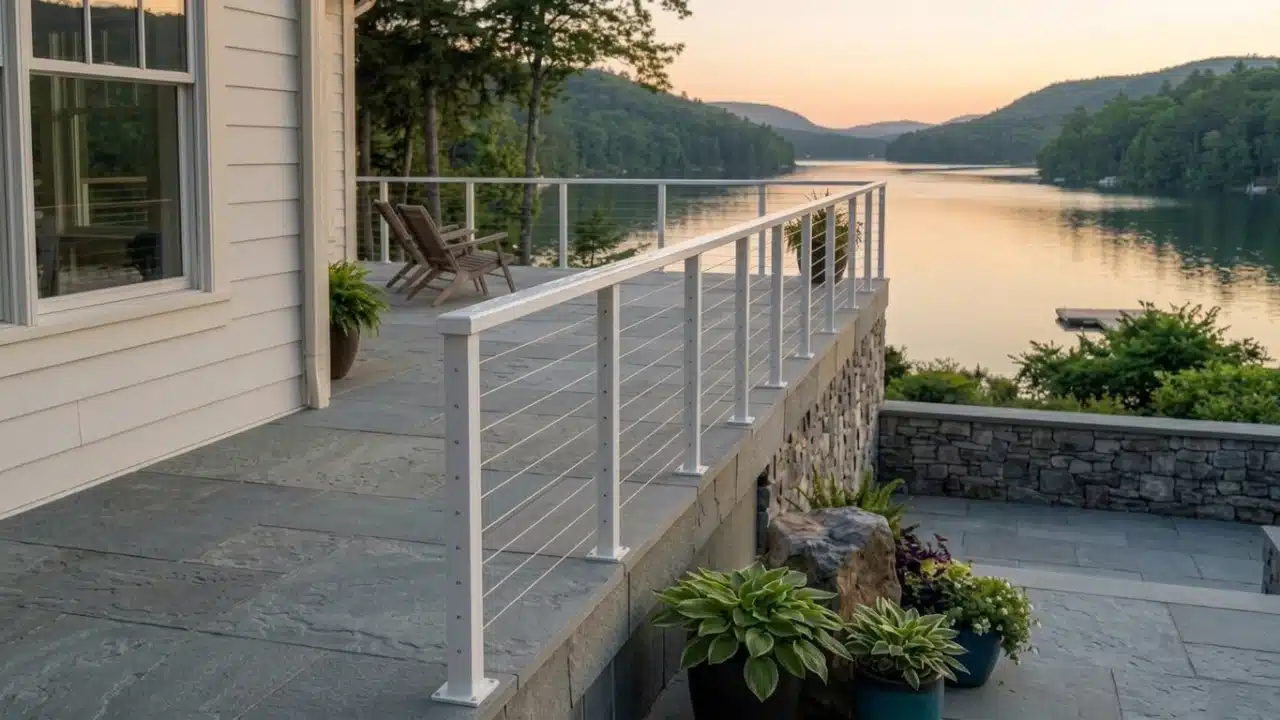
This guide compares the main metal options for outdoor stair handrails—aluminum, steel, and wrought iron—and covers cost factors, installation considerations, and maintenance requirements. It focuses on the outdoor-specific aspects of metal handrails. For the general stair railing installation process, see our guide to putting up a stair railing.
This article is part of our comprehensive Ultimate Guide to Handrails.
Why Choose Metal for Outdoor Steps?
Wood handrails can work outdoors, but they require regular sealing, painting, or staining to prevent rot and deterioration. Metal handrails avoid many of these issues:
-
Rot resistance: Metal does not rot, decay, or attract insects.
-
Dimensional stability: Metal does not expand and contract with humidity changes in the same way wood does.
-
Low maintenance: Most metal handrails require only occasional cleaning.
-
Strength: Metal can provide strong support with relatively slim profiles.
The trade-off is that metal can corrode if the wrong material or finish is selected for the environment. Coastal areas, high-humidity climates, and regions with freeze-thaw cycles require more careful material selection.
Aluminum Handrails
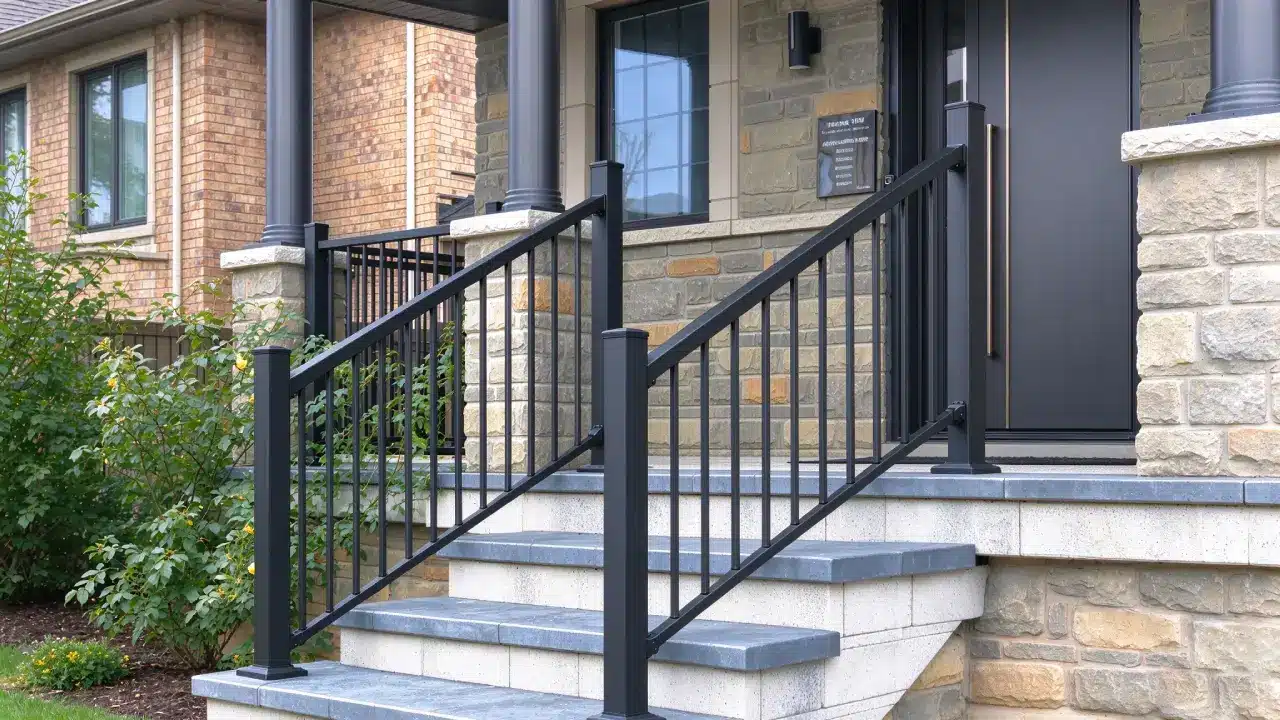
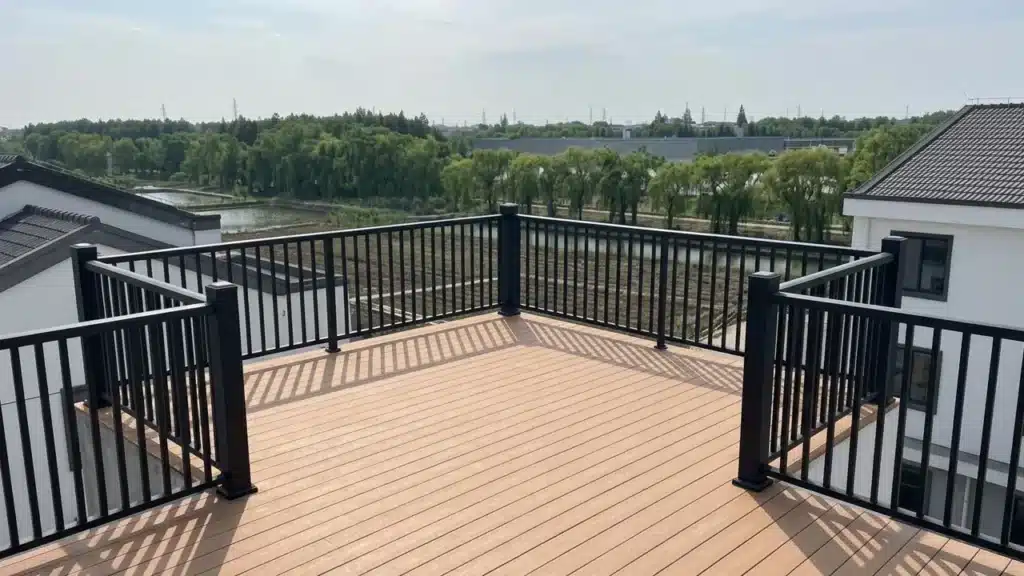
Aluminum is one of the most popular metals for outdoor handrails, especially in residential applications.
Advantages:
-
Naturally corrosion-resistant.
-
Lightweight, which makes installation easier.
-
Available in powder-coated finishes in many colors.
-
Lower cost than stainless steel or wrought iron.
Considerations:
-
Aluminum is softer than steel and can dent under impact.
-
Powder coating can chip, exposing the aluminum underneath.
-
Standard aluminum may not be suitable for harsh coastal environments without additional protection.
Aluminum is a good choice for covered porches, residential entry steps, and moderate climates. For coastal installations, confirm the coating system and alloy with the manufacturer.
Steel Handrails
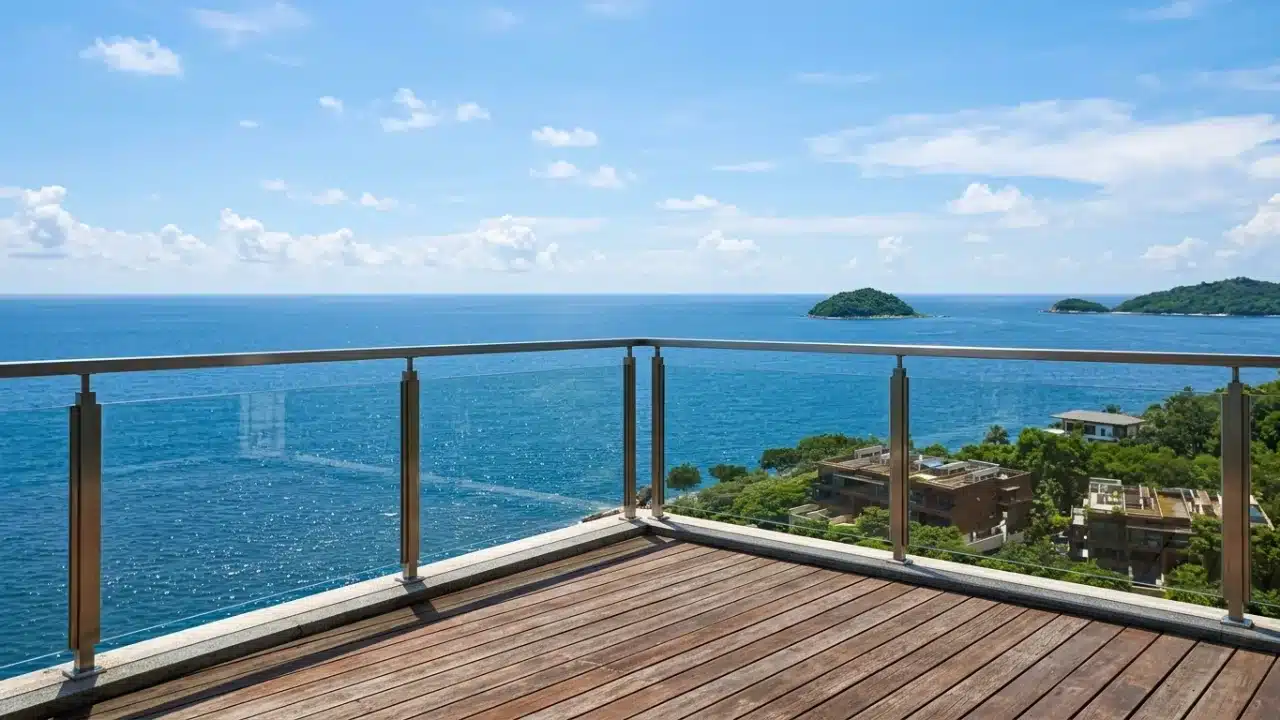
Steel is stronger and stiffer than aluminum. For outdoor applications, the key question is corrosion protection.
Acero al carbono will rust if exposed to moisture without protection. It requires a durable coating system—powder coating, galvanizing, or paint—and regular inspection for coating damage.
Acero inoxidable contains chromium, which provides inherent corrosion resistance. Stainless steel handrails are common in commercial and high-end residential outdoor applications. However, not all stainless steel grades perform equally outdoors. Marine-grade stainless steel (such as 316) offers better resistance to salt and chlorides than standard grades.
Steel handrails are heavier than aluminum and require more substantial mounting. The additional weight can be an advantage for stability but adds installation effort.
Wrought Iron Handrails
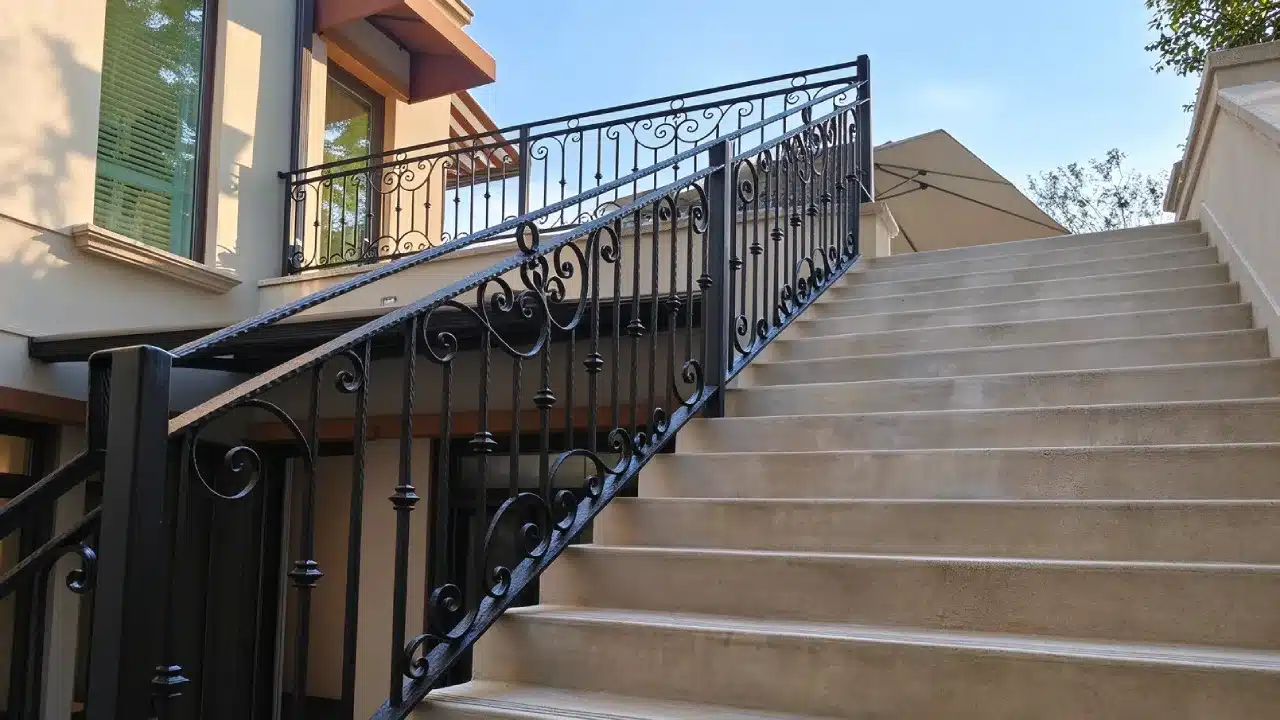
Wrought iron is a traditional material for decorative outdoor railings. It is strong and can be formed into ornamental shapes.
Advantages:
-
Durable and long-lasting.
-
Traditional appearance suited to period properties and formal landscapes.
-
Can be repaired by welding if damaged.
Considerations:
-
Heavier than aluminum.
-
Requires regular maintenance—typically repainting—to prevent rust.
-
More expensive than aluminum or standard steel.
-
Genuine wrought iron is less common today; many “wrought iron” products are actually mild steel.
If you choose a wrought iron-look handrail, confirm the actual material and the required maintenance schedule.
Cost Comparison for Outdoor Metal Handrails
Costs vary by region, material grade, finish, and installation complexity. The following ranges are general budgeting estimates for materials, not fixed quotes.
| Material | Typical Material Cost (per linear foot) | Maintenance Level |
|---|---|---|
| Aluminio | $40–$60 | Bajo |
| Steel (carbon, coated) | $40–$60 | Medium |
| Acero inoxidable | $60–$120+ | Low to medium |
| Wrought Iron | $50–$120 | Medium to high |
These figures are for the handrail material only. Installation labor, anchors, base plates, and any custom fabrication add to the total project cost.
For a short set of porch steps, a prefabricated metal handrail kit may be the most economical option. For longer runs or custom configurations, fabricated or modular systems are more suitable.
Installation Considerations for Outdoor Metal Handrails
Metal handrails for outdoor steps are typically mounted in one of two ways:
-
Surface-mounted: The handrail posts are anchored to the concrete or wood surface of the steps.
-
Wall-mounted: The handrail is attached to a wall or structural surface beside the steps.
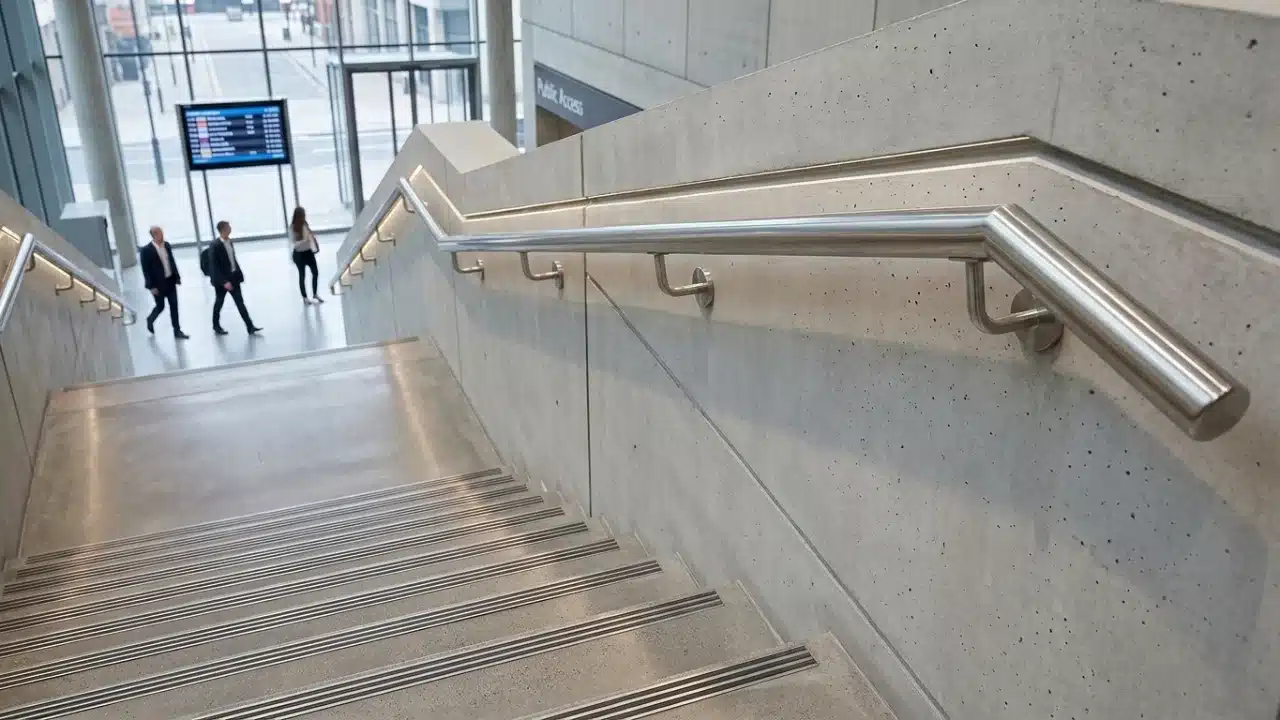
For concrete steps, the anchors must be suitable for concrete and appropriate for outdoor exposure. For wood steps, confirm that the structural framing can support the handrail loads.
Outdoor installations also require attention to:
-
Drainage: Water should not pool around base plates or anchors.
-
Sealant: Base plates should be sealed to prevent water intrusion.
-
Thermal movement: Metal expands and contracts with temperature changes. Connections should allow for minor movement without loosening.
For detailed instructions on anchoring to concrete, see our guide to how to secure a handrail to concrete.
Maintenance for Outdoor Metal Handrails
Maintenance requirements depend on the material:
Aluminum: Clean with mild soap and water. Inspect powder coating for chips or scratches. Touch up if needed.
Steel (coated): Inspect the coating regularly. Repair any damage to prevent rust. Touch up paint or powder coat as needed.
Stainless Steel: Clean regularly to remove dirt and salt deposits. In coastal areas, more frequent cleaning may be needed to prevent surface corrosion.
Wrought Iron: Inspect for rust and repaint as needed. Address any coating damage promptly.
Preguntas frecuentes
Q: What is the best metal for outdoor handrails?
A: Aluminum is a practical choice for most residential outdoor applications because it is corrosion-resistant, lightweight, and relatively affordable. Stainless steel is better for coastal or high-humidity environments but costs more. Wrought iron offers a traditional look but requires more maintenance.
Q: Do metal handrails get hot in the sun?
A: Yes. Dark-colored metal handrails can become uncomfortably hot in direct sunlight. Lighter colors or wood-topped handrails can reduce this issue.
Q: Can I install a metal handrail on concrete steps myself?
A: A straightforward surface-mounted metal handrail on concrete can be a DIY project if you have the right tools, including a hammer drill and masonry bits. For complex installations or uncertain concrete conditions, professional installation is recommended.
Q: How long do outdoor metal handrails last?
A: With proper material selection, installation, and maintenance, aluminum and stainless steel handrails can last many years. Wrought iron and coated steel require more maintenance to achieve a similar lifespan.
Conclusión
Metal handrails are a durable, low-maintenance option for outdoor steps. Aluminum is a practical all-around choice for most residential applications. Stainless steel is better suited to harsh or coastal environments. Wrought iron offers a traditional appearance but requires more ongoing care.
The right choice depends on your climate, budget, maintenance preferences, and the architectural style of your property. For installation guidance specific to concrete steps, see our guide to how to secure a handrail to concrete. For a broader overview of railing installation, read putting up a stair railing.