

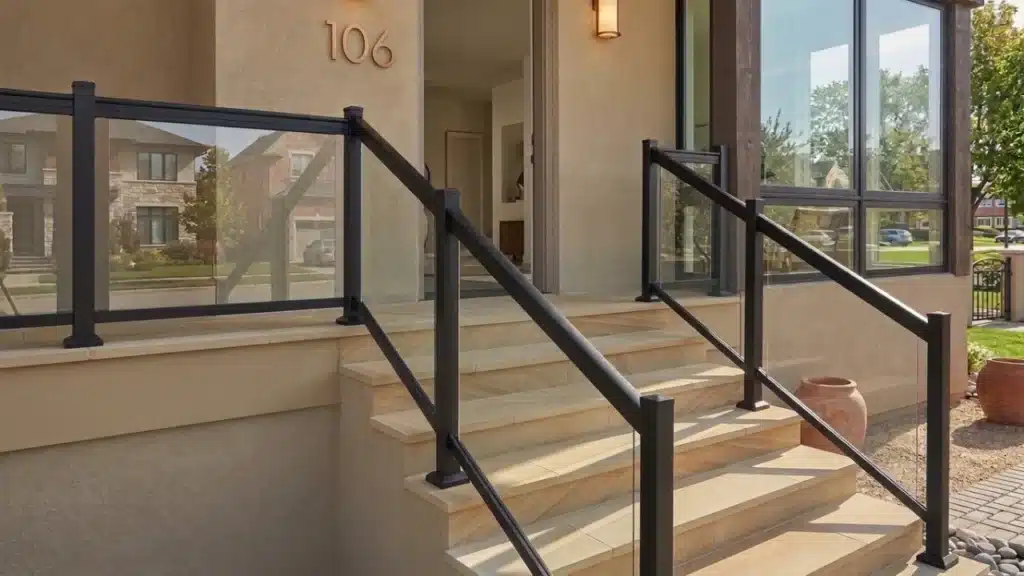
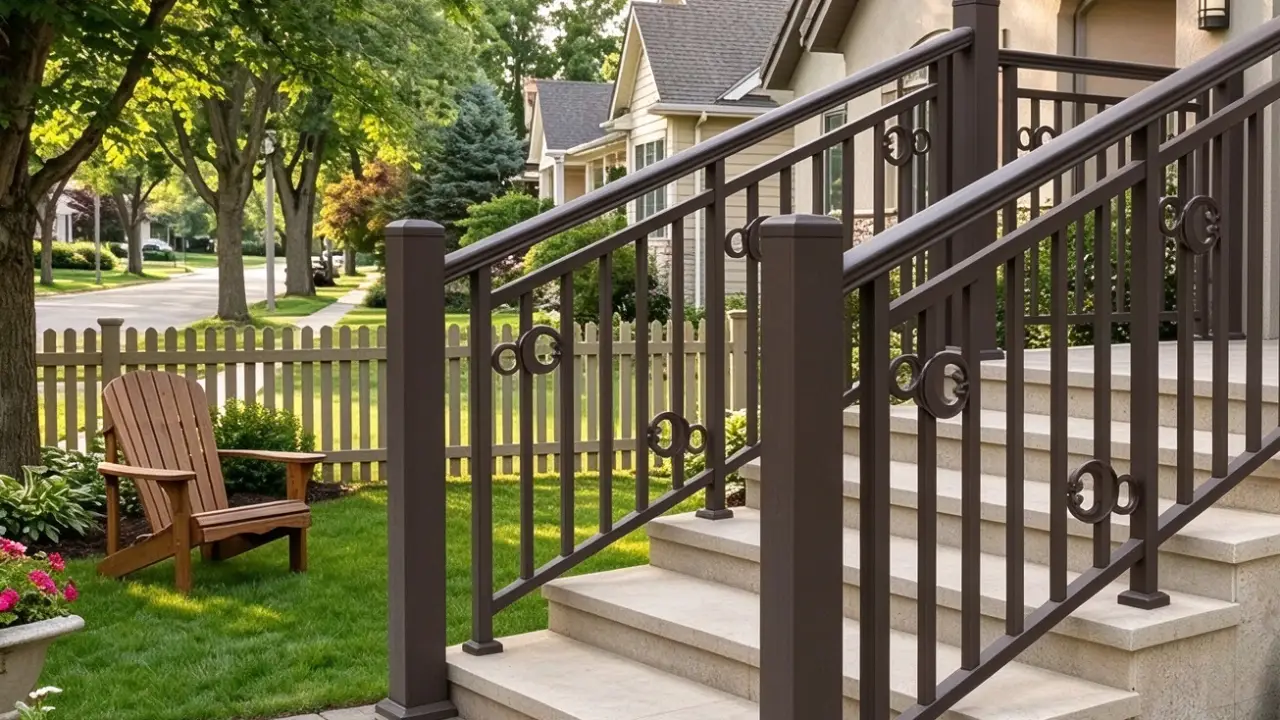
Aluminum handrails for outdoor steps are a practical choice for homeowners looking for a lightweight, corrosion-resistant, and low-maintenance railing solution. Compared with carbon steel, aluminum does not rust in the same way, and it is lighter than wrought iron. It also generally costs less than stainless steel, making it a good balance of durability, cost, and maintenance for many residential outdoor stairways.
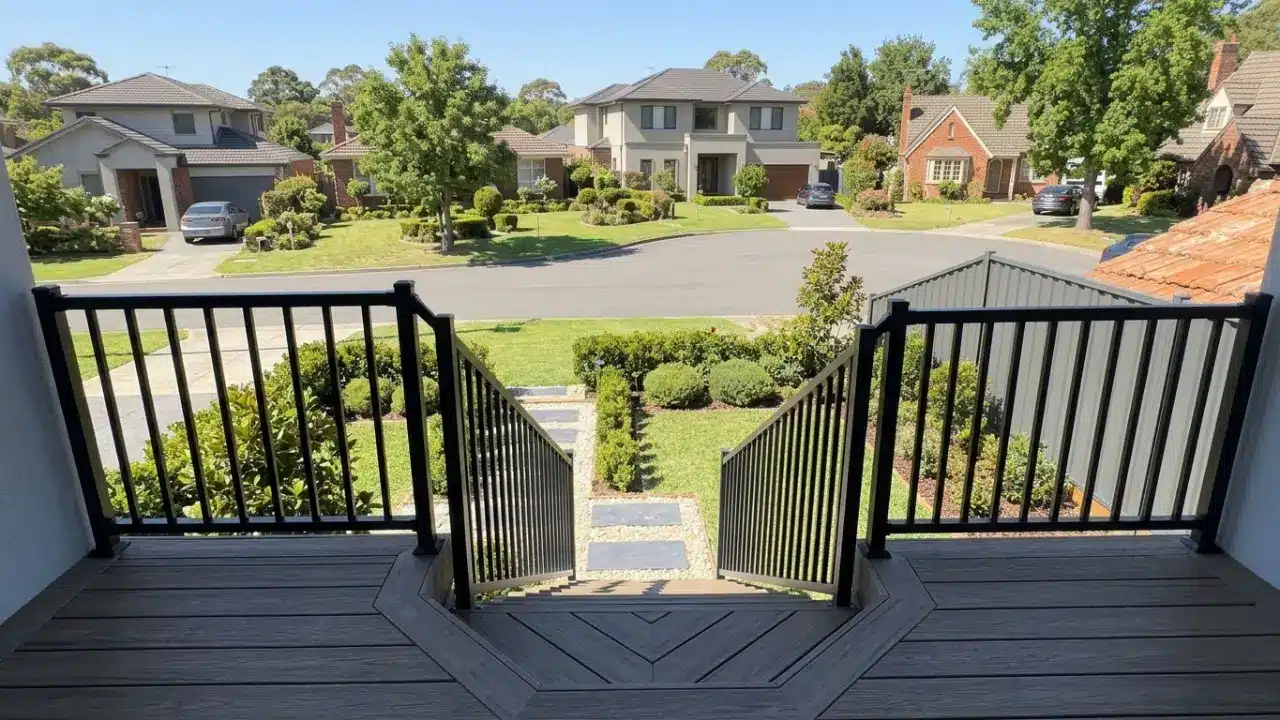
This guide focuses specifically on aluminum handrails for outdoor steps. It covers their advantages and limitations, finish options, buying considerations, and installation basics. For a broader comparison of different metal materials, see our guide to metal handrails for outdoor steps.
This article is also part of our comprehensive Ultimate Guide to Handrails.
Why Aluminum Handrails for Outdoor Steps Are Popular
Aluminum offers several properties that suit outdoor stair handrails:
Corrosion resistance. Aluminum naturally forms a thin oxide layer on its surface, which helps protect the underlying metal from corrosion. Unlike carbon steel, aluminum does not rust in the same way. However, its corrosion performance can vary depending on environmental conditions and exposure.
Lightweight. Aluminum is about one-third the density of steel. This makes aluminum handrails easier to handle during installation and reduces the load on mounting points.
Workability. Aluminum can be cut, drilled, and formed with common tools. This makes it suitable for both prefabricated kits and custom fabrication.
Finish options. Aluminum accepts powder coating in a wide range of colors, allowing the handrail to match the building’s exterior.
Pros and Cons of Aluminum Handrails for Outdoor Steps
| Ventajas | Contras |
|---|---|
| Naturally corrosion-resistant | Softer than steel; can dent under impact |
| Lightweight and easy to install | Powder coating can chip or scratch |
| Lower cost than stainless steel | Standard aluminum may not suit harsh coastal environments |
| Available in many colors and finishes | Can feel hot or cold depending on temperature |
| Low maintenance | Less rigid than steel; may flex under load in some configurations |
When aluminum works well: Covered porches, residential entry steps, moderate climates, and applications where a lightweight, low-maintenance handrail is preferred.
When aluminum may not be the best choice: Exposed coastal locations with salt spray, high-impact commercial environments, or projects requiring maximum rigidity.
Finishes for Aluminum Handrails for Outdoor Steps
Aluminum handrails are typically supplied with one of two finishes:
Pintura en polvo is an electrostatically applied dry powder that is cured under heat. It provides a durable, colored finish in a wide range of options. Powder coating is the most common finish for residential aluminum handrails.The process typically uses electrostatic application followed by heat curing to form a durable protective finish. You can learn more about the powder coating process from the Powder Coating Institute.
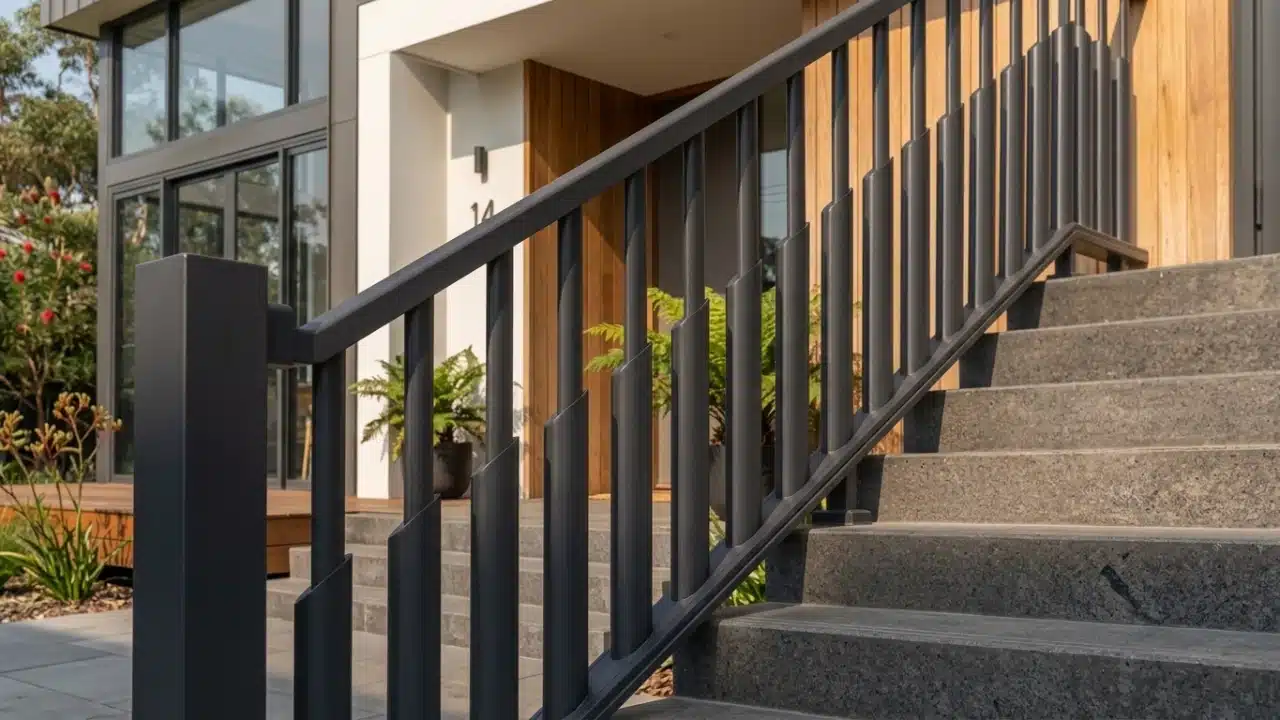
Anodized aluminum is common in commercial and architectural applications. Because the anodic oxide finish is formed from the aluminum itself rather than applied as a separate paint layer, it does not chip or peel in the same way as conventional coatings. For more technical information, see this guide to the aluminum anodizing process.
For outdoor handrails, both finishes can work. Powder coating offers more color choices; anodizing can be more resistant to chipping and scratching because the finish is not a separate layer.
How to Choose Aluminum Handrails for Outdoor Steps
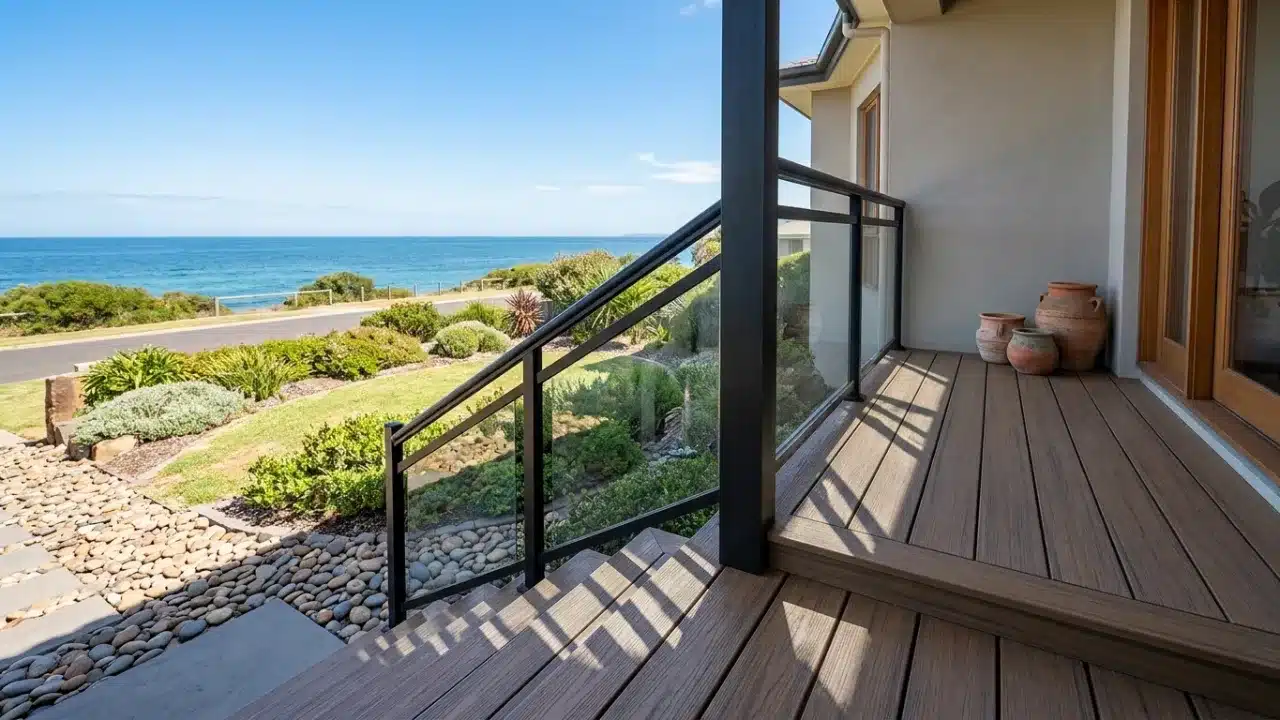
1. Confirm the environment. Standard powder-coated aluminum works well in many residential settings. However, coastal environments expose outdoor aluminum to salt, humidity, and other corrosive conditions. Ask the manufacturer about the aluminum alloy, coating system, and suitability for marine exposure. For additional guidance, see this article on selecting aluminum finishes for coastal areas.
2. Check the profile and dimensions. Handrail diameter or cross-section should be comfortable to grip and appropriate for the installation. Common outdoor handrail profiles range from round tubes to square or rectangular sections.
3. Verify the mounting method. Aluminum handrails for outdoor steps are typically surface-mounted to concrete or wood. Confirm that the base plates and anchors are suitable for your step material.
4. Consider prefabricated vs. custom. Short runs may be served by prefabricated aluminum handrail kits. Longer or custom configurations may require fabricated sections.
5. Check the warranty. Finish warranties vary. Confirm what is covered and for how long.
Installation Basics for Aluminum Handrails
The installation process for aluminum handrails depends on whether the system is surface-mounted or wall-mounted.
Surface-mounted aluminum handrails on concrete steps require anchors suitable for concrete. Use a hammer drill and masonry bit, clean the holes, and follow the anchor manufacturer’s instructions. Seal the base plates after installation.
Wall-mounted aluminum handrails require brackets attached to structural backing. For wood-framed walls, locate studs. For masonry walls, use appropriate anchors.
Aluminum is softer than steel. When tightening fasteners, avoid over-tightening, which can deform the handrail or strip threads.
For detailed concrete anchoring instructions, see our guide to how to secure a handrail to concrete.
Maintenance for Aluminum Handrails
Aluminum handrails require minimal maintenance:
- Clean with mild soap and water.
- Inspect powder coating or anodized finish for damage.
- Touch up minor coating damage to prevent underlying corrosion.
- In coastal areas, rinse periodically to remove salt deposits.
Preguntas frecuentes
Q: Do aluminum handrails rust?
A: Aluminum does not rust in the way iron or steel does. It forms a protective oxide layer. However, in harsh environments or if the coating is damaged, aluminum can corrode. Proper finish and maintenance reduce this risk.
Q: Are aluminum handrails strong enough?
A: For typical residential outdoor steps, aluminum handrails provide adequate strength. However, aluminum is softer and less rigid than steel. For high-load or commercial applications, steel or stainless steel may be more appropriate.
Q: What color options are available for aluminum handrails?
A: Powder-coated aluminum is available in many colors, including black, white, bronze, and custom colors. Anodized aluminum typically has a metallic silver or bronze appearance.
Q: Can I cut an aluminum handrail to length?
A: Yes, aluminum can be cut with a metal-cutting saw or blade. If the handrail is powder-coated, cutting exposes bare aluminum at the cut end. This should be treated or covered to prevent corrosion.
Conclusión
Aluminum handrails are a practical, low-maintenance option for many outdoor steps. They resist corrosion, are lightweight, and are available in a range of finishes. The main limitations are lower rigidity than steel and reduced suitability for harsh coastal environments without appropriate specification.