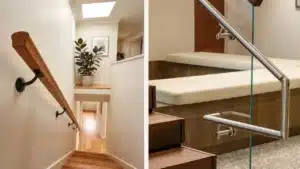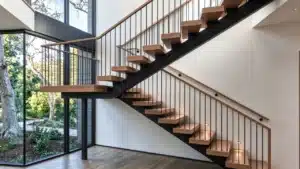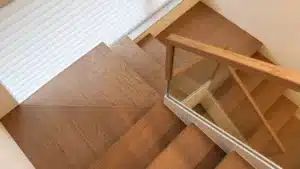



A wooden railing for stairs is more than a safety feature. It is an important design element that can shape the overall appearance of your staircase and complement the style of your home. Whether you prefer the clean lines of modern architecture or the warmth of a traditional farmhouse interior, wood offers flexibility in design, color, and finish—and bridges both aesthetics with natural warmth.
From sleek wood handrails paired with glass panels to classic turned balusters and dark-stained hardwood railings, there are many ways to incorporate wood into a staircase. In this guide, we explore modern and traditional ideas, popular material combinations, and practical factors to consider when choosing a wooden railing for stairs.
This article is part of our comprehensive Ultimate Guide to Handrails, where you can explore different handrail materials, styles, and applications.
Understanding the Components of a Wooden Railing for Stairs
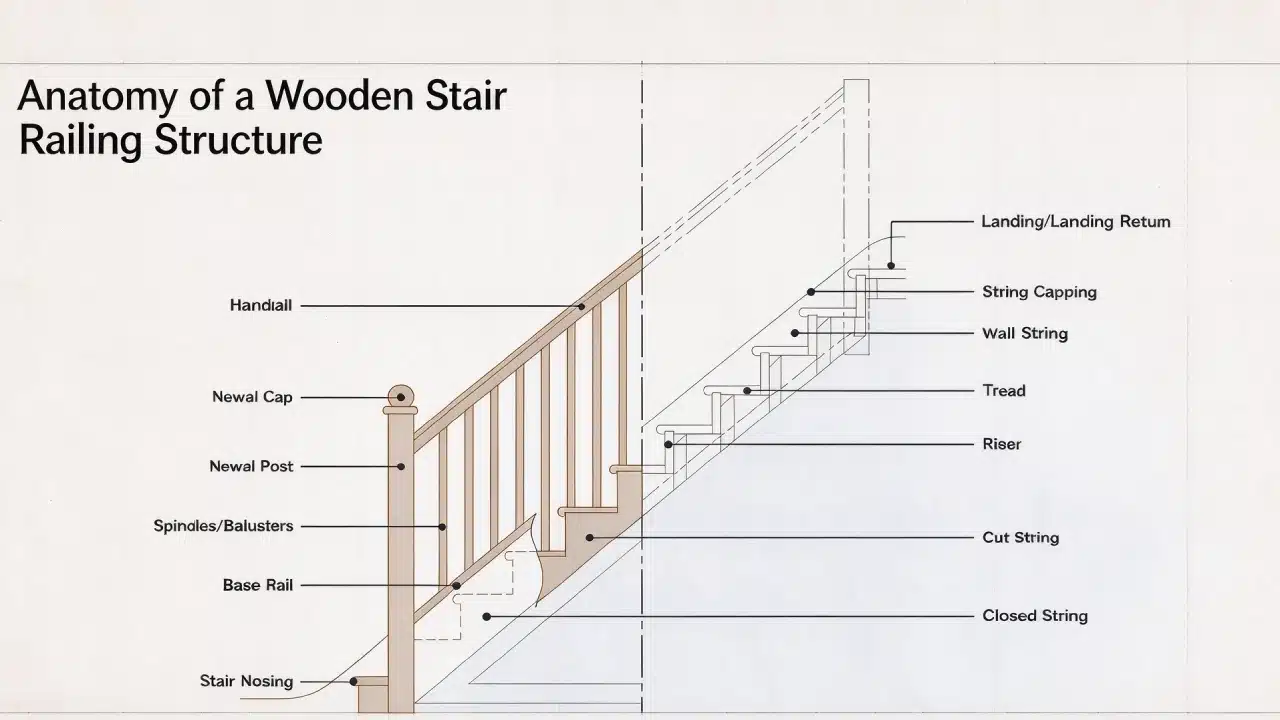
Before choosing a design, it helps to understand the main components of a wooden railing for stairs. Although the terms are sometimes used interchangeably, each part serves a different purpose.
| مكون | الوصف | Main Function |
|---|---|---|
| درابزين | The horizontal or inclined rail that people hold | Provides a gripping surface for support |
| Balusters | Vertical, decorative, or horizontal slat members between the handrail and base rail | Fill openings and limit gap size for safety |
| Newel Posts | Larger structural posts at the beginning, end, or turning points of a railing | Support and stabilize the railing |
| Infill Panels | Glass, metal, wood, or other panels within the railing | Provide a barrier while contributing to the overall design |
| Base Rail | A lower rail or supporting member used in certain railing systems | Supports balusters or infill components |
Understanding these components makes it easier to compare different designs and select materials that work together. With these components in mind, let’s look at modern design approaches.
Modern Wooden Railing for Stairs Ideas
Modern staircase design often emphasizes clean lines, simple shapes, and an open visual appearance. A modern wooden railing for stairs can introduce natural warmth without making the space feel visually heavy.
Here are several design ideas worth considering.
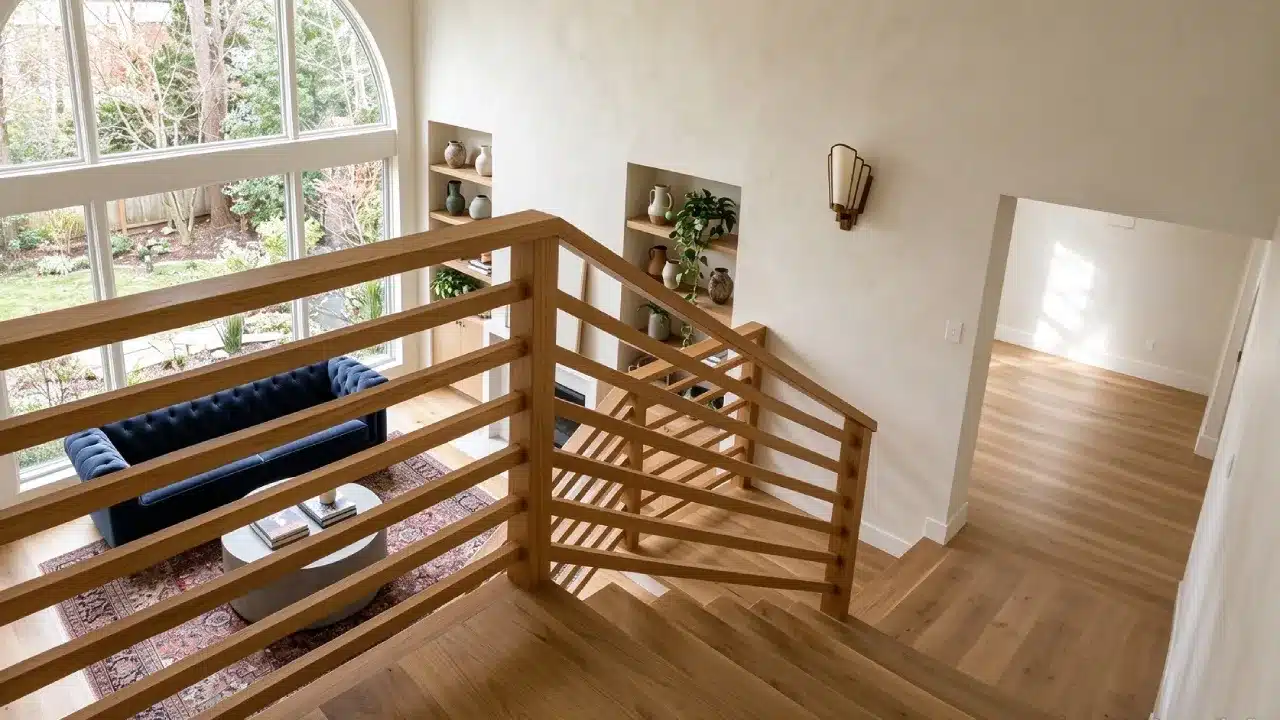
1. Horizontal Wood Slats for Wooden Railing for Stairs
Horizontal wood slats create a distinctive architectural pattern and offer an alternative to traditional vertical balusters. Their clean, repeating lines work particularly well in contemporary homes and minimalist interiors.
The natural texture of wood softens the appearance of the railing, while the horizontal arrangement creates a strong visual feature along the staircase. Different wood species and finishes can be used to complement the flooring, wall colors, and surrounding furniture.
When horizontal slats form part of a wooden railing for stairs, their spacing, structural connections, and overall design must comply with applicable local building codes. Consider child safety and potential climbing risks before selecting this style.
2. Sleek Flat-Bottom Wood Handrails
Flat-bottom wood handrails have a streamlined appearance that suits modern stair railing designs. Their straight underside creates a neat transition between the handrail and its supporting brackets or posts.
Depending on the design, they can be paired with square metal posts, glass panels, or other contemporary railing components. Different widths, edge treatments, and wood finishes allow the handrail to match the proportions of the staircase.
When choosing a flat-bottom profile, consider its dimensions and grip shape as well as its appearance. A well-designed handrail should be comfortable to hold and appropriate for the mounting method and user height.
3. Wood Handrails with Glass or Cable Railings
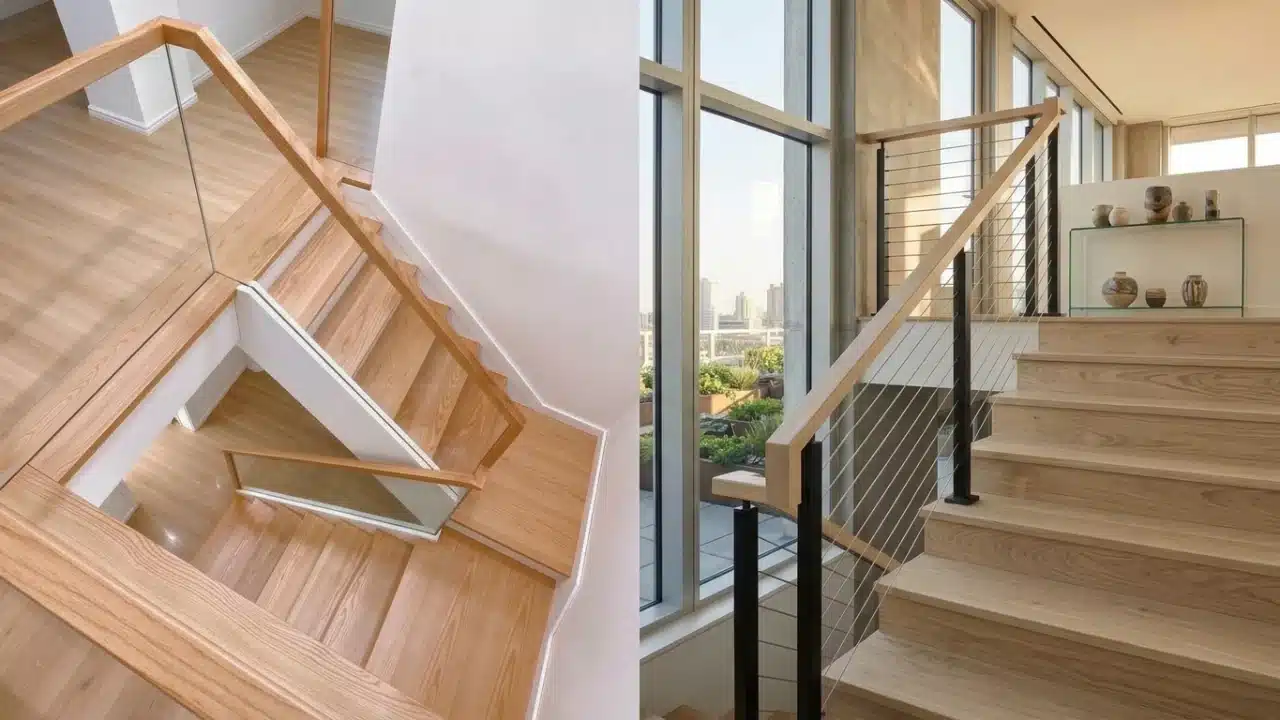
Combining a solid wood handrail with glass panels or stainless steel cable infill is a popular way to balance warmth and visual openness.
Glass panels provide a relatively uninterrupted view through the staircase, making this combination suitable for interiors where natural light and an open appearance are important. Stainless steel cable systems create a more linear, industrial look while allowing the wood handrail to remain the main visual feature.
The choice between glass and cable often depends on the desired appearance, maintenance preferences, staircase layout, and project requirements.
For exterior staircases where a stainless steel railing system is preferred, explore our درابزين من الستانلس ستيل options.
Common Material Combinations
Different material combinations produce different visual effects. The table below summarizes the most popular options for a wooden railing for stairs.
| Material Combination | Visual Effect | Suitable Design Style |
|---|---|---|
| Wood handrail + glass panels | Open, light, and minimal | Modern and contemporary |
| Wood handrail + stainless steel cables | Linear and understated | Modern and industrial |
| Wood handrail + black metal balusters | Strong contrast and visual definition | Farmhouse and transitional |
| Wood handrail + wooden balusters | Consistent and natural | Traditional and classic |
Traditional Wooden Railing for Stairs Ideas
Traditional designs bring warmth, detail, and a timeless character to an interior. They are particularly suitable for homes with classic architectural features, natural wood flooring, and traditional furniture.
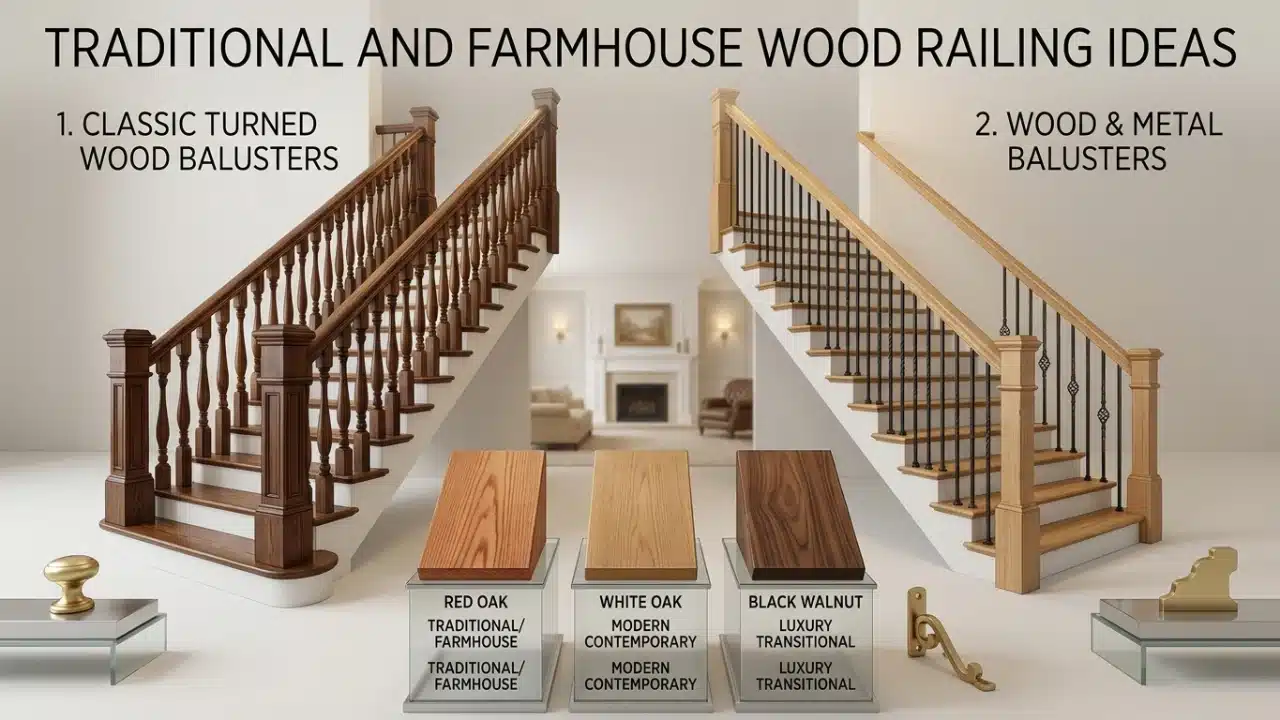
1. Classic Turned Wood Balusters for Wooden Railing for Stairs
Turned wood balusters feature shaped, decorative profiles produced through wood turning. Their curved details create a more traditional appearance than simple square balusters.
When paired with a classic wood handrail and substantial newel posts, turned balusters can give a wooden railing for stairs a formal and elegant look.
For a coordinated design, consider matching the baluster finish with the handrail and other visible woodwork. Meizstairs 6010 and 6210 handrail profiles—classic traditional profiles with a rounded grip—may also be considered where their actual cross-sectional dimensions suit the chosen baluster design. These numbers identify specific product profiles and should not be treated as universal industry standards.
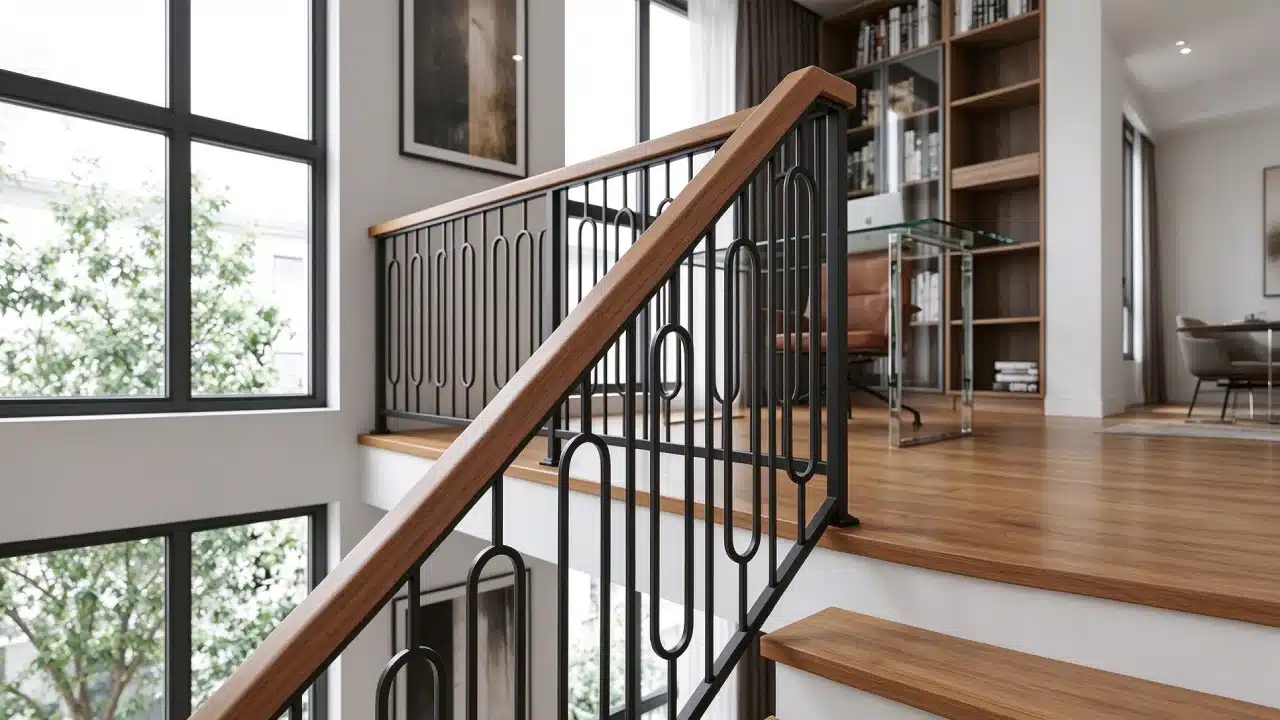
2. Wood Handrails with Black Metal Balusters for Wooden Railing for Stairs
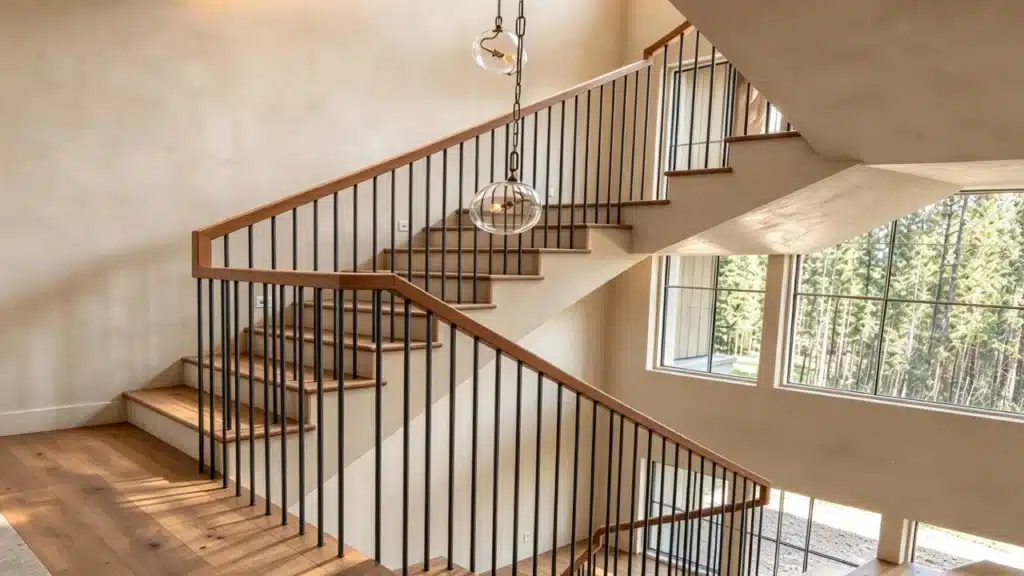
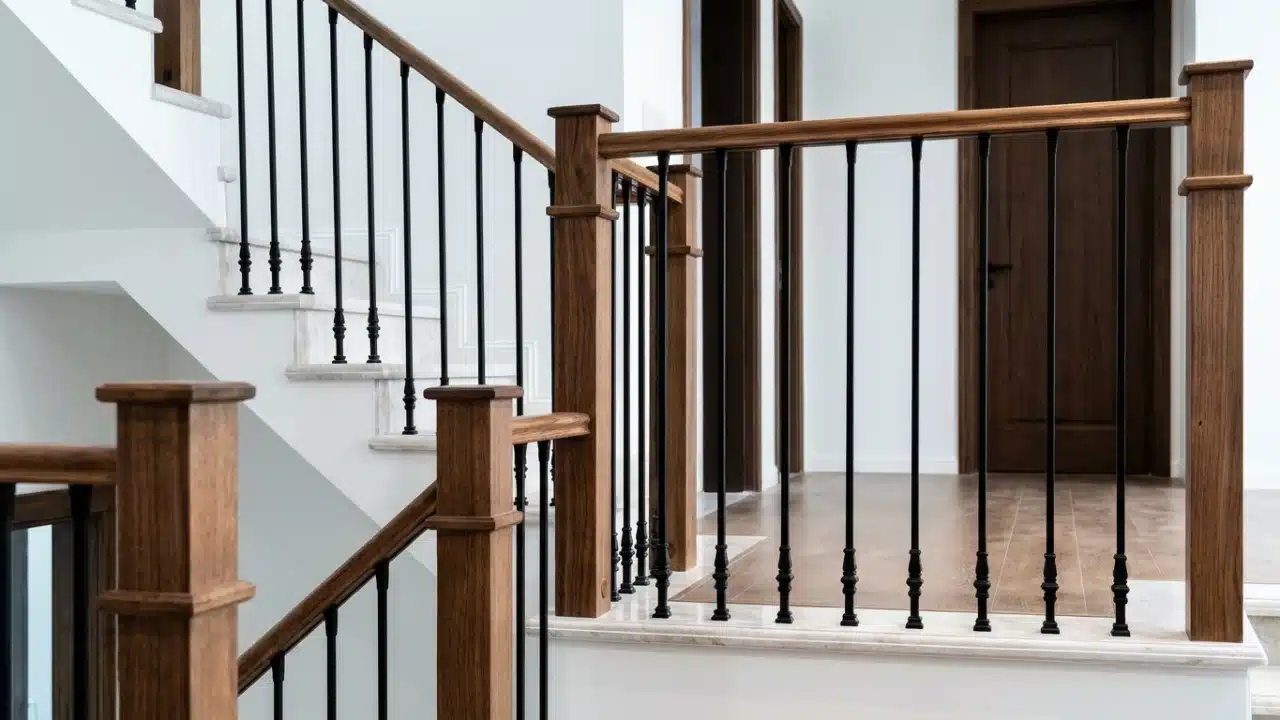
A combination of wood handrails and black metal balusters is a classic option for farmhouse, rustic, and transitional interiors.
The warm grain of wood contrasts with the darker appearance of metal, creating a design that feels both traditional and contemporary. Simple square metal balusters create a cleaner appearance, while decorative metal designs introduce more traditional detail.
This combination also offers design flexibility. You can choose a light oak handrail for a softer contrast or a dark-stained wood handrail for a richer, more dramatic appearance.
3. Classic Wood Tones: Oak and Walnut
Wood species and finishes have a major influence on the appearance of a wooden railing for stairs.
Oak is a versatile choice for both traditional and contemporary interiors. Red Oak offers warm reddish tones and a distinctive grain, while White Oak generally has a lighter to medium brown appearance with a different grain character.
Walnut is valued for its deeper brown color and rich natural grain. It can create a more luxurious appearance, particularly when combined with black metal balusters or other dark architectural details.
| أنواع الخشب | Typical Appearance | Suitable Design Styles |
|---|---|---|
| البلوط الأحمر | Warm reddish tones with prominent grain | Traditional, farmhouse, and transitional |
| بلوط أبيض | Light to medium brown tones with distinctive grain | Modern, contemporary, and classic |
| الجوز الأسود | Rich brown tones with flowing grain | Luxury, modern, and traditional |
The final appearance also depends on the wood grade, stain color, and surface finish. For a closer comparison of oak varieties and their properties, read our Oak Handrail Guide.
For more detailed information about hardwood species, grain patterns, and material characteristics, visit the American Hardwood Export Council’s Compare Species Guide.
How to Choose the Right Wooden Railing for Stairs
The right wooden railing for stairs should complement your home while meeting practical requirements for comfort, durability, and safety. Consider the following factors before making a decision.
| عامل | What to Consider | Practical Recommendation |
|---|---|---|
| Existing Architecture | The style, proportions, and details of your home | Match decorative profiles with traditional interiors and simpler lines with modern spaces |
| أنواع الخشب | Color, grain, availability, and budget | Choose Oak for versatility or Walnut for a deeper, richer appearance |
| Material Combination | Wood with glass, metal, or cable infill | Use glass for visual openness or metal for stronger contrast |
| Railing Profile | Shape, dimensions, and grip comfort | Check the actual handrail cross-section before ordering |
| Lighting | Whether the staircase receives sufficient natural light | Consider lighter wood tones and glass infill in darker spaces |
| Maintenance | Finish type, cleaning requirements, and exposure | Select a suitable finish and follow the manufacturer’s care instructions |
| Budget | Material, machining, fittings, and installation | Compare the complete railing system rather than the handrail alone |
Consider Your Home’s Architectural Style
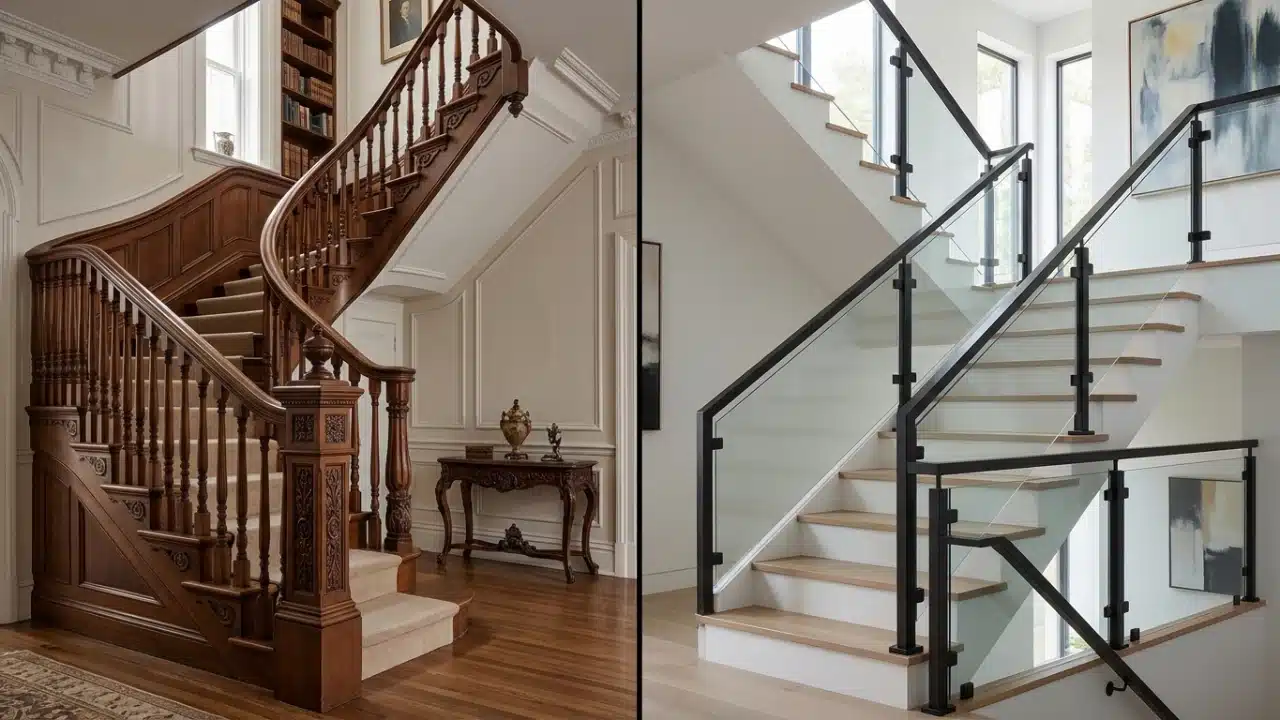
A traditional or Victorian-style home may suit decorative turned balusters, detailed newel posts, and classic wood handrail profiles. In contrast, a modern home may look better with simple rectangular handrails, square balusters, glass panels, or stainless steel components.
A consistent design approach helps the wooden railing for stairs feel like a natural part of the interior rather than a separate feature.
Think About Safety and Building Codes
Appearance should never be the only consideration when choosing a railing. Before finalizing the design, check the local building requirements for handrail height, handrail graspability, guard height, opening limitations, and structural strength.
These requirements can vary according to location, building type, and the applicable code edition. Pay particular attention to the spacing of balusters or infill members and the way posts, brackets, and handrails are connected to the supporting structure.
For U.S. residential projects, Chapter 3 of the International Residential Code (IRC) covers requirements for stairways, handrails, and guards. Always check the code edition adopted by your local jurisdiction.
Frequently Asked Questions about Wooden Railing for Stairs
Q1: What is the best wood for a wooden railing for stairs?
أ: Oak is a widely used choice for stair railings because of its strength, durability, and distinctive grain. Red Oak offers warm reddish tones and takes stain well, while White Oak has different grain characteristics and generally better natural resistance to decay. Maple is another option for those who prefer a lighter, finer grain, while Walnut is valued for its rich, darker appearance.
The best choice depends on your preferred style, budget, finish, and project requirements. See the wood comparison table above for a quick overview, or read our Oak Handrail Guide for more detail.
Q2: Can I mix wood and metal in my stair railing?
أ: Absolutely. Combining a wooden handrail with metal balusters is a popular design approach. Wood adds natural warmth, while metal introduces contrast and a more defined architectural appearance.
Black metal balusters work particularly well with Oak and Walnut handrails. The final combination can be adapted to traditional, farmhouse, industrial, and contemporary interiors.
Q3: How do I modernize an old wooden railing?
أ: There are several ways to update an existing wooden railing for stairs. You can refinish or repaint the wood in a contemporary color, replace dated balusters with simple square profiles, or combine a wooden handrail with glass panels or black metal balusters. Replacing traditional infill with horizontal slats is another possible design option.
However, changes to the railing structure and infill should always be checked against applicable safety and building code requirements before installation.
Q4: How do I maintain a wooden stair railing?
أ: Regularly remove dust with a soft, dry or slightly damp cloth. Use a suitable wood-safe cleaning product when necessary, and avoid harsh chemicals or excessive moisture that may damage the finish.
Periodically inspect the handrail, posts, balusters, brackets, and connections for looseness or surface damage. The need for refinishing depends on the coating, usage, and environmental conditions.
Q5: Can I install a wooden railing myself?
أ: Some straightforward wooden handrail replacements or decorative updates may be suitable for experienced DIY homeowners. However, installing a complete wooden railing for stairs system requires accurate measurements, secure structural connections, proper alignment, and compliance with local building codes.
If your project involves new railing posts, structural modifications, or a complex staircase layout, professional installation is recommended.
خاتمة
Whether you prefer the clean lines of a modern look or the timeless charm of traditional designs, a wooden railing for stairs offers many possibilities for creating a staircase that complements your home. From classic turned balusters and warm hardwood handrails to contemporary combinations of wood, glass, and metal, the right design can balance appearance, comfort, safety, and practical requirements.
At Meizstairs, we offer custom stair and railing solutions for different staircase styles and project requirements. Contact our team to discuss custom profiles, dimensions, wood species, and material combinations for your staircase.