

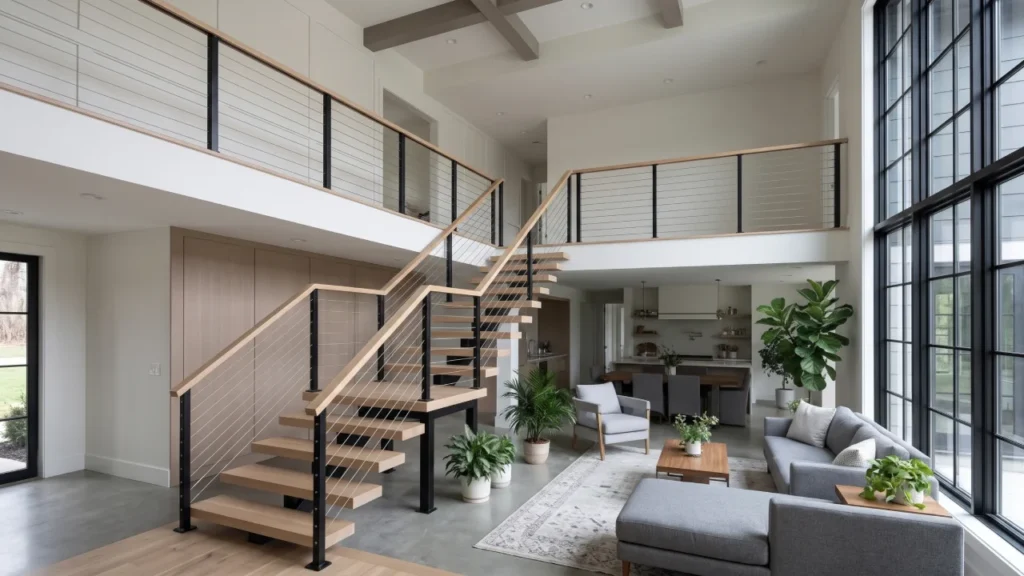

An interior cable railing with a wood handrail combines the clean appearance of stainless steel cables with the natural warmth of solid wood. This combination works particularly well in modern homes, open-plan interiors, lofts, and contemporary staircases. The slim cable infill helps preserve sightlines, while the wood top rail provides a comfortable gripping surface.
However, a successful design involves more than choosing attractive materials. Post strength, cable spacing, tensioning hardware, wood selection, and local building requirements all affect the finished system.
This guide explores the design options, materials, cost factors, and installation considerations for cable railing with a wood handrail. For more traditional and contemporary timber railing ideas, see our guide to wooden railing for stairs. You can also explore our complete handrail guide for a broader overview of handrail systems and materials.
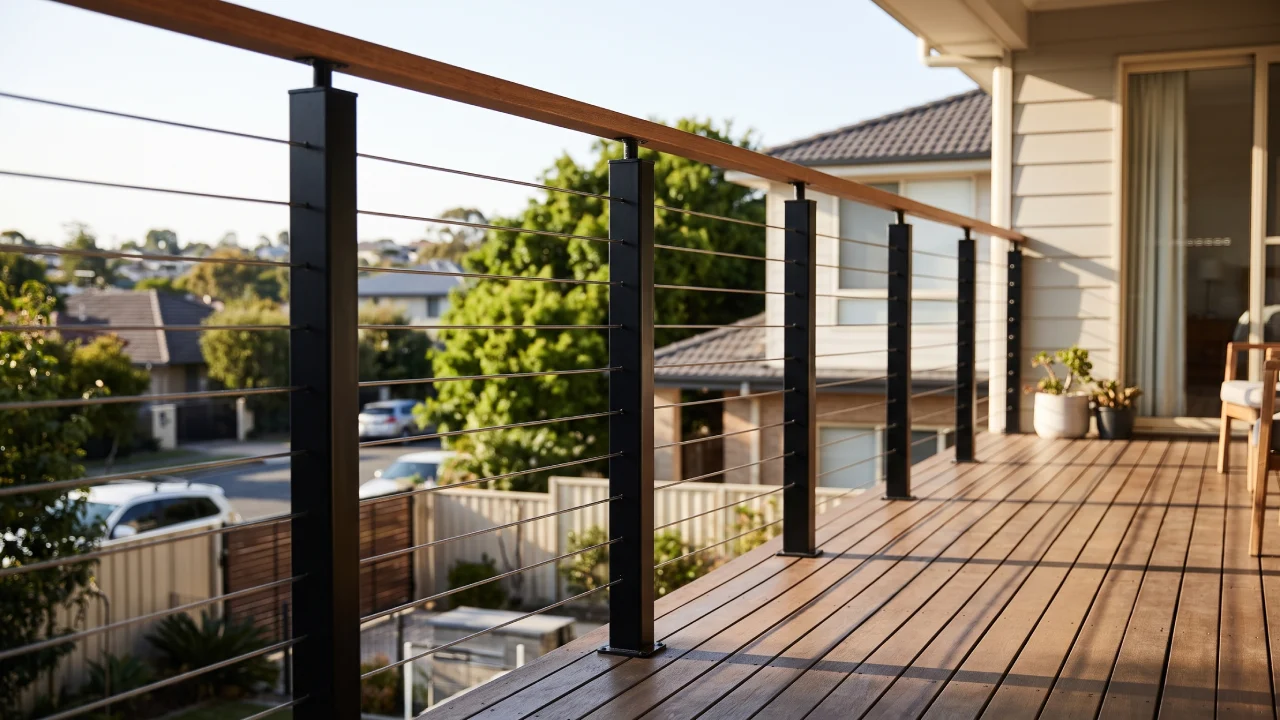
What Is Interior Cable Railing with a Wood Handrail?
An interior cable railing system uses horizontal stainless steel cables as infill between structural posts or supporting frames. A wood handrail runs along the top, providing a comfortable gripping surface and completing the railing design.
A typical system includes four main components:
Wood handrail: Provides a comfortable surface to hold and adds natural warmth to the staircase.
Stainless steel cables: Create the infill between posts while maintaining a relatively open appearance.
Posts and structural supports: Hold the cables in position and transfer loads to the supporting structure.
Cable fittings and tensioners: Connect the cables to the posts and allow installers to apply the tension specified by the manufacturer.
Unlike traditional wooden balusters, horizontal cables create thin visual lines across the staircase. As a result, this design can help maintain an open feeling in rooms overlooking living areas, balconies, or double-height spaces.
Why Choose Wood Handrails with Cable Railing?
Combining wood and stainless steel offers several advantages in interior staircase design.
First, the contrast between natural timber and metal creates a modern appearance without making the space feel too industrial. For example, a white oak handrail paired with black metal posts and stainless steel cables can complement minimalist and contemporary interiors.
Another advantage is visibility. Because the cables have a relatively slim profile, they can preserve more of the view through the railing than many traditional baluster designs. This makes the combination particularly suitable for open-plan homes and lofts.
Wood also provides a warm, familiar surface for everyday use. In addition, homeowners can select different species, colors, profiles, and finishes to coordinate the handrail with flooring, doors, and furniture.
Interior Cable Railing Design Options
The overall appearance depends on the wood species, handrail profile, post material, and cable arrangement. These elements should work together rather than be selected independently.
Wood Species and Handrail Profiles
Oak, walnut, and hard maple are popular choices for interior wood handrails. Each offers a different appearance and works with different interior styles.
Wood species also differ in physical and mechanical properties, so material selection should consider more than appearance. The USDA Forest Products Laboratory’s Wood Handbook provides technical information on commercially important wood species and their properties.
| Wood type | 外观 | Suitable design styles |
|---|---|---|
| 白橡木 | Light to medium brown with visible grain | Modern, Scandinavian, and transitional |
| 黑胡桃 | Deep brown with rich grain patterns | Premium contemporary and luxury interiors |
| 硬枫木 | Light color with a relatively uniform appearance | Minimalist and bright interiors |
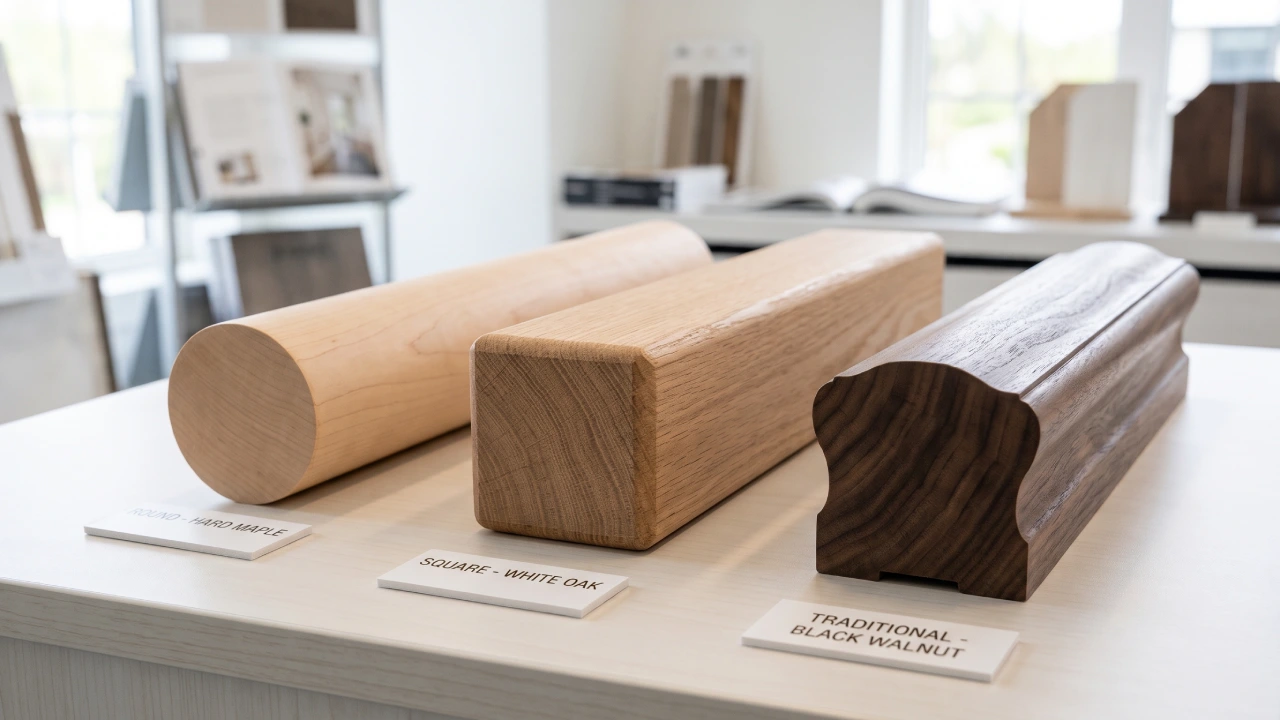
The handrail profile also influences comfort and appearance. Rounded profiles create a softer look, while square and rectangular profiles suit more contemporary designs.
However, appearance should not be the only consideration. The selected profile must provide a suitable gripping surface and work with the intended mounting system.
Post Materials and Cable Layout
Posts can use stainless steel, powder-coated steel, or wood. Stainless steel creates a coordinated metal appearance, while black powder-coated posts provide a stronger contrast with lighter timber. Wood posts, on the other hand, create a more consistent natural finish.
The cable arrangement also depends on the staircase configuration. Straight stair flights usually offer a simpler layout, while landings, corners, and changes in direction may require additional posts, supports, or specialized fittings.
Therefore, plan the post positions and cable routing around the actual staircase geometry. Also, check the applicable opening limitations and the manufacturer’s system requirements before finalizing the design.
For residential projects, the International Residential Code (IRC) provides guard opening requirements under Section R312.1.3, although local code editions and stairway exceptions may differ.
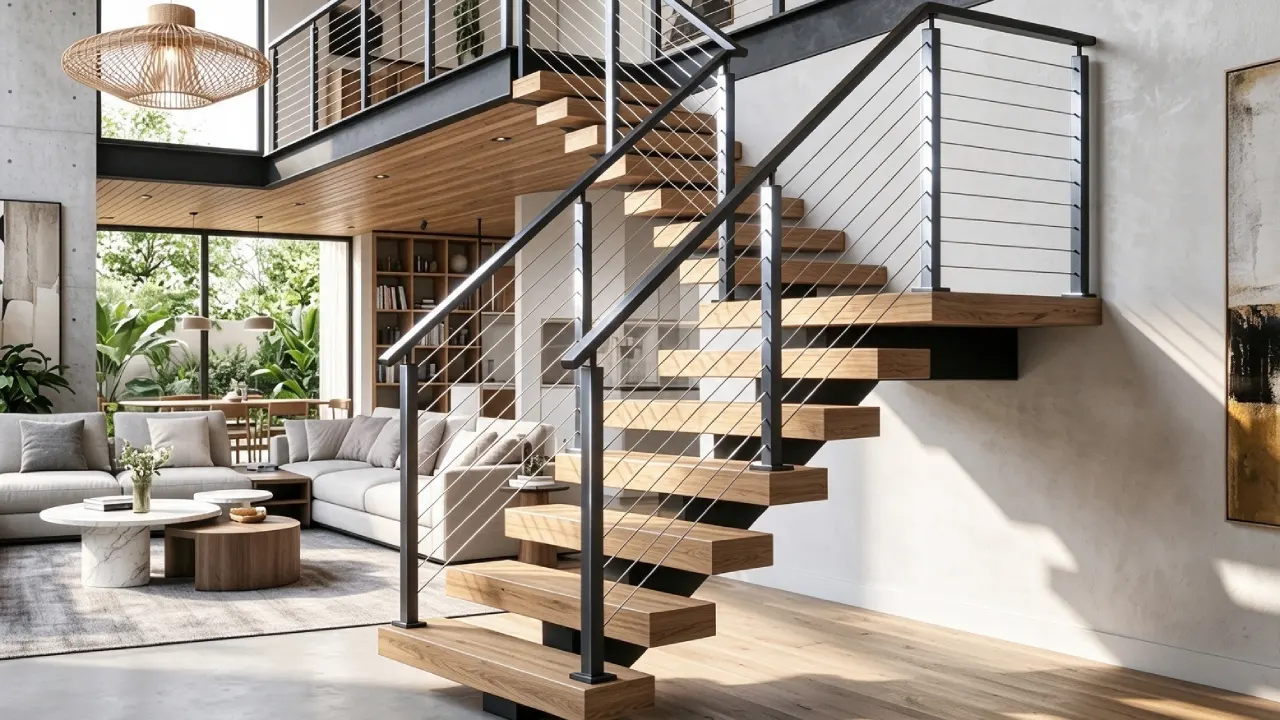
Materials and Components of Interior Cable Railing
Selecting compatible components helps the complete railing system perform as intended.
Stainless steel cable forms the infill and provides the slim appearance associated with this railing style. The cable diameter and construction should match the system design, expected loads, and manufacturer’s specifications.
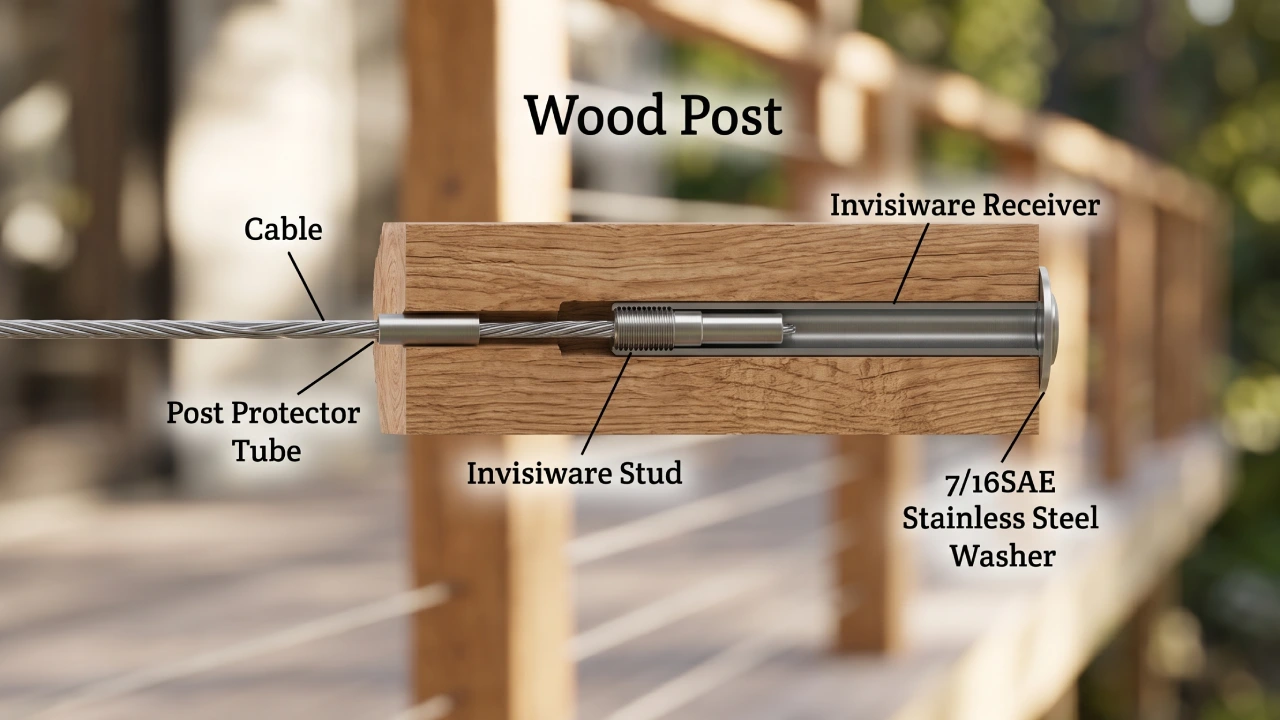
Cable fittings connect each cable to the end posts. Depending on the system, these may include threaded tensioners, terminal fittings, and intermediate supports. Always check that the fittings match the cable diameter and post construction.
Structural posts require particular attention. End posts carry the tension generated by the cables, so installers must secure them to suitable structural supports. For longer cable runs, intermediate posts or additional supports may help control cable deflection.
Interior Cable Railing Cost Factors
The cost of an interior cable railing with a wood handrail depends on the total railing length, wood species, post material, cable hardware, staircase layout, and installation requirements.
A single price per linear foot cannot accurately represent every project. Instead, consider the following components when preparing a budget.
| Cost factor | What affects the price |
|---|---|
| Wood handrail | Wood species, dimensions, profile, finish, and custom fabrication |
| Stainless steel cables | Cable diameter, construction, length, and quantity |
| 帖子 | Material, dimensions, finish, and required number |
| Cable fittings | Tensioning hardware, terminal fittings, and intermediate supports |
| 安装 | Staircase geometry, anchoring conditions, labor, and adjustment work |
Material and Installation Budget
Published estimates vary considerably between cable railing systems. For example, HomeAdvisor’s cable railing cost guide provides general project estimates, but those figures do not represent a guaranteed price for an interior system with a custom hardwood handrail.
Premium hardwoods such as walnut can increase the material budget. Similarly, complex stair turns, additional structural supports, custom handrail profiles, and specialized fittings can increase fabrication and installation costs.
To obtain a more accurate quotation, prepare the staircase dimensions, total handrail length, number of stair flights, preferred wood species, post material, and project drawings. This information helps suppliers evaluate the complete system rather than estimate individual components in isolation.
Installing Interior Cable Railing: Key Considerations
Installing cable railing requires accurate measurements, suitable structural supports, compatible fittings, and controlled cable tension. The following steps explain the main stages, although the manufacturer’s installation instructions should always take priority.
Check the supporting structure
Before installation, confirm that the posts can attach securely to structural framing or another suitable supporting material. End posts deserve particular attention because they carry significant cable tension. The fixing method must suit the actual substrate and project requirements.
Position the posts
Next, mark the post locations according to the staircase layout and cable system design. Check alignment, spacing, and intermediate support positions before drilling or fixing the posts. Stair turns and landings may require additional supports or custom connections.
Mount the wood handrail
Once the posts are secure, install the wood handrail using a suitable connection method. Check its alignment and height against the applicable local requirements. Where the code requires a continuous handrail, plan the joints and transitions accordingly.
Install and tension the cables
Pass the cables through the prepared post openings or designated fittings. Then install the terminal and tensioning components according to the manufacturer’s instructions.
Tension the cables in the specified sequence. Tightening one cable can affect the forces on the posts and other cables, so installers should never improvise the process.
Finally, inspect the cable alignment, fittings, post stability, visible fixings, and infill openings. Confirm that the completed system meets the applicable building requirements.
Maintenance of Wood Handrails and Stainless Steel Cables
Although interior cable railing generally requires straightforward maintenance, the timber and metal components need different care.
Wipe stainless steel cables and fittings periodically with a soft cloth and a suitable mild cleaner. Avoid abrasive materials that could damage their finish. In addition, inspect the fittings and connections for looseness, damage, or unusual movement.
For the wood handrail, regular dusting and cleaning with a product suitable for its finish will help maintain its appearance. Depending on the coating, the timber may need occasional refinishing. Follow the finish manufacturer’s recommendations rather than applying oil or varnish to every type of coated handrail.
The complete system also needs periodic inspection. If a cable becomes noticeably loose or a post moves, arrange an inspection and adjustment by a qualified professional.
常见问题
Is interior cable railing suitable for staircases?
Yes. Interior cable railing can work well on staircases when installers design and install the complete system to meet applicable requirements for handrails, guards, openings, and structural performance.
Can I use a wood handrail with stainless steel cable railing?
Yes. Wood handrails can be combined with stainless steel cables and different post materials. However, the handrail connections and cable fittings must match the selected system.
What is the best wood for a cable railing handrail?
Oak, walnut, and hard maple are popular choices. The best option depends on the desired color, grain, finish, budget, and handrail design.
How much does interior cable railing cost?
The price depends on the railing length, post material, cable hardware, wood species, staircase layout, and installation labor. General cable railing estimates can help with initial budgeting, but a project-specific quotation provides a more reliable total.
How far apart should cable railing cables be?
Cable spacing must comply with the applicable guard opening limitations and the cable system’s performance requirements. Cable flexibility and deflection under load also matter. Therefore, installers should follow the system manufacturer’s design specifications rather than assume one spacing measurement works for every project.
Does cable railing require regular maintenance?
Interior cable railing generally needs periodic cleaning and inspection. The wood handrail may require refinishing depending on its coating, while installers or maintenance professionals should check cable fittings and connections for looseness or damage.
结论
An interior cable railing with a wood handrail combines the open appearance of stainless steel cable infill with the natural warmth and comfortable grip of timber. It can complement modern staircases, lofts, and open-plan interiors while offering flexibility in wood species, post materials, and finishes.
However, a successful project requires more than attractive materials. Consider the handrail profile, post strength, cable spacing, fittings, installation conditions, and local building requirements together before fabrication begins.
With compatible components and proper installation, a wood handrail and cable railing system can become a practical and visually distinctive feature of an interior staircase.