

A handrail kit bundles the components needed for a railing installation into a single package. Instead of sourcing the handrail, brackets, fasteners, and end caps separately, you receive a set that the manufacturer has assembled for a specific application—typically a straight indoor stair run, a short outdoor step section, or a porch railing. For homeowners who want a straightforward project without measuring and matching individual parts, a kit can simplify the process considerably.
The trade-off is that kits are designed around standard configurations. They work well when your staircase or step layout falls within the kit’s intended range. They are less suitable when the railing must follow an unusual angle, span a non-standard length, or integrate with existing structural elements that the kit was not designed to accommodate. This guide covers what handrail kits include, the main types available, how to choose one that fits your project, and what to check before buying.
This article is part of our comprehensive Ultimate Guide to Handrails.
What Is a Handrail Kit?
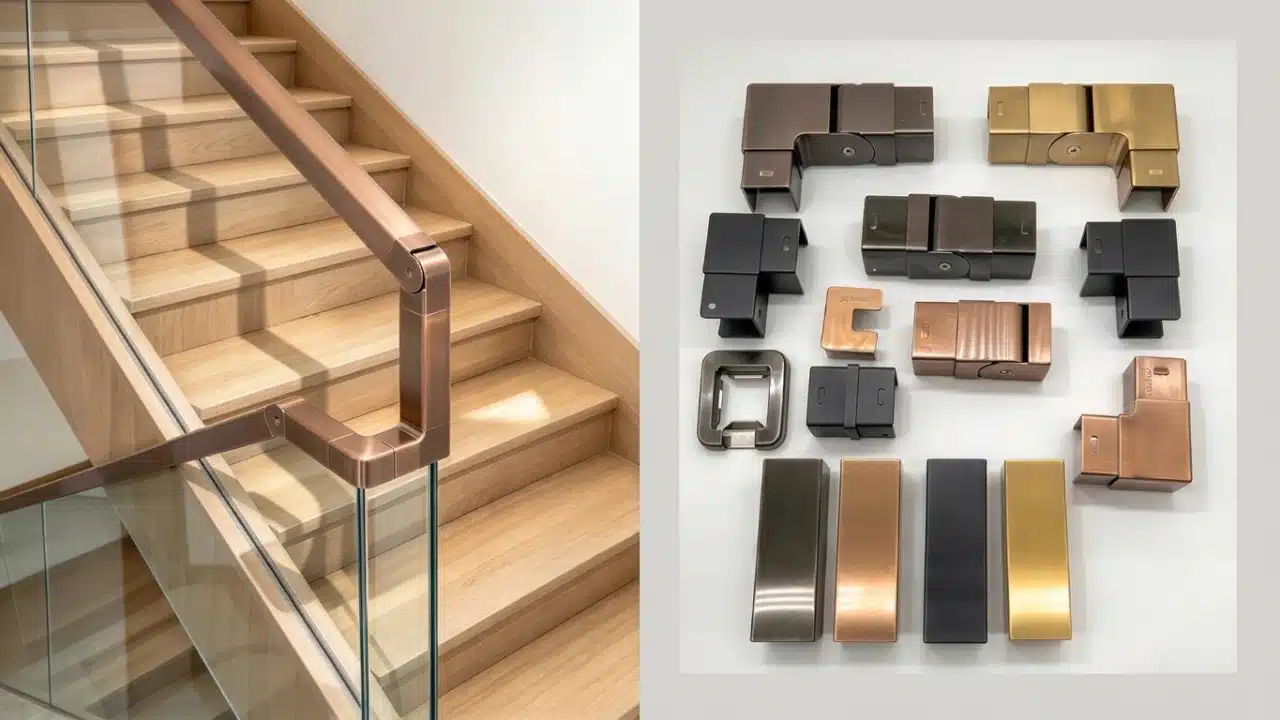
A handrail kit is a packaged set of railing components intended for a specific type of installation. The contents vary by product, but most kits include the handrail itself, mounting brackets or posts, fasteners, and end caps or finishing pieces.
Kits are commonly sold for:
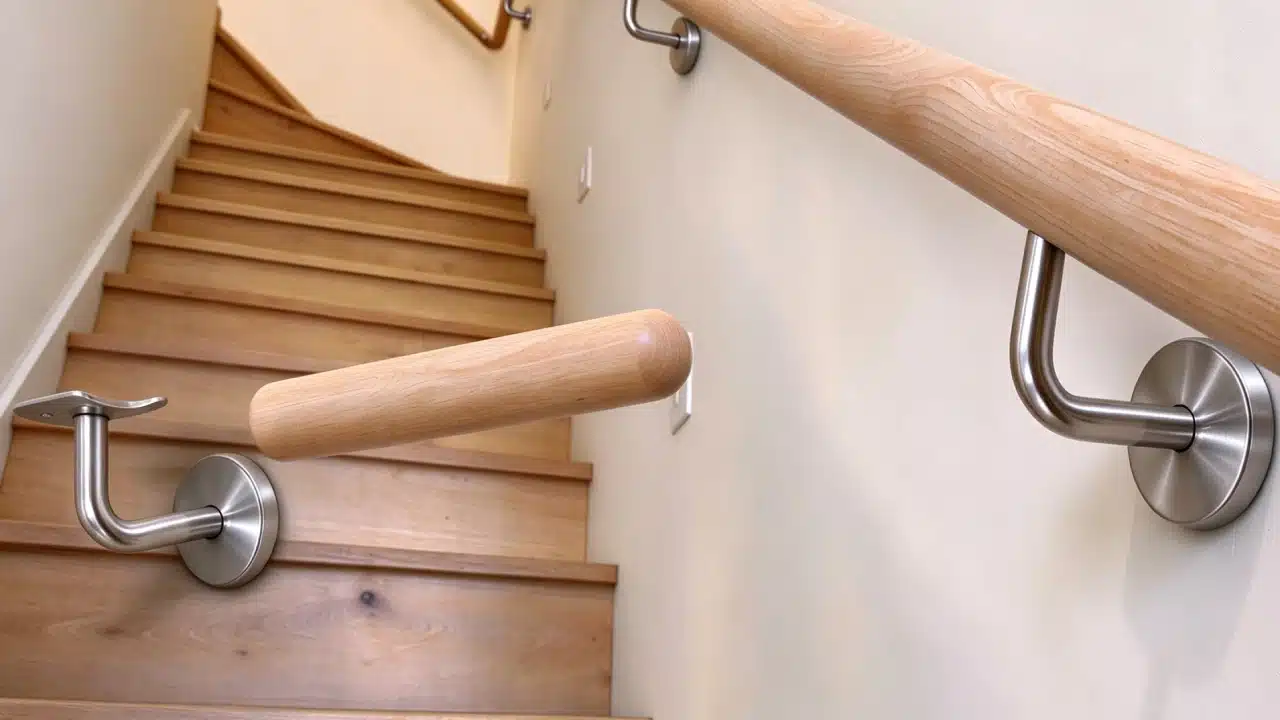
Indoor straight stair runs. These kits typically include a wall-mounted handrail with brackets sized for a standard stair angle.
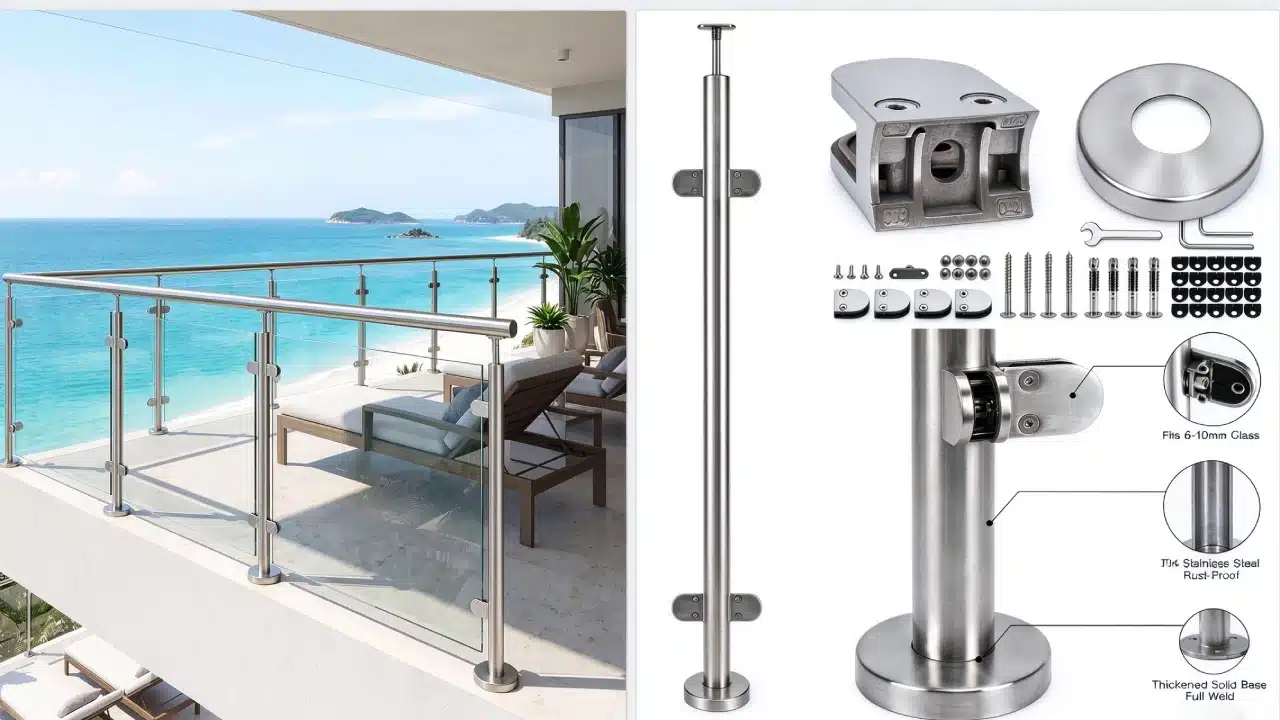
Outdoor step sections. These kits often include short post-mounted railing sections for porches, decks, or concrete steps.
Porch and entry railings. These may be post-mounted or wall-mounted, depending on the structure.
The key characteristic of a kit is that the components are matched to each other. The bracket fits the handrail profile, the fasteners match the bracket holes, and the end caps fit the rail diameter. This matching reduces the risk of incompatible parts, which is one of the main practical advantages of buying a kit rather than individual components.
Benefits of Using a Handrail Kit
Simplified sourcing. The most obvious benefit is that you do not need to identify and order each component separately. For a first-time installer, this removes a significant amount of uncertainty.
Compatibility assurance. The parts in a kit are designed to work together. The bracket opening matches the rail shape, the screw holes align, and the end treatment fits the rail. This reduces the chance of discovering mid-installation that a bracket does not fit the rail you bought.
Predictable scope. A kit defines the project. You know what you are installing, and the manufacturer has provided instructions for that specific assembly. This can be helpful for planning time and tools.
Cost transparency. The kit price covers the components in the package. You can compare kit prices more directly than you can compare the cost of individually sourced parts.
The limitation is that kits are less flexible. If your project requires a custom length, a non-standard angle, or integration with existing railing components, a kit may not be the right choice.
Types of Handrail Kits
| Kit Type | Typical Contents | 最适合 |
|---|---|---|
| Wall-mounted indoor kit | Handrail, wall brackets, fasteners, end caps | Straight stair runs with a wall on one side |
| Post-mounted outdoor kit | Posts, rail sections, fasteners, base plates | Short step sections, porches, decks |
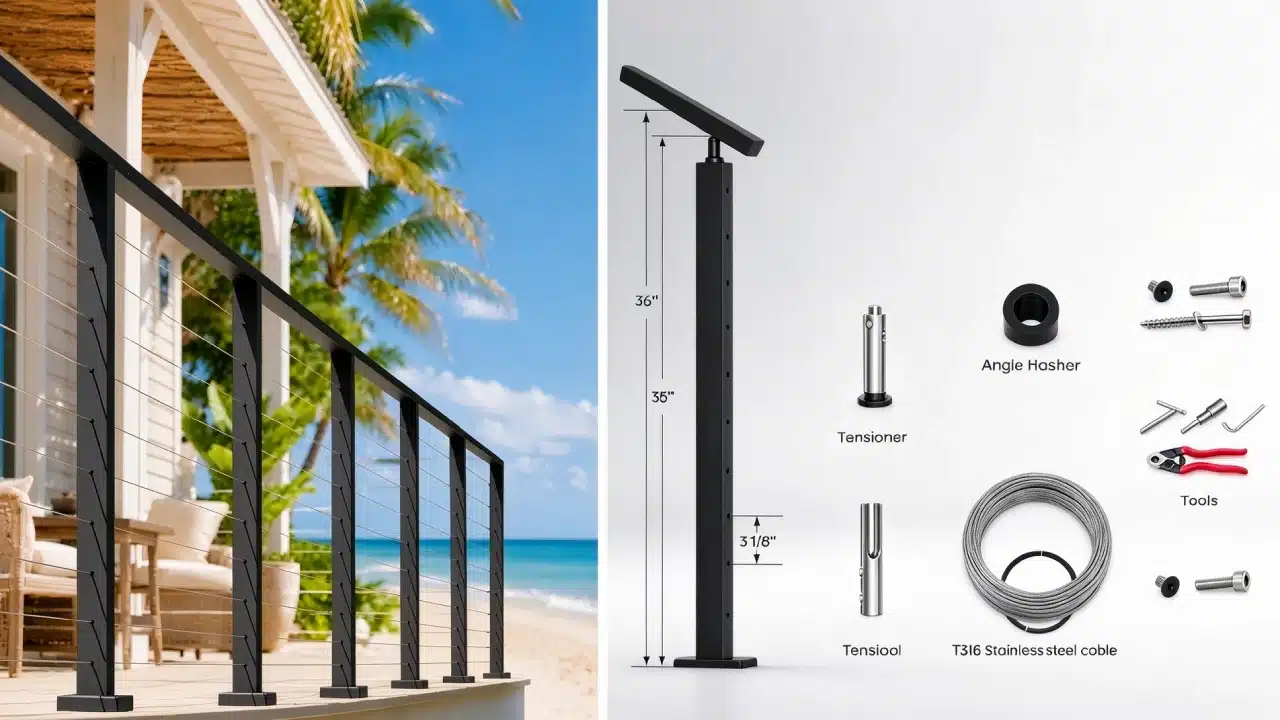
| Cable or infill kit | Handrail, posts or brackets, cable or infill components | Modern railing designs with cable or metal infill |
| Replacement kit | Handrail and brackets sized to match existing mounting points | Updating an existing railing without changing the structure |
Wall-mounted indoor kits are the most common type for staircases. They typically include a handrail in a standard length or cuttable length, wall brackets, and the screws or anchors needed for wood-stud installation. Some kits include adjustable handrail brackets to accommodate the stair angle and provide greater flexibility during installation.
Post-mounted outdoor kits are designed for short runs where the railing is supported by posts anchored to the ground or step surface. These kits often include base plates and masonry or wood fasteners, though the appropriate fastener depends on the substrate.
Cable or infill kits combine a handrail with cable or other infill components. These are more complex than simple handrail kits and require attention to tensioning and spacing.
Replacement kits are sized to fit existing mounting points, which can simplify a railing update. However, the existing mounting points must be in good condition and correctly positioned; a replacement kit does not correct an old installation that was anchored poorly or set at the wrong height.
What to Look for in a Handrail Kit
Before buying, check the following:
Rail length and cuttability. Confirm whether the rail is supplied at the exact length you need or whether it is intended to be cut. If cutting is required, check whether the rail profile and material allow clean cuts with common tools.
Bracket type and adjustment. For stair applications, the bracket must accommodate the stair angle. Pivoting or adjustable brackets are common in stair kits. Check the adjustment range and whether the bracket locks securely at the required angle.
Mounting surface compatibility. A kit designed for wood-stud walls may include wood screws but not masonry anchors. If your wall is concrete or brick, confirm whether the kit includes suitable fasteners or whether you need to source them separately.
Included fasteners. Check that the fasteners match your substrate. A kit that includes screws for wood studs is not ready for a concrete wall without additional anchors.
Code compliance. A kit does not exempt the installation from building code requirements. Check the finished height, the opening limitations if infill is included, and any extension requirements that apply in your area. For projects governed by the International Building Code in the United States, also check the handrail graspability requirements, which address acceptable handrail cross-sectional dimensions and gripping surfaces.
Return policy. If the kit does not fit, you want the option to return it. Check the return window and condition requirements before ordering, especially for cut-to-length products.
Handrail Kits vs. Custom Components
| Consideration | Kit | Custom Components |
|---|---|---|
| Sourcing effort | Low; everything in one package | Higher; each part selected separately |
| Compatibility risk | Low; parts designed to match | Depends on the buyer’s selections |
| Flexibility | Limited to standard configurations | High; can match unusual angles and lengths |
| Cost predictability | Kit price is fixed | Total cost depends on individual part prices |
| 最佳适用 | Standard straight runs and short step sections | Complex staircases, unusual layouts, and integration with existing systems |
A kit is the practical choice when your project matches a standard configuration and you value simplicity. Custom components are the better choice when the installation requires specific dimensions, non-standard angles, or integration with existing railing elements that a kit cannot accommodate.
If your staircase is a standard straight run and you want a wall-mounted handrail, a kit can work well. If you are installing a complete railing system with newel posts, balusters, and a handrail, the project is closer to a custom assembly, and our guide on how to put up a stair railing covers the broader process.
Installation Overview for Handrail Kits
Kit installations follow the same basic logic as any railing installation, with the advantage that the components are pre-matched.
Plan and measure. Confirm the stair angle and the required rail length. Most kits include instructions for measuring the mounting points.
Prepare the mounting surface. For wall-mounted kits, locate studs or structural backing. For post-mounted kits, confirm the substrate and use the appropriate anchors.
Install the brackets or posts. Follow the kit instructions for spacing and fastening. For wall brackets, attach to structural backing, not drywall alone.
Attach the handrail. Fit the rail to the brackets, adjust the angle if the brackets are adjustable, and secure the locking mechanisms.
Check stability. Apply load in multiple directions. The railing should not move at the mounting points.
For a more detailed walkthrough of the installation sequence, including how to handle wall types and anchoring, see our guide on how to attach railing to wall and our broader installation guide.
常见问题
Q: What is included in a handrail kit?
A: Most kits include the handrail, mounting brackets or posts, fasteners, and end caps. The exact contents vary by product. Some kits include adjustable brackets for stairs; others include fixed brackets for a specific angle. Check the product listing for the full contents before buying.
Q: Are handrail kits suitable for outdoor steps?
A: Some kits are designed for outdoor use, with posts, base plates, and weather-resistant materials. However, outdoor installations face additional considerations: moisture exposure, freeze-thaw cycles, and substrate conditions. Confirm that the kit is rated for exterior use and that the fasteners are appropriate for your step material.
Q: Can I cut a handrail kit to fit my stairs?
A: Many kits use cuttable rail sections, but you must confirm this for the specific product. Some kits supply rails in fixed lengths, and cutting may void the return policy or affect the end treatment. Check the product specifications before cutting.
Q: Is a handrail kit cheaper than buying components separately?
A: Not always. A kit can be cheaper because the manufacturer packages standard components efficiently, but the comparison depends on the specific parts and your project. A kit may include components you do not need, or it may not include the exact profile or finish you want. Compare the kit contents against your requirements rather than comparing price alone.
Q: Do handrail kits meet building codes?
A: A kit provides components, not compliance. The finished installation must meet the applicable code for height, graspability, and opening limitations. Check the kit’s dimensions against your local requirements, and verify that the installed railing meets the code requirements for your project.
For projects in the United States subject to ADA requirements, the ADA standards for handrails provide additional specifications for handrail height, continuity, clearance, and extensions.
结论
A handrail kit can make a straightforward railing project simpler by providing matched components in a single package. The key is matching the kit to your project: standard straight runs and short step sections are well served by kits, while unusual layouts and custom dimensions are better handled with individual components.
If your project involves a wall-mounted handrail, review the wall-fixing specifics in our guide on how to attach railing to wall. If you are installing a complete railing system, our guide on how to put up a stair railing covers the broader sequence.
Ready to choose a handrail kit? Explore our selection of handrail kits for stairs and outdoor steps, or contact our team to confirm compatibility with your project.