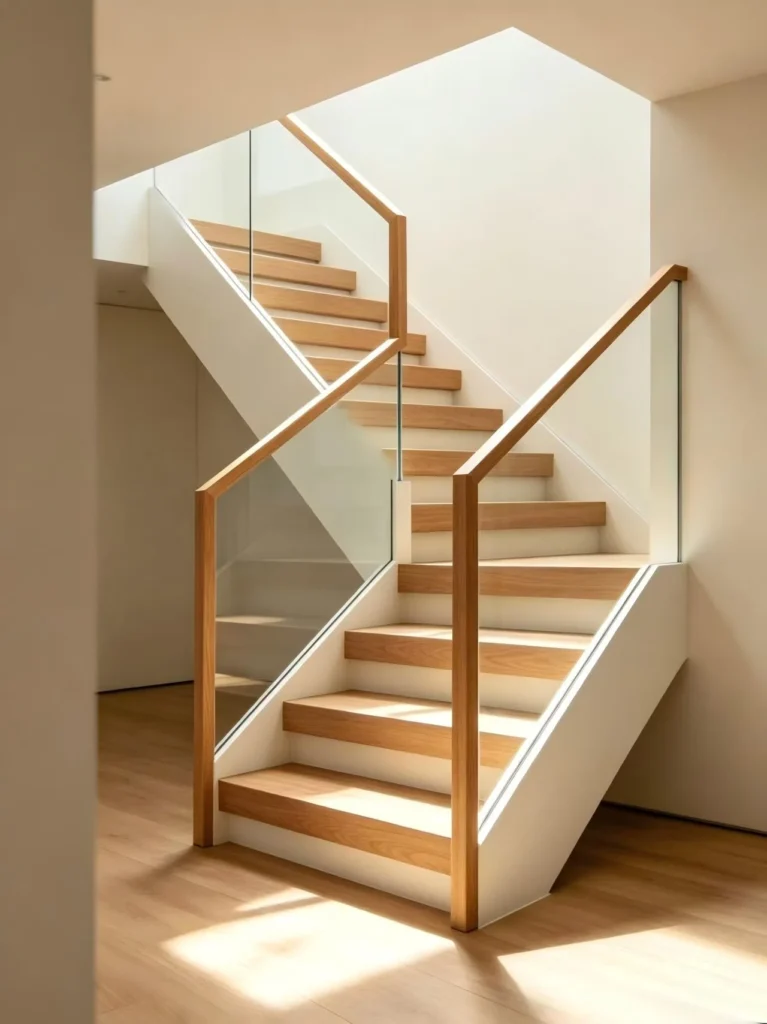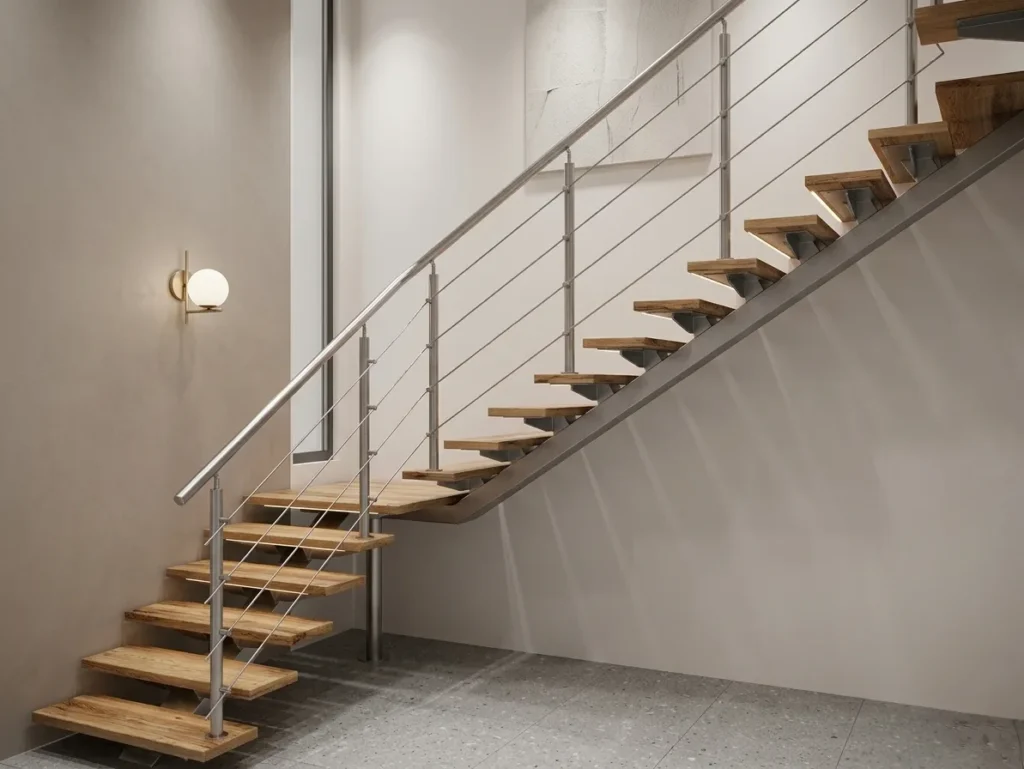



Stair Steps Wood: Oak vs Walnut vs Maple – Which Is Best?
Compare oak, walnut, and maple stair steps by Janka hardness, durability, cost, and style. Expert guide to choosing the best wood for your staircase.
Stair Steps Wood: Oak vs Walnut vs Maple – How to Choose
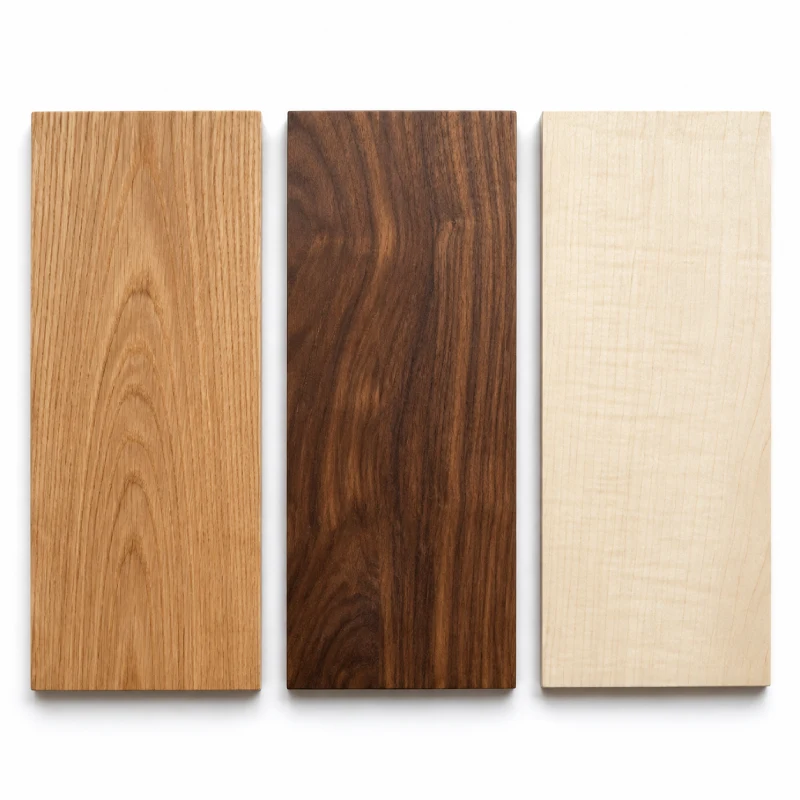
Generally speaking, oak, walnut, and maple are the three most popular hardwoods for residential stair steps in North America. Specifically, each brings distinct strengths: oak offers the best balance of durability and cost, walnut delivers unmatched richness, and maple provides the hardest surface.
However, most buyers overlook a crucial point: Janka hardness is not the only factor. Walnut (1,010 lbf) is softer than oak (1,290–1,360 lbf) and maple (1,450 lbf), yet it is the most dimensionally stable of the three—meaning less warping in seasonal humidity changes.
So, how do you choose? If you have children, pets, or heavy traffic, prioritize maple or white oak. For formal spaces with lighter use, walnut is a stunning choice. Always specify kiln-dried lumber at 6–8% moisture content to prevent future warping and cracking.
Step 1: Janka Hardness of Oak, Walnut, and Maple
Janka hardness measures the force required to embed a steel ball into wood. For stair steps, this is the most important durability metric.
| Wood Species | Janka Hardness (lbf) | Relative Durability |
|---|---|---|
| Hard Maple | 1,450 | Highest – ideal for heavy traffic |
| White Oak | 1,360 | Very high – suitable for most homes |
| Red Oak | 1,290 | High – the traditional standard |
| Black Walnut | 1,010 | Good – best for moderate traffic |
Pro Tip: With this in mind, here is a quick reference: For stair steps, a Janka rating of 900+ is acceptable. However, for high-traffic residential staircases, we recommend 1,200+ to ensure long-term durability.
Step 2: Oak Stair Steps – The Classic All-Rounder
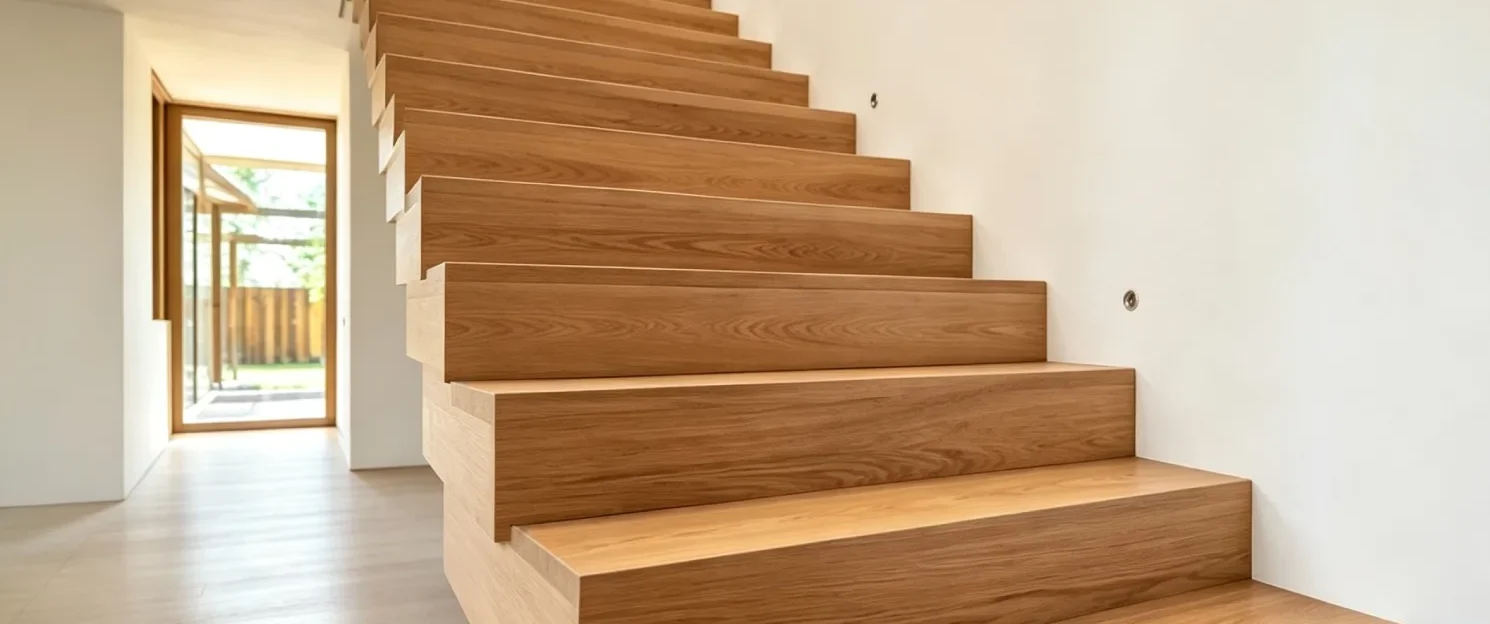
Among the three, oak is the most widely used hardwood for stair steps in North American homes. In fact, White Oak (1,360 lbf) has overtaken Red Oak in popularity due to its superior moisture resistance. Red Oak (1,290 lbf) remains a more affordable choice with a warm reddish tone and dramatic grain.
Pros: Excellent balance of durability and cost, widely available, takes stains beautifully, and pronounced grain hides scratches.
Cons: Bold grain may not suit ultra-modern interiors. White Oak costs more than Red Oak.
Best For: Most residential staircases. White Oak is especially popular in modern Scandinavian and contemporary interiors.
Step 3: Walnut Stair Steps – The Luxurious Statement
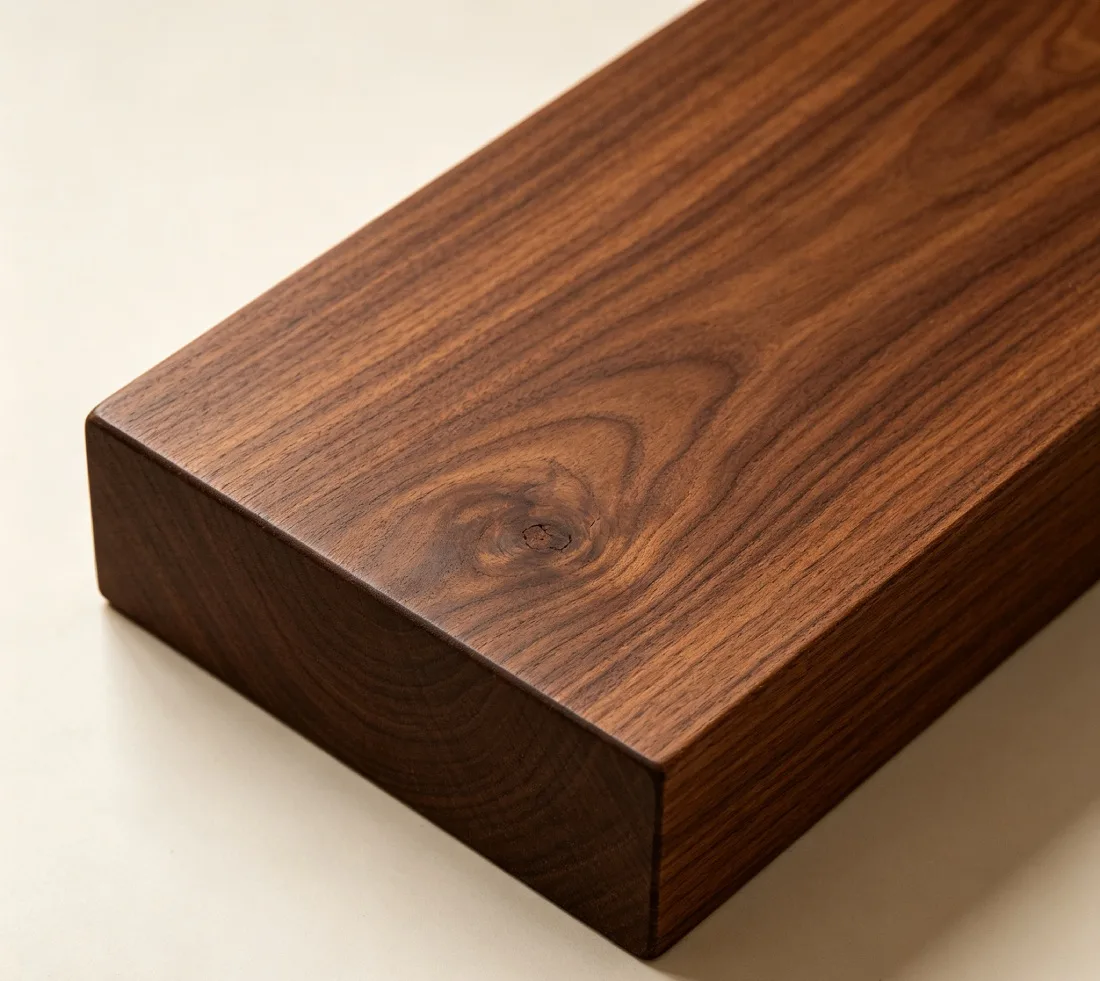
American Black Walnut is prized for its rich, dark chocolate-brown color. Notably, it is the only dark-brown domestic hardwood in North America.
Pros: Unique rich color, highly varied grain, excellent dimensional stability, and develops a lustrous patina over time.
Cons: Softer than oak and maple (1,010 lbf), higher cost, and sapwood may require steaming to match the heartwood.
Best For: Elegant, high-end interiors where the staircase serves as a focal point—formal living rooms or entryways.
Now let’s turn to the hardest option available.
Step 4: Maple Stair Steps – The Hardest Surface
If maximum durability is your priority, Hard Maple (1,450 lbf) tops the list in hardness—harder than White Oak and more wear-resistant than Red Oak.
However, many buyers are unaware that Soft Maple (~950 lbf) is 35% softer. Therefore, always specify Hard Maple for stair treads. For high-traffic areas, Hard Maple stair steps offer the longest service life.
Pros: Hardest of the three, excellent dent and scratch resistance, clean uniform appearance, and holds fasteners well.
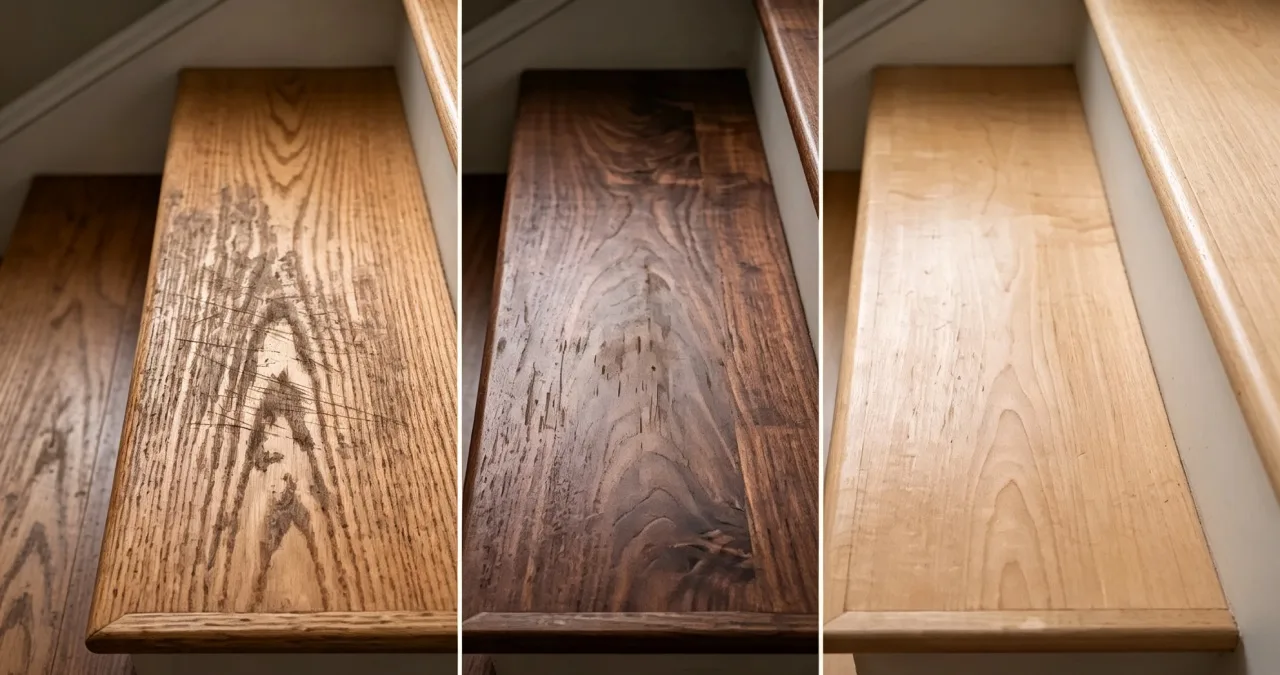
Cons: Difficult to stain evenly (dark finishes often look blotchy), light color shows dirt more readily, and lacks natural character.
Best For: High-traffic modern homes, minimalist and contemporary interiors.
Now let’s compare all three side by side.
Step 5: Oak vs Walnut vs Maple – Quick Comparison
For example, this table compares oak, walnut, and maple across all key factors—hardness, color, grain, stability, style, and cost—so you can see the differences at a glance.
| Aspect | White Oak | Black Walnut | Hard Maple |
|---|---|---|---|
| Janka Hardness | 1,360 lbf | 1,010 lbf | 1,450 lbf |
| Color | Warm brown | Rich chocolate | Creamy white |
| Grain | Pronounced, open | Varied, beautiful | Fine, uniform |
| Dimensional Stability | Good | Excellent | Very good |
| Style Match | Traditional to contemporary | Luxurious, formal | Modern, minimalist |
| Relative Cost | $$ | $$$ | $$ |
Step 6: Four Questions to Help You Choose Your Stair Steps
To narrow down your choice of stair steps, ask yourself these four questions:
- How much traffic? First, consider how much traffic the stairs will handle. For example, high traffic points toward Hard Maple or White Oak, while moderate traffic allows Walnut.
- What is your design style? If your style is traditional, choose Oak. For modern, choose White Oak or Hard Maple. For luxury, choose Walnut.
- How much maintenance? For low maintenance, Hard Maple is most worry-free. However, moderate maintenance works with Oak, and Walnut requires more care.
- What is your budget? On a budget, choose Red Oak. For mid-range, choose White Oak or Hard Maple. For premium, choose Walnut.
Step 7: Common Mistakes to Avoid
To help you steer clear of problems, here are four common mistakes:
- First, choosing Soft Maple – always specify Hard Maple for stair steps.
- Second, ignoring moisture content – always confirm 6–8% kiln-dried lumber.
- Third, staining Maple dark – Maple’s closed grain resists even stain absorption, so choose Walnut if you want a dark finish.
- Finally, mismatching wood species – treads, handrails, and balusters should match for a cohesive look.

Final Thoughts
When choosing between oak, walnut, and maple for your stair steps, the decision ultimately comes down to balancing durability, aesthetics, and budget. In addition, each of these stair steps woods offers distinct advantages for different scenarios:
- Hard Maple – The hardest surface and cleanest modern look. Consequently, it is practical for high-traffic homes.
- White Oak – The all-around top performer. As a result, it is durable, beautiful, and versatile across styles.
- Walnut – Unmatched richness and drama. In short, it turns your staircase into the focal point of the space.
Therefore, start with your lifestyle and traffic needs, then incorporate your design vision. That way, the wood you choose for your stair steps will keep your staircase beautiful for decades.
Why Choose Meizstairs for Your Custom Stair Steps?
With 15 years of OEM/ODM experience, Meizstairs is a trusted stair parts manufacturer. For instance, our factory produces custom stair treads in oak, walnut, maple, and other hardwoods—plus custom staircases, railings, and steel stair fabrication. Furthermore, free technical consultation, CNC precision cutting, and global shipping are all part of our service.
Contact our stair specialists for a free consultation today.