How Square Wooden Handrails Are Made: From Solid Stock to Finished Profile
Published Date: June 17, 2026 | Reading Time: 10 minutes | Views: 1,832 | ✅ 5‑Year Structural Warranty
From Solid Hardwood to Precision‑Milled Profiles – A 15‑Year Factory Tour
Meizstairs INSIGHTS
Subject Matter Expert: Qianglin ZhanChief Stair Designer, Meizstairs (15 years of design and custom stair manufacturing)
Expert Insight:
“The most common question I get from builders is: what size should a handrail be? Many assume any piece of wood will work. But for square wooden handrail for stairs , the dimensions matter – not just for comfort, but for code compliance and long‑term stability.
In my 15 years at Meizstairs, I’ve seen beautiful wood handrail projects fail because the solid hardwood handrail wasn’t properly kiln‑dried before milling. The rail warped within a year, pulling away from the newel posts. Another common mistake: ignoring the handrail width and thickness ratio. A rail that’s too thin feels flimsy; one that’s too thick is uncomfortable to grip.
For solid wood handrails , we follow a strict process – from selecting premium wood handrail profiles to final sanding. And for outdoor installations, we always recommend wood handrail outdoor with appropriate finishes. This guide shows you how professional square and rectangular profiles are engineered for decades of daily use.”
Subject Matter Expert: Qianglin Zhan
Chief Stair Designer, Meizstairs (15 years of design and custom stair manufacturing)
From Product Supplier to Problem‑Solving Partner
This article reveals how professional wood handrails for stairs interior and outdoor applications are manufactured – so you can make an informed choice. At Meizstairs, we believe understanding the process builds trust.
| Diagnosis Based on Experience | Holistic Approach | Long‑Term Partnership |
| 15 years of production data help us identify why certain solid wood handrails fail (moisture, grain orientation, incorrect dimensions) before they leave the factory. | We consider your staircase design, traffic level, and local building codes to recommend the optimal handrail wood species and size. | Your staircase’s safety and beauty are our success. We’re committed to delivering durable, elegant support for staircases and hallways . |
→ Talk to our production experts about your handrail order
Why Manufacturing Quality Matters for Wooden Handrails
Handrails are among the most touched and used parts of any staircase. A poorly made solid wood handrail can:
- Warp or twist, creating gaps at connections
- Develop splinters or rough edges
- Fail to meet code requirements for grip size
- Show premature finish wear or cracking
Conversely, precision‑manufactured premium hardwood handrails from a qualified stairs manufacturer can last decades while maintaining their beauty and function. This guide walks you through the professional production process – from raw lumber to finished wood handrails products .
Step 1: Lumber Selection & Grading – The Foundation of Quality
The journey begins with selecting the right raw material. Not all wood is suitable for square handrail production.
Wood species commonly used for solid wood handrail :
| Species | Hardness (Janka) | Best for | Grain Pattern |
| Red Oak | 1,290 lbf | Most homes – classic, affordable | Prominent, open |
| White Oak | 1,360 lbf | High traffic, outdoor use | Tighter, water‑resistant |
| Hard Maple | 1,450 lbf | Modern interiors | Subtle, closed |
| Walnut | 1,010 lbf | Luxury, dark finishes | Rich, straight |
| Hickory | 1,820 lbf | Extreme durability | Varied, bold |
Pro tip: For wood handrail for stairs outdoor , choose white oak or treated hardwoods for moisture resistance. For handrails for stairs interior , red oak or maple are excellent choices.
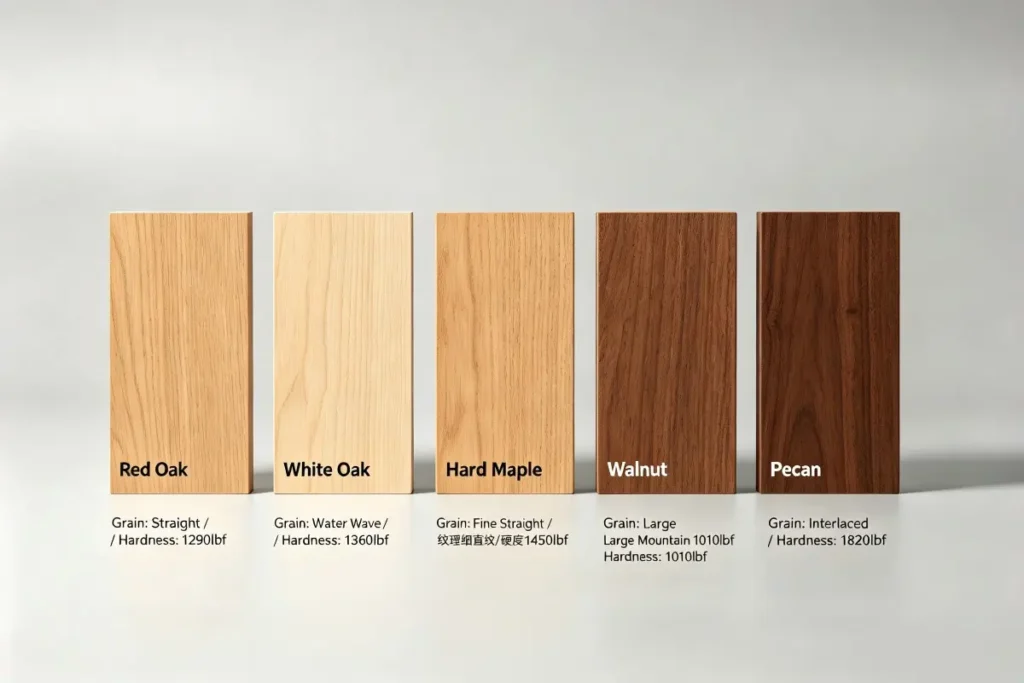
Grading standards for handrail stock
At Meizstairs, we select FAS (First & Second) grade lumber – the highest quality available. This ensures:
- Minimum 83% clear wood on the better face
- Limited, tight knots (sound, ¾″ max)
- No wane (bark edge)
” Crafted from premium natural wood – that’s not just marketing. Lower‑grade lumber with loose knots or wild grain will fail under the stress of daily gripping and pulling. For solid cap, finger joint and plowed handrails , we start with the best material available.” – Qianglin zhan
Step 2: Kiln Drying & Moisture Control
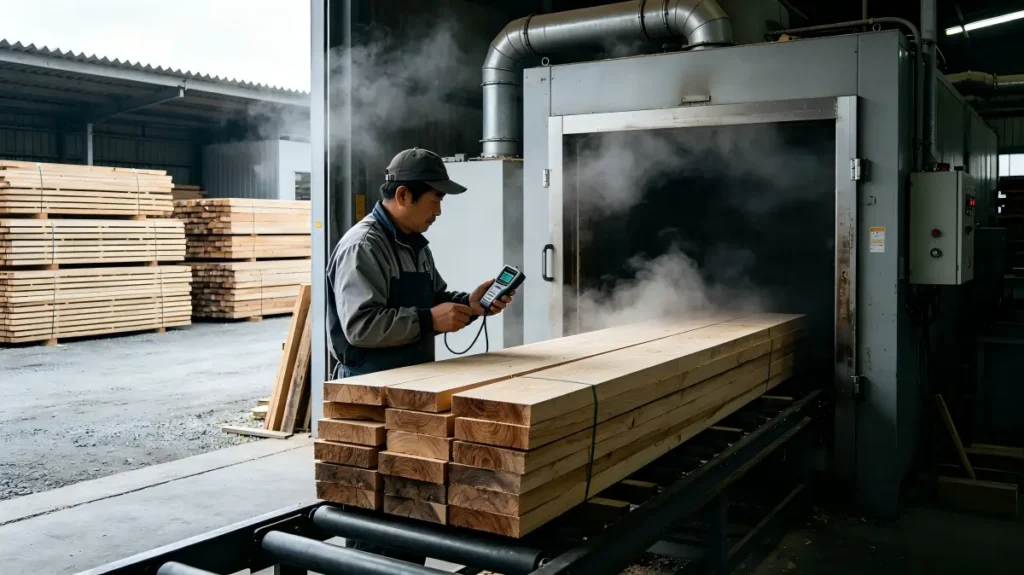
Proper drying is critical for wood handrail dimensions stability. Rails that are milled before they’re fully dry will warp, twist, or crack.
The drying process:
- Air drying (30‑90 days): Stacked with stickered spacers for initial moisture loss.
- Kiln drying (10‑21 days): Heated chambers reduce moisture content (MC) to 6‑8%.
- Conditioning : Equalizing MC throughout each board.
Target MC for handrails:
- Interior installations: 6‑7%
- Outdoor applications: 7‑8% (slightly higher to accommodate outdoor humidity swings)
- Mixed‑climate regions: 7‑8%
Why it matters: If a square handrail wood blank is machined at >10% MC, it will shrink after installation – creating gaps at the newel post connections or between joined sections.
Step 3: Rough Milling & Defect Removal
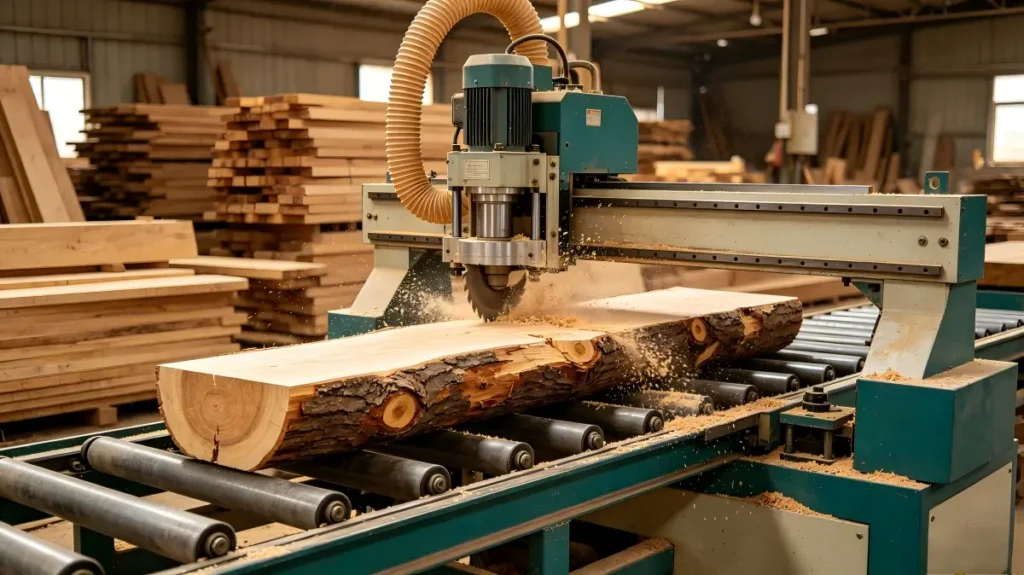
After drying, boards go to the rough mill for initial processing.
- Straight‑line ripping : One straight edge is cut for reference.
- Cross‑cutting to length : Boards are cut slightly longer than final square handrail dimensions .
- Defect cutting : Knots, checks, and splits are removed.
For custom orders: We produce square wooden handrail for stairs in any length, with blanks typically oversized by 1/4″ in both dimensions to allow for final shaping.
Step 4: Lamination or Solid Stock?
Handrail wood can be produced in two ways:
| Method | Best for | Pros | Cons |
| Solid stock | Premium, clear‑grain requirements | Consistent color; no visible glue lines | Requires thick lumber; more expensive |
| Finger‑jointed | Cost‑effective; long lengths | Uses shorter pieces; stable; reduces waste | Visible joints; not suitable for clear finishes |
| Edge‑glued | Wider profiles | Stable; resists warping | May show glue lines |
For solid wood handrails , we generally recommend edge‑glued or finger‑jointed blanks for lengths over 8 feet – they’re more stable and less prone to warping than a single solid piece.
Solid cap, finger joint and plowed handrails – each method has its place depending on the application and budget.
Step 5: Shaping the Square Profile
This is where square and rectangular profiles come to life.
Our production equipment:
| Equipment | Purpose | Accuracy |
| Four‑sided moulder (4‑sided planer) | Shapes all four sides in one pass | ±0.2mm |
| CNC router | Complex profiles, finger grooves | ±0.1mm |
| Shaper | Custom profiles | ±0.3mm |
Typical handrail profiles for modern handrail profiles :
| Profile Type | Appearance | Best for |
| Square | Clean, sharp corners | Modern, minimalist interiors |
| Square with eased edges | Slightly rounded corners | Residential, safe grip |
| Rectangular | Wider than tall | Contemporary homes |
| Colonial | Rounded top, flat bottom | Traditional homes |
Square handrail dimensions typically range from:
- 1.5″ × 1.5″ to 2.5″ × 2.5″ (square profiles)
- 1.5″ × 2.5″ to 2″ × 3″ (rectangular profiles)
Handrail width and height ratio is critical for comfort. The ideal grip size for most adults is about 1.5″ to 2″ in diameter or width. For square wooden handrail , we recommend 1.75″ to 2.25″ square – comfortable for most hands.
Step 6: Sanding to Perfection
Sanding transforms machined wood into a smooth, touch‑safe surface.
Multi‑stage sanding process:
- 60‑80 grit – removes mill marks and rough edges
- 100‑120 grit – smooths for finish absorption
- 150‑180 grit – final prep for clear coat or stain
- Hand sanding (220+ grit) – on visible faces for a silky feel
**For straight interior wood handrails for stairs , we pay extra attention to the gripping surface – the top and sides of the square profile must feel smooth to the touch.
Wood handrail dimensions must be maintained within ±0.5mm after sanding – oversanding can reduce the profile below code‑compliant grip siz
Step 7: Optional – Curved Handrail Production
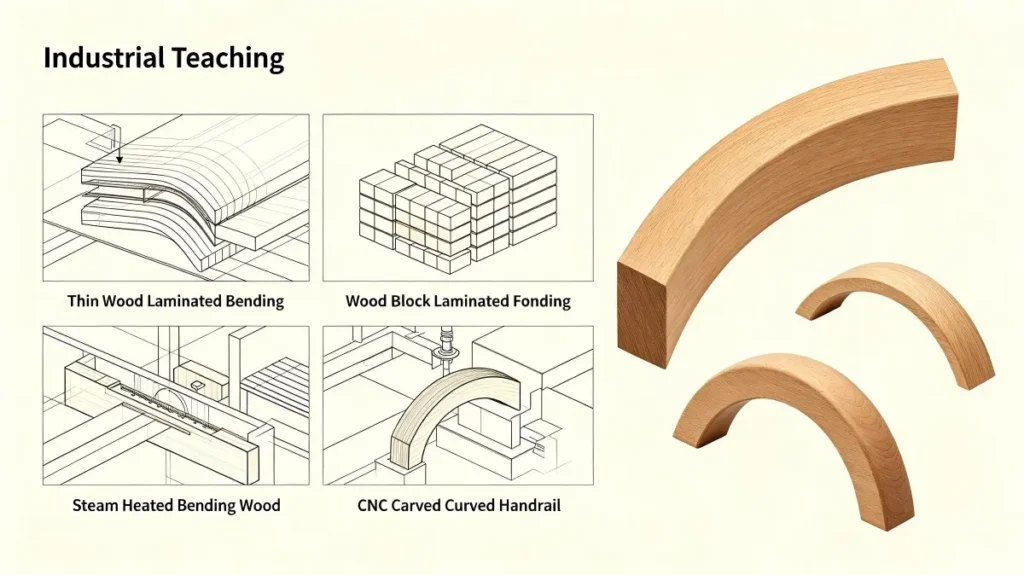
Not all handrails are straight. Solid wood curved handrail requires additional processes:
Methods for curved handrail production:
| Method | Process | Best for |
| Laminate bending | Thin layers of wood glued and bent around a form | Gentle curves; moderate radius |
| Block stacking | Individual blocks cut and assembled on a form | Tight curves; complex shapes |
| Steam bending | Wood steamed and bent to shape | Sweeping curves; large radius |
| CNC machining | Solid block cut to shape | Any curve; high precision |
Modern handrail wood designs often incorporate curved sections. For tight curves (small radius), the block‑stacking or laminate method produces the most stable results.
Step 8: Surface Finishing – Protecting the Wood
Finishing protects solid wood handrails from moisture, oils from hands, and daily wear.
Our finishing process for wood handrails products :
- Sealer coat – penetrates wood to prevent blotching
- Sanding sealer – fills grain
- Two‑coat urethane or lacquer – provides durability
- Final buff – for consistent sheen (matte, satin, or semi‑gloss)
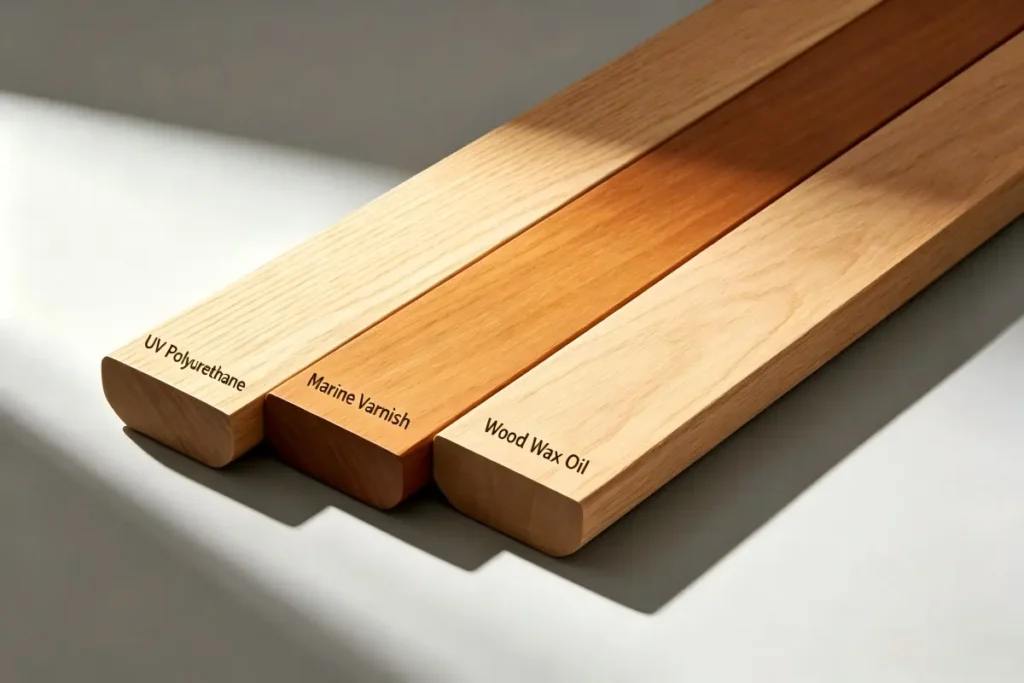
Finish options for wood handrail for stairs outdoor :
| Finish Type | Durability | Best for |
| PU urethane | Excellent; weather‑resistant | Outdoor and high‑traffic areas |
| Marine varnish | Superior; UV blockers | Marine‑adjacent; extreme weather |
| Oil finish | Moderate; easy to touch up | Indoor; natural look |
| Wax | Low; traditional | Interior; antique finish |
Pro tip:For wood handrail outdoor applications, we always recommend PU‑stable finishes with at least 2% UV absorbers – otherwise, the wood will gray and the finish will fail within 18‑24 months.
Wood handrails for stairs interior can use standard urethane or lacquer finishes, as they’re protected from weather.
Step 9: Quality Control & Inspection
Every piece of wood handrail undergoes rigorous checks before leaving the factory.
Standard QC checks for square handrail orders:
| Test | Method | Pass/Fail Criteria |
| Dimensions | Laser or caliper measurement | ±0.5mm for width, height, length |
| Straightness | Straightedge and feeler gauge | ≤1/16″ over 8 feet |
| Surface quality | Visual & touch | No chips, cracks, or visible scratches |
| Moisture content | Moisture meter | 6‑8% ±1% |
| Finish adhesion | Cross‑hatch tape test | No lifting |
| Color match | Visual (standardized lighting) | Consistent across the set |
For solid hardwood handrail orders: We perform additional checks on grain orientation and defect‑free surfaces.
Step 10: Packaging & Shipping
Proper packaging prevents damage during transit – especially for wood handrails for stairs interior destined for residential sites.
Our packaging protocol:
- Each rail individually wrapped in foam or bubble wrap
- Stacked with edge protectors
- Crating in heavy cardboard or plywood with internal bracing
- Labeled with handrail wood dimensions and installation order
For international shipping: Meizstairs adds corner blocks and A‑frames inside the crate to prevent any movement during transit.
Handrail Code Requirements – What You Need to Know
What size should a handrail be? Building codes specify the required handrail dimensions :
| Code Standard | Grip Size Requirement | Height Requirement |
| IRC (USA) | 1.25″ – 2″ circular or square | 34″ – 38″ above nosing line |
| IBC (Commercial) | 1.25″ – 2″ | 34″ – 38″ |
| UK/Europe (EN) | 900‑1000 mm height | Finger clearance of at least 50mm |
For square handrail code compliance, the profile must allow for a secure grip. Our standard square wooden handrail is 1.75″ × 1.75″ – comfortably within code requirements for most jurisdictions.
Handrail width – the gripping surface – must be at least 1.25″ but no more than 2″ for a comfortable, secure grip.
Sample Production Timeline (Custom Square Handrail Order)
| Stage | Time | Notes |
| Lumber selection & kiln drying | 2‑4 weeks | If stock on hand, faster |
| Milling & defect removal | 2‑3 days | |
| Shaping (4‑sided moulder / CNC) | 1‑2 days | |
| Curved section production (if applicable) | 2‑3 days | Block stacking or CNC |
| Sanding | 1‑2 days | Multi‑stage |
| Finishing | 3‑5 days | Includes curing time |
| Quality control | 1 day | |
| Packaging & shipping | 1‑2 days | |
| Total (typical custom order) | 3‑5 weeks | Faster for stock profiles |
Common Mistakes to Avoid When Buying Square Wooden Handrails
| Mistake | Why it fails | Meizstairs solution |
| Ignoring handrail width and grip size | Too thin = uncomfortable; too thick = unsafe | We produce code‑compliant dimensions |
| Ordering wood handrail without specifying square handrail dimensions | Mismatch with newels and balusters | We coordinate all custom stair parts |
| Installing wood handrail for stairs outdoor without UV‑stable finish | Wood grays and cracks | We apply UV‑protected outdoor finish |
| Assuming all square handrail wood is the same quality | Lower grades warp and split | We use FAS‑grade material only |
| Forgetting square handrail code requirements | Fails building inspection | We engineer to local code standards |
Why Choose Meizstairs for Your Square Wooden Handrails?
We are a custom staircase manufacturer with 15 years of experience producing custom stair parts – including square and rectangular handrails in all sizes and finishes.
What we offer:
| Category | Details |
| Wood species | Red oak, white oak, maple, walnut, hickory, and more |
| Profiles | Square, eased square, rectangular, colonial, custom wood handrail profiles |
| Lengths | Up to 20 feet straight; custom curved sections |
| Finishes | Unfinished, PU urethane, lacquer, oil, marine varnish |
| Applications | Handrails for stairs interior , wood handrail outdoor , modern handrail wood , wood handrail for stairs outdoor |
| Integration | Complete coordination with wood handrails products , newels, and balusters |
| Certifications | IRC‑compliant, IBC‑compliant (commercial) |
Free services:
- Technical drawing review – we confirm your square handrail dimensions before cutting
- Finish samples (wood and color options)
- Installation guidance for straight interior wood handrails for stairs and curved sections
“Meizstairs supplied solid hardwood handrail for our entire custom home. The square handrail wood matched perfectly with our newels, and the finish has held up beautifully for three years. Their team even confirmed our what size should a handrail be question before we ordered.”— Mark T., Homeowner, Colorado
Final Checklist Before You Order Square Wooden Handrails
- Have you chosen your wood species (oak, maple, walnut, hickory)?
- Have you confirmed the handrail width and square handrail dimensions ?
- Do you need straight interior wood handrails for stairs or wood handrail for stairs outdoor ?
- Have you checked local square handrail code requirements?
- Do you need curved sections? (Send your radius and angle.)
- Have you ordered matching custom stair parts (newels, balusters, fittings)?
- Do you require wood handrail outdoor with UV‑stable finish?
- Have you measured your total linear footage (add 10% for waste)?
Ready to Order Professional Square Wooden Handrails?
Contact Meizstairs today. We’ll help you select the right species, size, and finish – and manufacture your wood handrail to precision standards.
📧 Email: sales@meizstairs.com
🌐 Website: www.meizstairs.com
📞 WhatsApp: +86 [13392776138]
Categories: Manufacturing Process
Tags: custom stair parts • stairs manufacturer
Author:Qianglin Zhan
Chief Stair Designer, Meizstairs, 15+ years in custom stair parts engineering and production. Qianglin Zhan has personally overseen the manufacture of over 200,000 linear feet of wood handrails for residential and commercial projects worldwide.
📌 Connect on LinkedIn | View all articles
© 2026 Meizstairs – Your Trusted Custom Stair Parts Manufacturer
