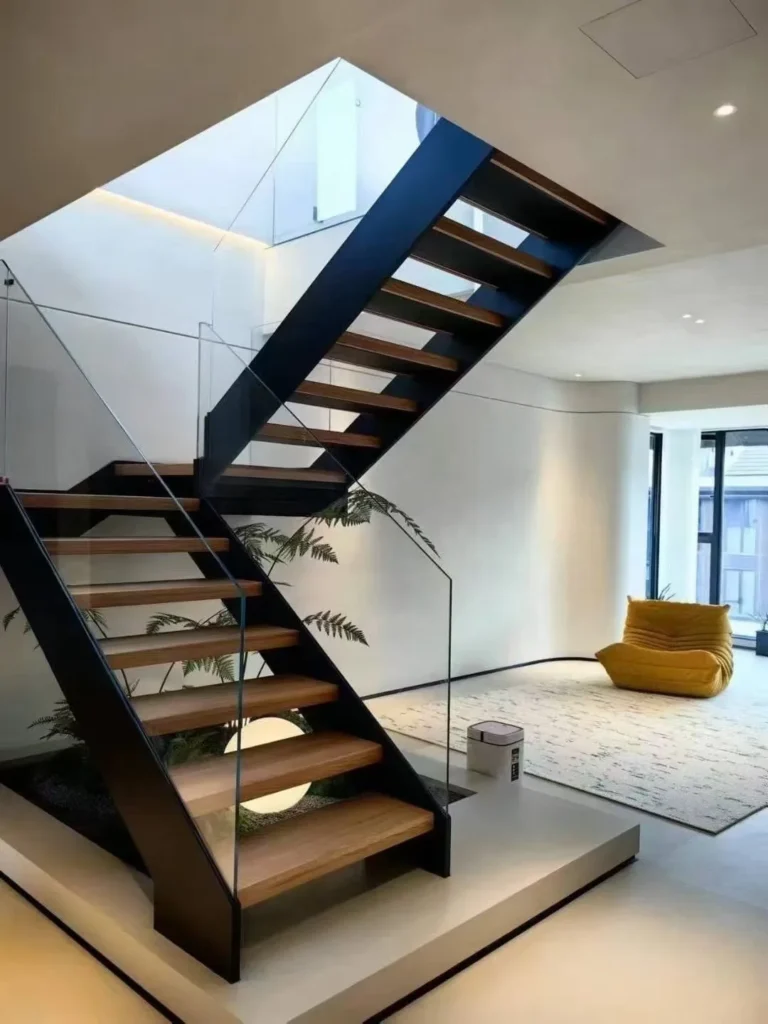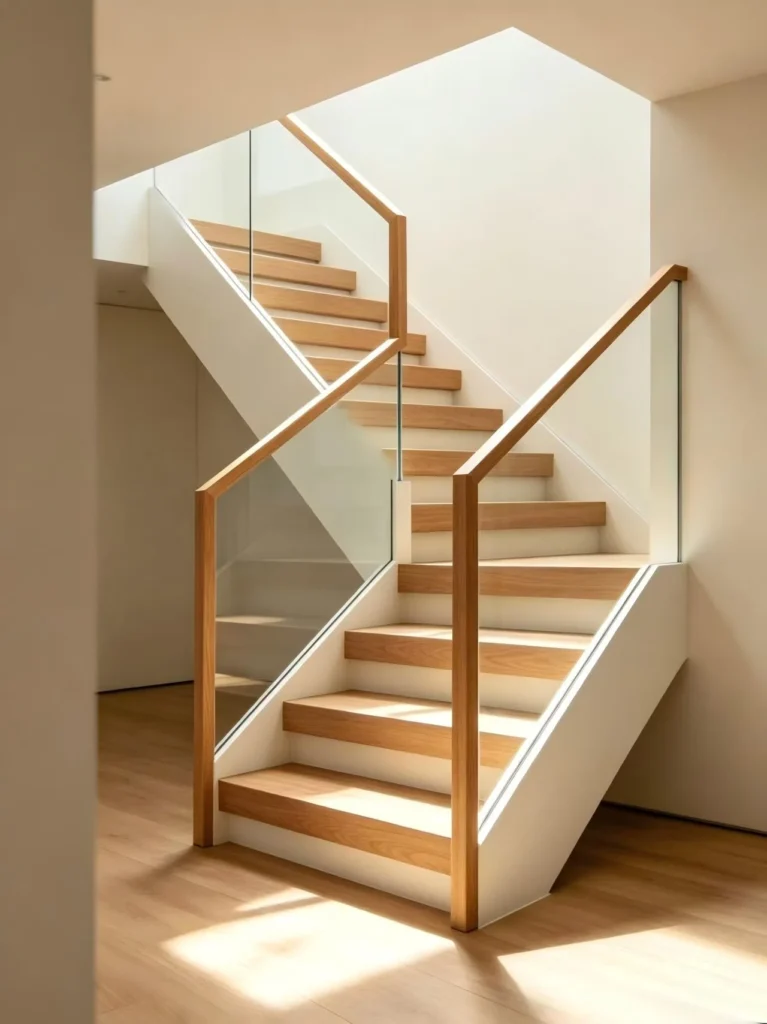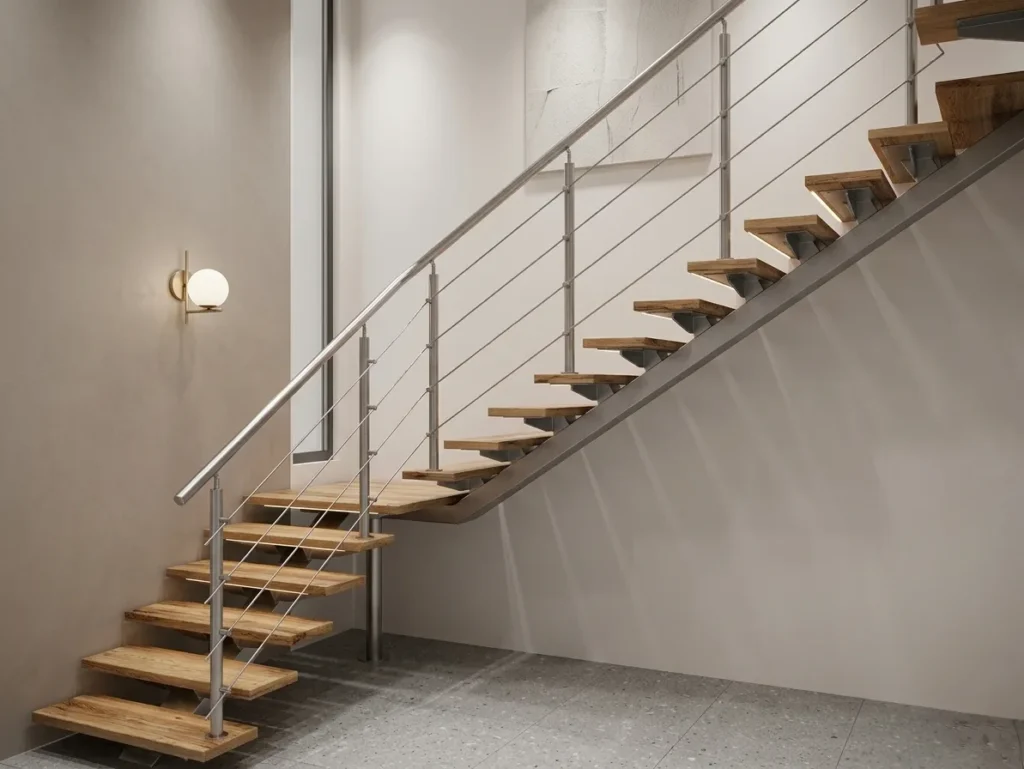


For example, in my 15 years at Meizstairs, I’ve seen these structural members fail not because of poor welding, but because the steel plate was too thin for the application. Conversely, over-specifying thickness drives up cost unnecessarily. This guide helps you determine the optimal thickness for your stair stringers.
Introduction: Why Steel Plate Thickness Matters for Steel Stair Stringers
Selecting the correct steel plate thickness for stair stringer fabrication is one of the most critical decisions in staircase fabrication. The stringer — the structural backbone that supports treads and risers — must be thick enough to carry the intended load without excessive deflection, yet not so thick that material costs become prohibitive.
To begin with, for the stringer system, plate thickness directly affects structural integrity, fabrication complexity, welding requirements, and overall project cost. This guide provides a systematic approach to determining the optimal steel plate thickness for steel stringers, covering load calculations, span considerations, material grades, and industry standards.
Key Factors for Metal Stringers for Stairs Plate Thickness
Several interrelated factors influence the required thickness of stair stringers. Understanding each factor is essential for accurate engineering decisions.
1. Load Requirements
The primary factor in determining steel plate thickness for the support members is the load the staircase must support.Specifically, Loads are divided into two categories:
- Dead Load – The weight of the staircase itself, including the stringers, treads, risers, and any attached finishes. For steel stair stringers, the self-weight of the steel plate is a significant component.
- Live Load – The weight of people using the stairs, furniture, and any temporary loads. Building codes (IBC, ASCE 7) specify minimum live loads for staircases, typically 100 psf for residential and commercial applications. For example, in high-traffic commercial buildings, this load may increase significantly.
For the stringer assembly in high-rise commercial applications, total load (dead + live) can exceed 150 psf, therefore requiring thicker steel plate.
2. Span Length
The unsupported span of the the stringer assembly directly affects the required plate thickness. Longer spans increase bending stress, requiring thicker steel plate or additional intermediate supports.
For typical residential the structural supports, spans of 10–14 feet are common. However, commercial applications often require spans of 14–20 feet.As a rule of thumb, for steel stringers, plate thickness must increase by approximately 20% for every 4-foot increase in span. Cependant, this is a general guideline and should be verified with engineering calculations.
3. Steel Grade for The Stringers
In addition to span and load, the grade of steel used for the stringers determines its yield strength and allowable stress. Common grades include:
- A36 – Yield strength: 36 ksi. Consequently, it is most common for these structural members in residential and light commercial applications.
- A572 (Grade 50) – Yield strength: 50 ksi. Higher strength allows for thinner plates for stair stringers under the same load.
- A992 – Yield strength: 50–65 ksi. Often used for structural steel members in high-performance applications. Thus, higher grade steel allows for thinner plates.
4. Safety Factor for Metal Stringers for Stairs
Engineering standards for stair stringers require a safety factor to account for unexpected loads, material defects, and long-term degradation. Typical safety factors range from 1.5 to 2.0 for stair support beams fabrication.
Recommended Steel Plate Thickness for Metal Stringers for Stairs
Based on the factors discussed above, the following table provides general recommendations for the stringer system based on span and load conditions.All values assume A36 steel with a safety factor of 1.67. Notably, these are minimum recommendations and should be verified by a structural engineer.
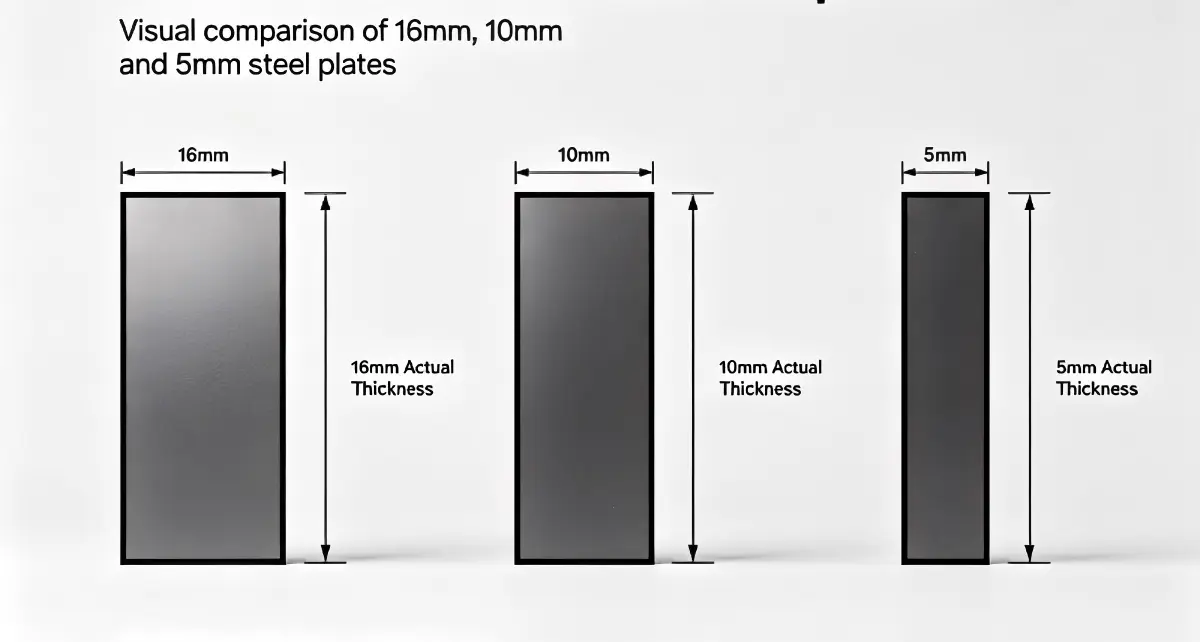
| Span Length | Load (psf) | Recommended Thickness | Application |
|---|---|---|---|
| 8–10 ft | ≤ 100 psf | 1/4″ (6.35 mm) | Residential, light use |
| 10–12 ft | ≤ 100 psf | 5/16″ (7.94 mm) | Residential, moderate use |
| 10–12 ft | 100–150 psf | 3/8″ (9.53 mm) | Commercial, light traffic |
| 12–14 ft | ≤ 100 psf | 3/8″ (9.53 mm) | Residential, long span |
| 12–14 ft | 100–150 psf | 1/2″ (12.7 mm) | Commercial, moderate traffic |
| 14–16 ft | 100–150 psf | 5/8″ (15.88 mm) | Commercial, high traffic |
| 16–20 ft | ≥ 150 psf | 3/4″ (19.05 mm) | Industrial, heavy load |
These thickness recommendations for these structural members are starting points. Always consult a structural engineer for final verification.
How to Calculate Steel Plate Thickness for Steel Stringers
Furthermore, When performing precise engineering of metal stringers for stairs, use the following systematic approach:
- Determine total load – Calculate dead load plus live load for your the support members.Next,
- Calculate bending moment – M = (w × L²) / 8 for simply supported the structural members.
- Determine section modulus – S = M / (0.6 × Fy) where Fy is the yield strength of the steel.
- Select plate thickness – Choose the minimum thickness that provides the required section modulus for your metal stringers for stairs.
- Apply safety factor – Multiply by 1.5–2.0 for final design thickness of metal stringers for stairs.
Industry Standards for Stair Support Members
In addition to engineering calculations, In addition to calculations, when specifying metal stringers for stairs, engineers should reference the following standards:
- AISC Steel Construction Manual – Provides design formulas and tables for the support structure.
- IBC (International Building Code) – Sets minimum live load requirements for metal stringers for stairs.
- ASCE 7 – Defines load combinations for structural metal stringers for stairs.
- ASTM A36 / A572 – Material specifications for steel plates used in steel stair fabrication. Par conséquent, following these standards ensures compliance and safety.
To Ensure a Successful Design, When Determining Thickness for Metal Stringers for Stairs, Avoid These Common Errors:
| Erreur | Conséquence | Prévention |
|---|---|---|
| Underestimating live load | Stringer deflection, fatigue cracking | Use IBC minimum loads + 20% margin |
| Ignoring safety factor | Structural failure under peak loads | Apply 1.5–2.0 factor for all metal stringers for stairs |
| Using too thin for long spans | Excessive vibration, comfort issues | Follow span-thickness table above |
| Over-specifying thickness | Unnecessary cost, heavy fabrication | Use engineering calculations, not guesswork |
| Not considering deflection | Bouncy, unstable stairs | Check deflection criteria: L/360 minimum. As a result, the staircase will remain stable and comfortable under load. |
To summarize, determining the optimal steel plate thickness for metal stringers for stairs requires a systematic approach. First, calculate all applicable loads. Then, consider span length and steel grade. Furthermore, apply appropriate safety factors. Finally, reference industry standards for verification. Then, consider span length and steel grade. Furthermore, apply appropriate safety factors. Finally, reference industry standards for verification. Meizstairs engineers can assist you in selecting the right thickness for your metal stringers for stairs project.
Ready to Fabricate Your Metal Stringers for Stairs?
Therefore, contact Meizstairs today. We will help you design, engineer, and fabricate your metal stringers for stairs to exact specifications.