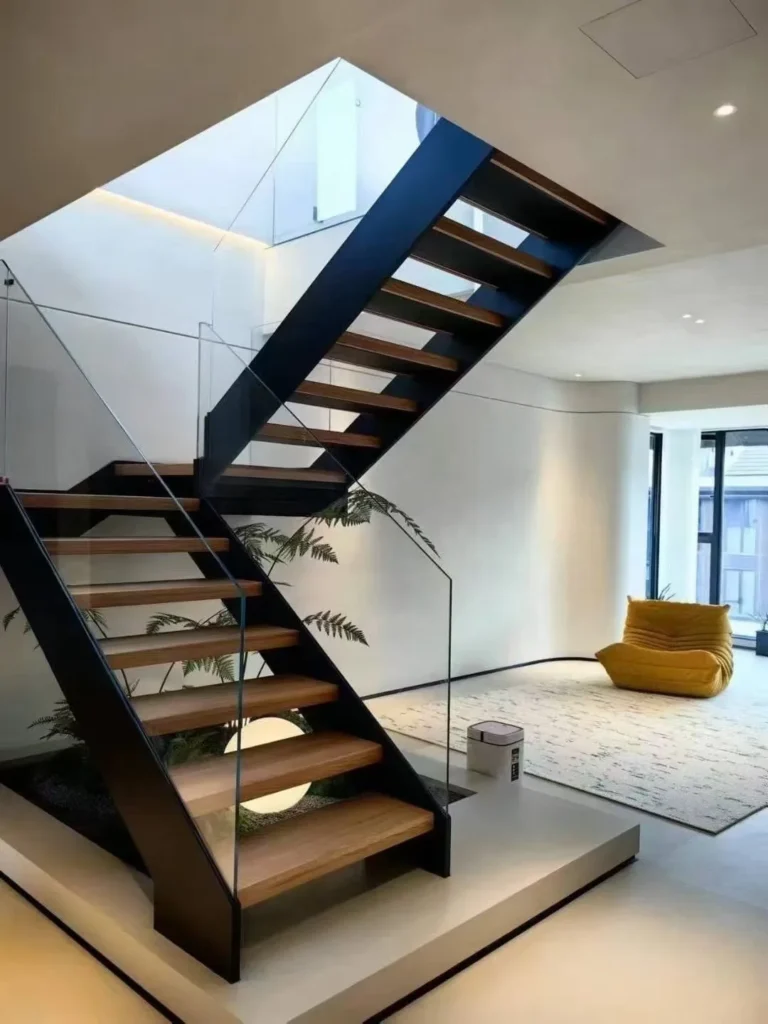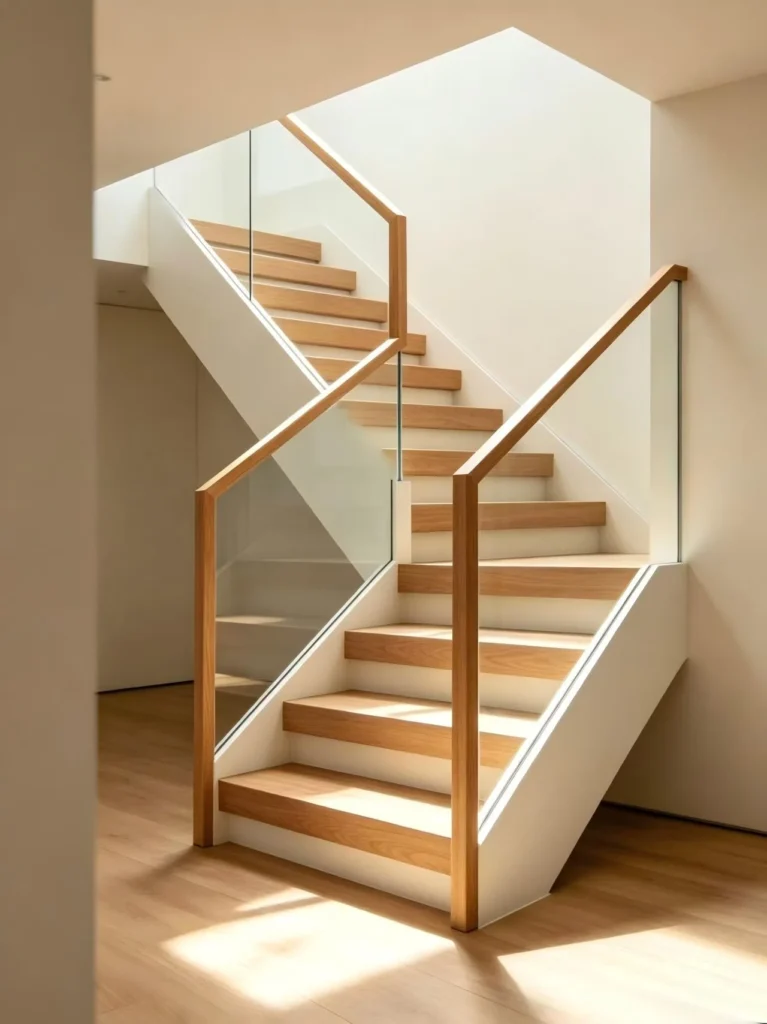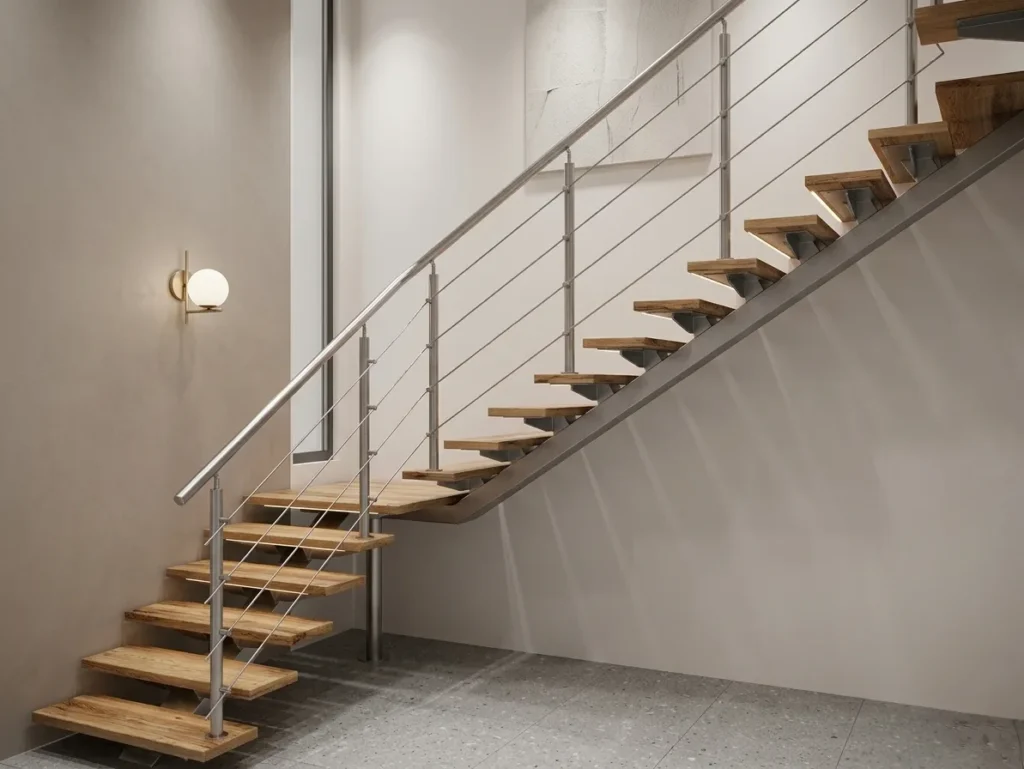


Expert Insight: To begin with,When architects ask me about modern staircase design, the first structural decision isn’t the tread material or railing style – it’s the stringer profile. Steel stair stringers typically use box section (HSS) or bent steel plate as the two most common choices. But which is better for your this stair design?
In addition,In my 9 years at Meizstairs, I’ve seen steel staircase projects succeed based on this choice. In contrast, other projects have failed because the wrong profile was selected.Hollow structural sections (HSS) offer excellent torsional rigidity and a clean, finished appearance – ideal for straight stairs and mono stringer stairs. Bent steel plate, on the other hand, provides unmatched design flexibility for curved stairs, u-shaped staircase, and floating stairs design.
Box section vs bent plate isn’t about which is universally better for your design? – it’s about which is right for your specific project. This guide breaks down the structural strength, load capacity, fabrication complexity, modern aesthetics, and cost-effectiveness of each option. Use this information to make an informed decision for your contemporary stair projects.
Box Section vs Bent Plate: Expert Selection Guide for Modern Staircase
This guide provides a comprehensive comparison of box section (HSS) and bent steel plate for modern staircase stringers. At Meizstairs, we believe understanding the trade-offs helps you choose the right profile for your your stair structure project. Whether you are designing a residential the structure or a commercial installation, the choice between box section and bent plate significantly impacts structural performance, fabrication complexity, and overall cost.
| Feature | Box Section (HSS) | Bent Steel Plate |
|---|---|---|
| Shape | Pre-formed rectangular/square tube | Custom-formed from flat plate |
| Structural efficiency | Excellent – closed section | Good – open section |
| Fabrication complexity | Modéré | High (curved) / Moderate (straight) |
| Aesthetic appearance | Clean, industrial | Custom, architectural |
What Are Box Section (HSS) and Bent Steel Plate for Modern Staircase?
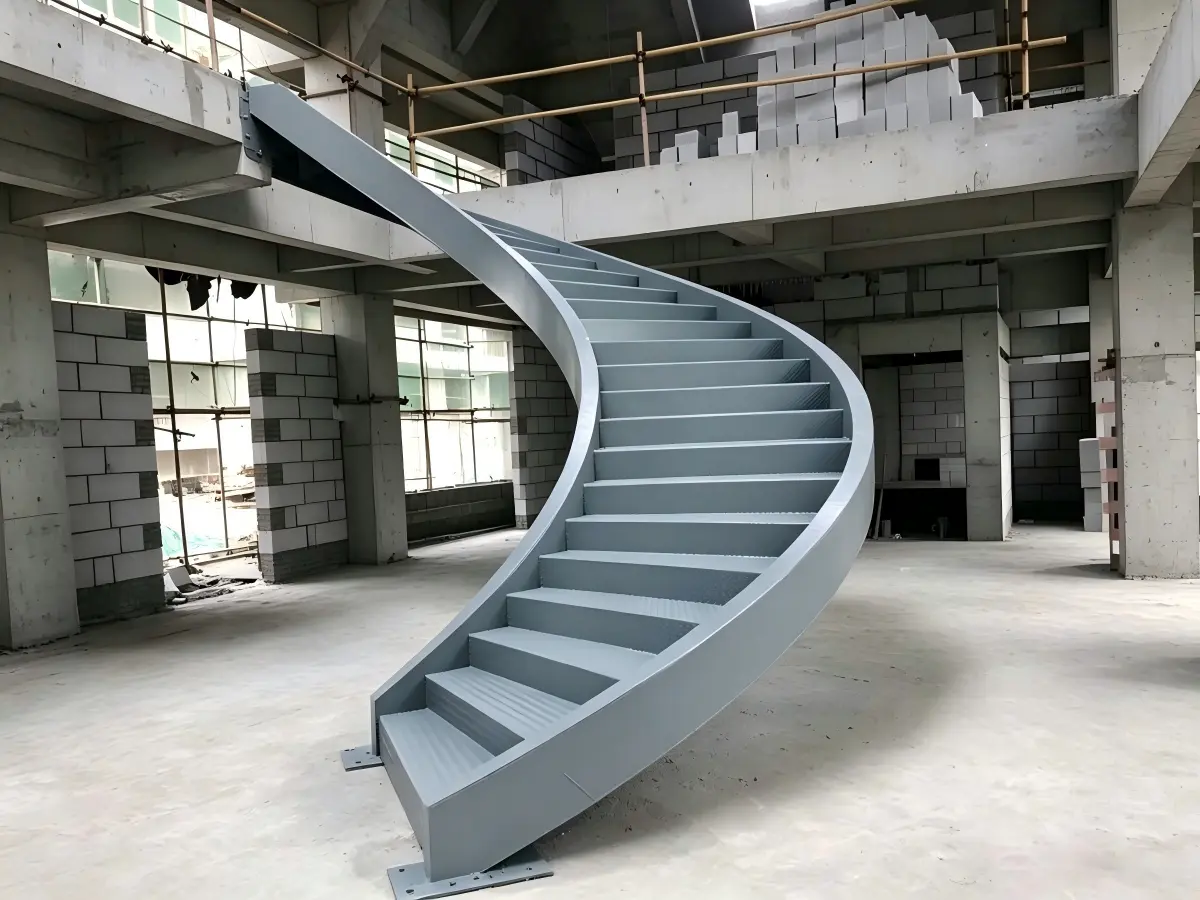
Box Section / Hollow Structural Section (HSS) – Hollow structural sections (HSS) are high-strength welded steel tubing available in rectangular, square, or circular shapes. For a modern staircase, HSS provides a clean, minimalist look with excellent structural performance.
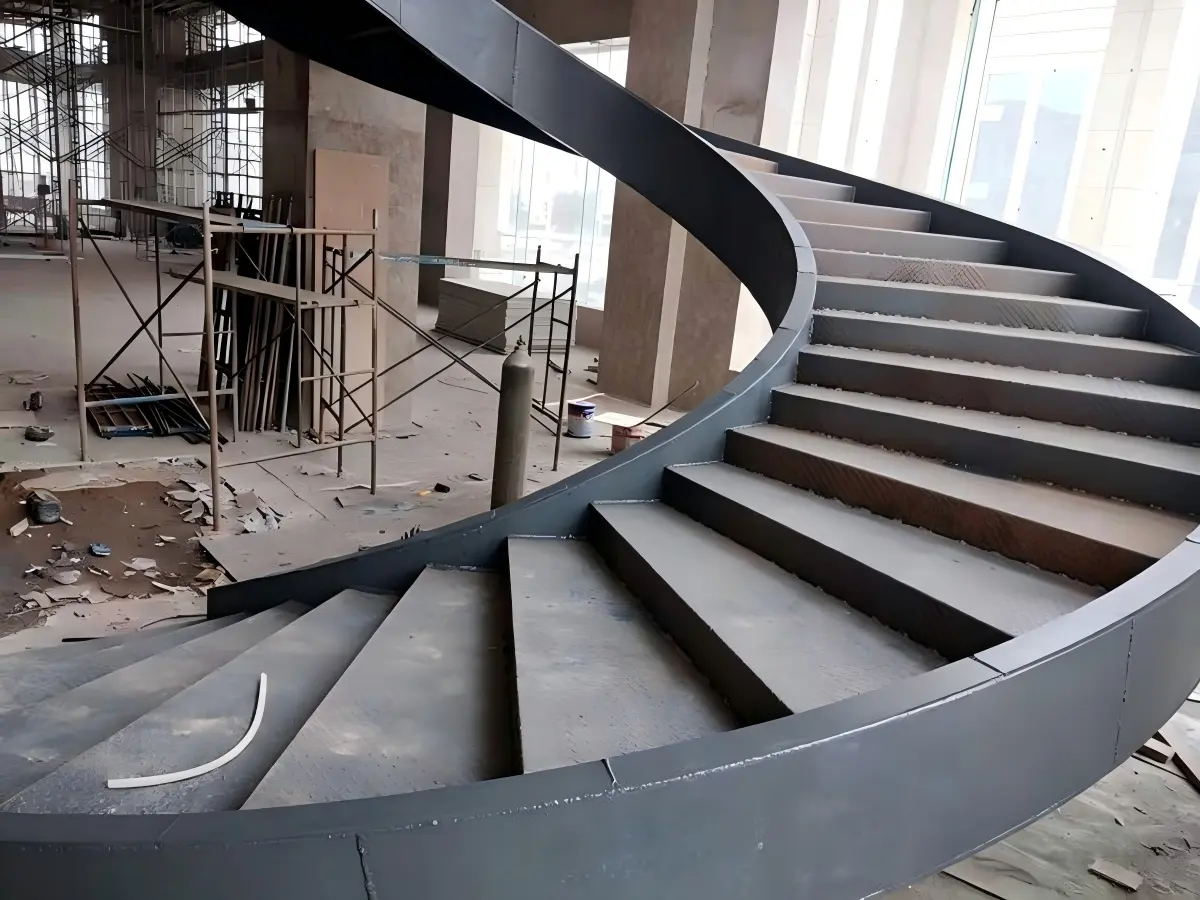
Bent Steel Plate / Folded Steel Plate – Bent steel plate is a flat steel plate that is formed – typically using a press brake, plate rolling, or section bender – into a custom shape. Engineers widely use bent plate structural steel for curved stringers, mono stringers, and architectural stair components in modern stair systems designs.
Box Section vs Bent Plate: Structural Strength Comparison for Modern Staircase
When designing a modern staircase, structural strength is paramount. HSS steel meaning in construction is all about structural strength & load capacity. The closed cross-section of HSS provides excellent torsional rigidity – ideal for mono stringers and cantilever designs in a this application. It also offers high flexural strength that resists bending in multiple directions, with consistent section properties that ensure predictable engineering calculations.
Buildings, bridges, and staircases commonly use HSS as a primary structural member. This makes it a reliable choice for any stair system project.
Bent Steel Plate – Flexible but Demanding
Bent steel plate offers good load-bearing capacity. Its strength depends on plate thickness and profile design. It provides adaptability that can be shaped to match complex curves, which is essential for curved modern staircase designs. However, variable section properties require more engineering attention compared to HSS.
Box Section vs Bent Plate: Load Capacity Comparison for Modern Staircase
Here is a comparison of load capacity factors:
| Factor | Box Section (HSS) | Bent Steel Plate |
|---|---|---|
| Material cost | Low – standardized | High – custom sizes |
| Engineering cost | Superior – closed section | Lower – open section |
| Buckling resistance | High – closed shape | Moderate – requires stiffeners |
| Span capability | Longer spans possible | Limited by plate thickness |
Designers often prefer HSS for mono stringer stairs or single stringer staircase designs in a modern staircase. Its superior torsional rigidity makes it the better choice.
Box Section vs Bent Plate: Fabrication Complexity for Modern Staircase
Box Section – Pre-Formed and Standardized
In contrast,Box stringer fabrication (also known as RHS – Rectangular Hollow Section) is relatively standardized for modern staircase construction. Profile Comparison shows available in standard sizes. Welded steel construction requires less complex fabrication than bent plate.Installation difficulty is lower – sections fit together more easily, which is a significant advantage for residential stair designs projects with tight timelines.
Fabrication & Processing for HSS in a modern staircase involves:
- Cutting – Laser cutting or sawing
- Bending – Induction bending for curves (specialized equipment required)
- Welding – Standard welding processes
- Finishing – Paint or powder coating
Bent Steel Plate – Custom and Complex
For a commercial stair projects with curved or complex geometry, bent steel plate offers superior design flexibility. However, this comes with increased fabrication complexity. Bent plate requires skilled labor for forming, more demanding welding requirements, and careful quality control to ensure consistent profiles. For straight modern staircase designs, the complexity is moderate, but for curved applications, it becomes significantly higher.
Cost Comparison: Box Section vs Bent Steel Plate for Modern Staircase
| Cost Factor | Box Section (HSS) | Bent Steel Plate |
|---|---|---|
| Material cost | Lower – standardized | Higher – custom sizes |
| Engineering cost | Lower – predictable | Higher – custom calculations |
| Fabrication cost | Lower – less labor | Higher – skilled labor required |
| Installation cost | Lower | Higher |
Nevertheless,For straight modern staircase designs, HSS is more cost-effective. For curved the overall structure designs, bent plate may be necessary despite higher cost, as it can follow complex curves that HSS cannot accommodate.
Best Uses for Box Section vs Bent Plate in Modern Staircase
| Application | Recommended Profile | Why |
|---|---|---|
| Straight modern staircase | Box Section (HSS) | Cost-effective, clean aesthetic |
| Curved modern staircase | Bent Steel Plate | Can follow complex curves |
| Mono stringer design | Box Section (HSS) | Superior torsional rigidity |
| Floating staircase | Bent Steel Plate | Custom shapes for cantilevered treads |
To summarize, you should consider several factors when selecting a modern staircase design.First, consider your design geometry – straight vs curved. Next, evaluate load requirements and span length. Furthermore, assess your budget and timeline. Finally, consult with fabrication experts to validate your choice. Meizstairs can help you select and fabricate the optimal profile for your contemporary designs project.
Ready to Build Your Modern Staircase?
Contact Meizstairs today. We will help you design, engineer, and fabricate your steel stair stringers to exact specifications for your the stair structure.