

Glass railing cost typically ranges from $200 to $600 per linear foot (304.8 mm) installed in 2026, depending on glass type, mounting system, and regional labor rates. This guide breaks down every cost component with real 2026 pricing data.
How Much Does Glass Railing Cost Per Linear Foot?
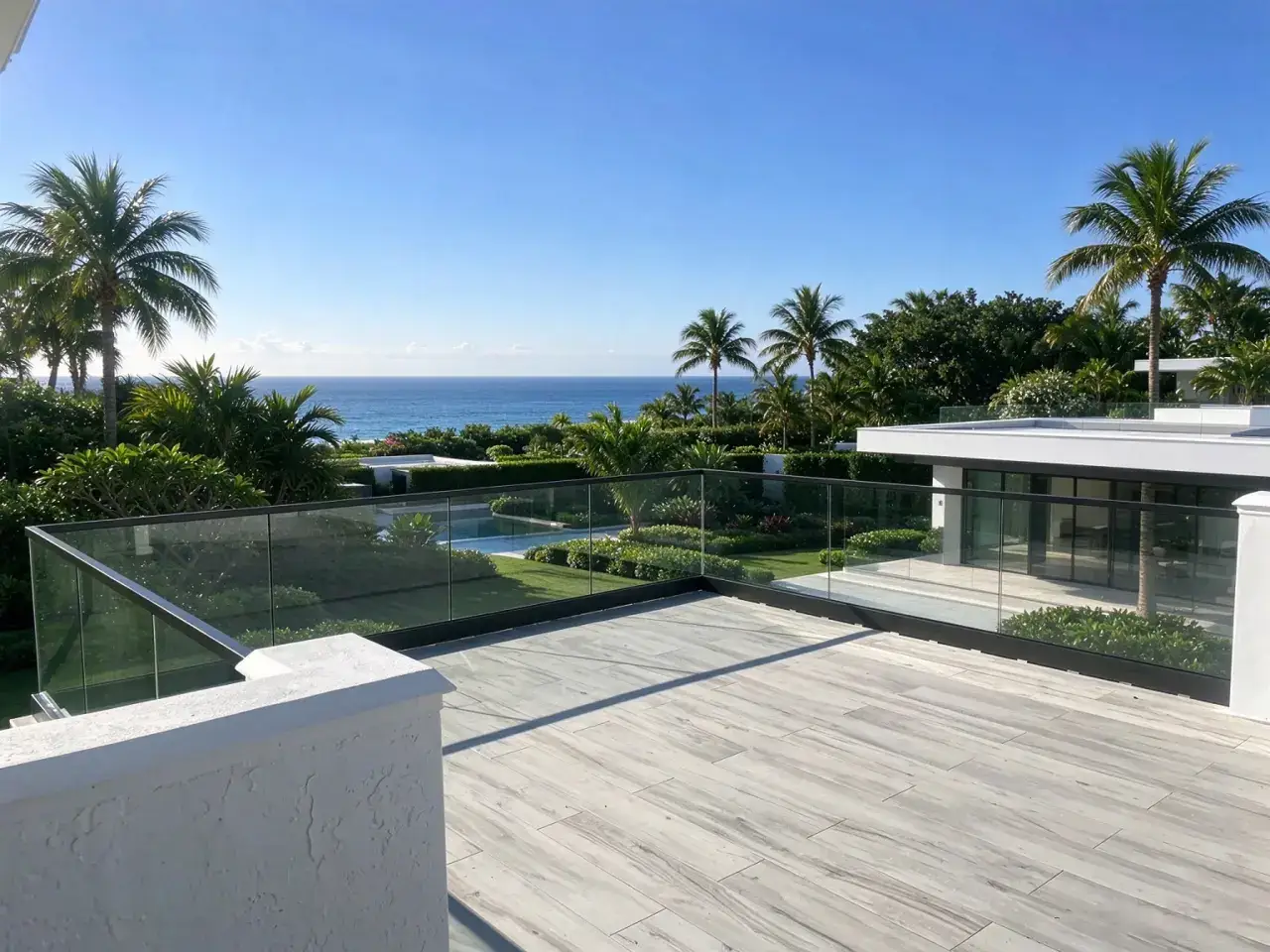
Frameless glass railing costs $200–$600 per linear foot (304.8 mm) installed. Semi-frameless systems run $200–$400. The price spread is wide due to the fact that three variables dominate: glass type, mounting hardware, and whether the glass is monolithic or laminated. Consequently, understanding these differences is crucial.
Glass Railing Cost by Glass Type
The table below breaks down the 2026 glass railing cost by glass type. Por ejemplo, monolithic tempered glass (10–12 mm) costs $120–$250 per linear foot (304.8 mm) installed. In contrast, laminated glass (6+6 or 8+8) is more expensive, costing $180–$350. Además, Low-Iron or Ultra-Clear glass costs $250–$450 because the manufacturing process removes the green tint. Consequently, this adds to the overall cost but significantly improves optical clarity.
| Glass Type | Cost Per Linear Foot (Installed) |
|---|---|
| Monolithic Tempered (10mm) | $120–$200 |
| Monolithic Tempered (12mm) | $150–$250 |
| Laminated (6+6) | $180–$280 |
| Laminated (8+8) | $220–$350 |
| Low-Iron / Ultra-Clear | $250–$450 |
Glass Railing Cost by Mounting System
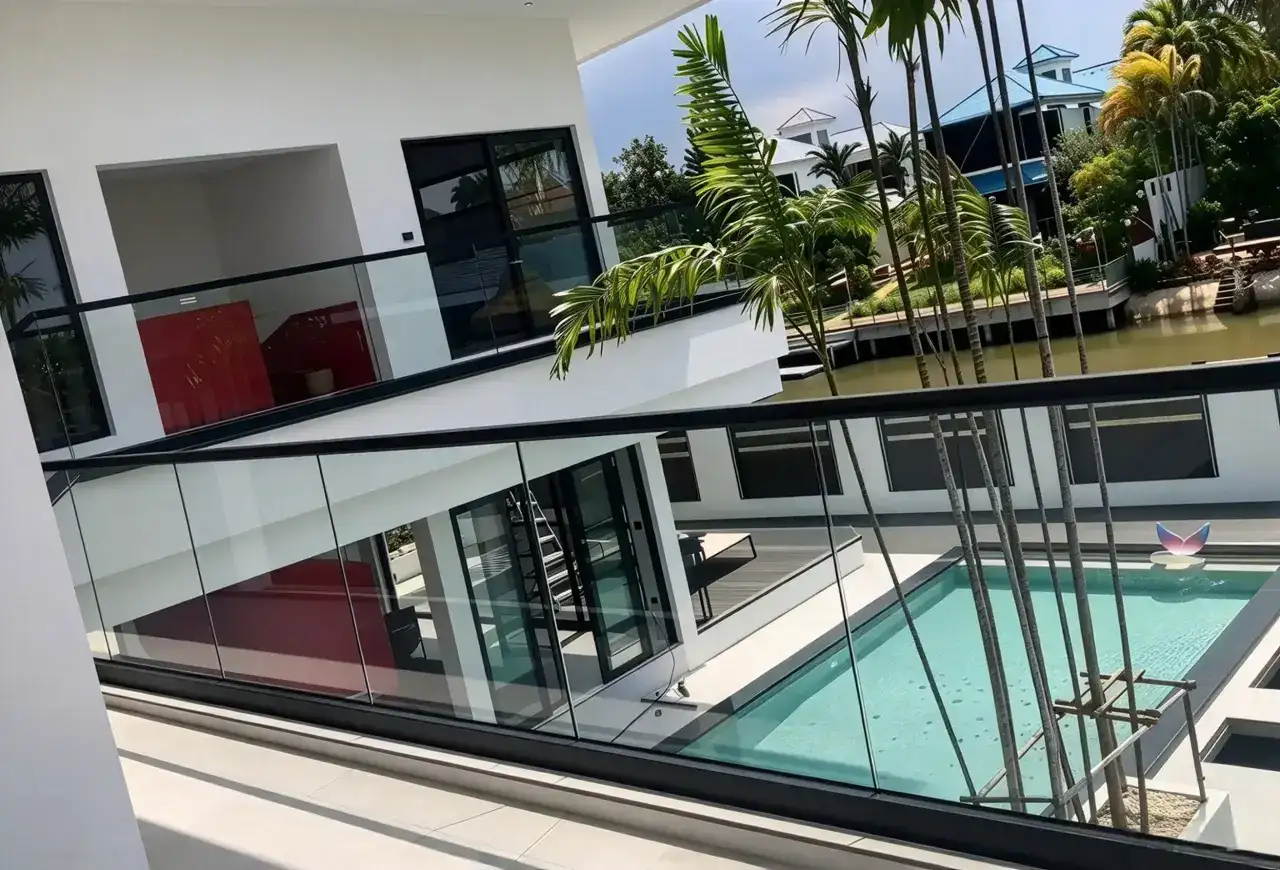
When it comes to installation, the mounting system plays a crucial role.Base shoe systems cost $150–$300 per linear foot (304.8 mm). Spigot systems cost $180–$350. Standoff systems cost $200–$400. Base shoe is the most economical because the aluminum channel is continuous and requires fewer individual fittings. Standoff is the most expensive because each panel needs four to six brackets, and installation labor increases accordingly.
| Mounting System | Cost Per Linear Foot (Installed) | Mejor para |
|---|---|---|
| Base Shoe | $150–$300 | Decks, balconies, long runs |
| Spigot | $180–$350 | Pool fencing, stairs |
| Standoff | $200–$400 | Commercial, high-end residential |
Glass Railing Cost by Application
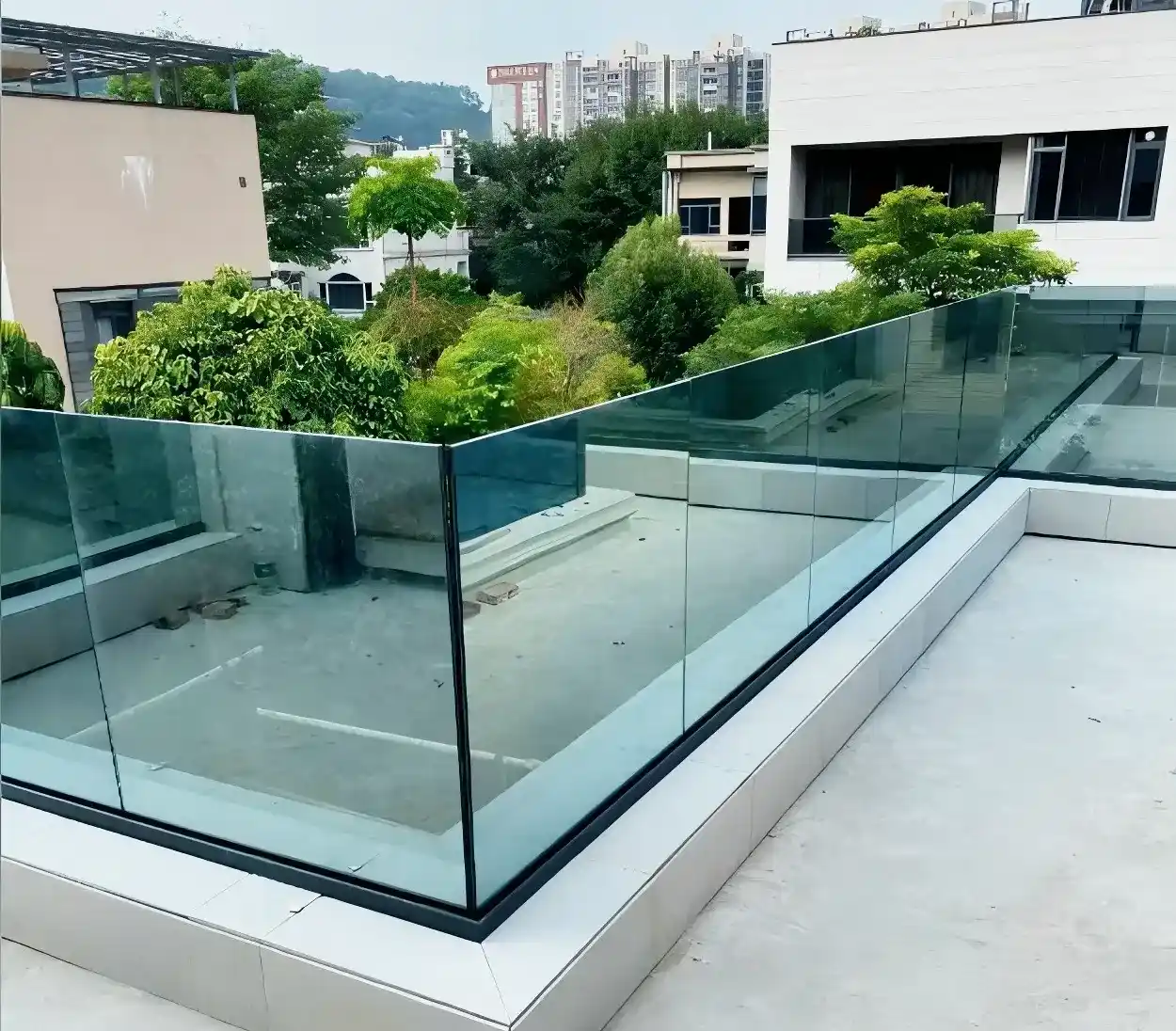
The table below shows how application changes the price per linear foot (304.8 mm). Deck railing costs $150–$350. Stair railing costs $180–$400 because sloped glass requires custom cutting and additional labor. Balcony railing costs $160–$380. Pool fencing costs $140–$320, but add $300–$800 for a self-closing gate.
| Aplicación | Cost Per Linear Foot (304.8 mm), Installed | Notes |
|---|---|---|
| Deck | $150–$350 | Standard level run |
| Stair | $180–$400 | Sloped glass, custom cuts |
| Balcony | $160–$380 | Height and access vary |
| Pool Fence | $140–$320 | Add $300–$800 for gate |
Glass Railing Cost Breakdown
Glass panels account for 40–50% of the total cost. Hardware accounts for 20–30%. Labor accounts for 20–30%. Permits and engineering stamps account for 5–10%. Understanding this split helps you identify where to cut costs without compromising safety.
| Componente | % of Total | Typical Range (Per Linear Foot) |
|---|---|---|
| Glass Panels | 40–50% | $60–$200 |
| Hardware | 20–30% | $30–$120 |
| Labor | 20–30% | $30–$120 |
| Permits & Engineering | 5–10% | $10–$40 |
Glass Railing Material Costs
When calculating glass railing cost,Glass panels are priced per square foot (92903 mm²), not per linear foot (304.8 mm). A 36-inch (914.4 mm)-high panel covering one linear foot (304.8 mm) equals 3 square feet (278709 mm²). At $20–$60 per square foot (92903 mm²) for tempered glass, that is $60–$180 per linear foot (304.8 mm) in glass alone. Laminated glass runs $30–$90 per square foot (92903 mm²).
Hardware costs include the base shoe or spigots, gaskets, setting blocks, grout, and cover plates. A complete base shoe kit runs $30–$80 per linear foot (304.8 mm). Spigot kits run $50–$120 per linear foot (304.8 mm) because each spigot is a separate machined fitting.
Glass Railing Labor Costs
A major component of the total glass railing cost is installation labor, which varies significantly by region and pricing model. Specifically, independent contractors (Tradies) in Australia and the United States charge the highest rates, typically running $36–$90 per hour, with complex custom staircases often costing $2,500–$6,000 per project. For instance, Europe offers moderate rates ranging from $11–$85 per hour depending on whether it is Eastern or Western Europe. In contrast, China predominantly uses a per-step or per-square-meter pricing model rather than hourly rates, where skilled installers effectively earn $6.5–$15 per hour. A typical installation takes 6–12 hours per 30 linear feet (9,144 mm), depending on mounting system and site conditions.
| Region | Labor Rate (Per Hour) | 30-Foot (9144 mm) Install Labor Cost |
|---|---|---|
| Australia | $36–$85 | $1,080–$3,060 |
| Estados Unidos | $50–$90 | $1,500–$3,240 |
| Europe | $11–$85 | $330–$3,060 |
| China | $6.5–$15 | $195–$540 |
Additional Glass Railing Costs
First of all, permits cost $100–$500 depending on jurisdiction. Además, engineering stamps cost $300–$1,500 for commercial projects or any installation requiring load calculations. Además, delivery costs $200–$800 because glass must be shipped vertically on a specialized rack and cannot be stacked.
What Factors Affect Glass Railing Cost?
Five factors drive the final price: glass thickness and type, mounting system complexity, site conditions, regional labor rates, and order volume. Each factor can swing the total by 20–40%.
Glass Thickness and Type
Por ejemplo,12 mm glass costs 20–30% more than 10 mm. Similarly,laminated glass costs 30–50% more than monolithic tempered. But laminated glass is increasingly required by code for guard applications because it stays in the frame after breakage, maintaining the barrier function.The ASTM E2353 standard defines the performance requirements for glass used in railing and guard applications.
Mounting System Complexity
Base shoe is the simplest system to install because the channel is continuous. Spigots require core drilling into concrete, which adds labor and requires precise alignment. Standoffs require the most fittings and the most precise glass drilling, which cannot be done on site.
Site Conditions
For example,Sloped surfaces, stairs, and uneven concrete can significantly increase your overall glass railing cost by adding 15-30% to labor. Difficult access, such as a rooftop or a backyard without vehicle access, adds 10–25%. Cold weather installation may require special grout and longer curing times.
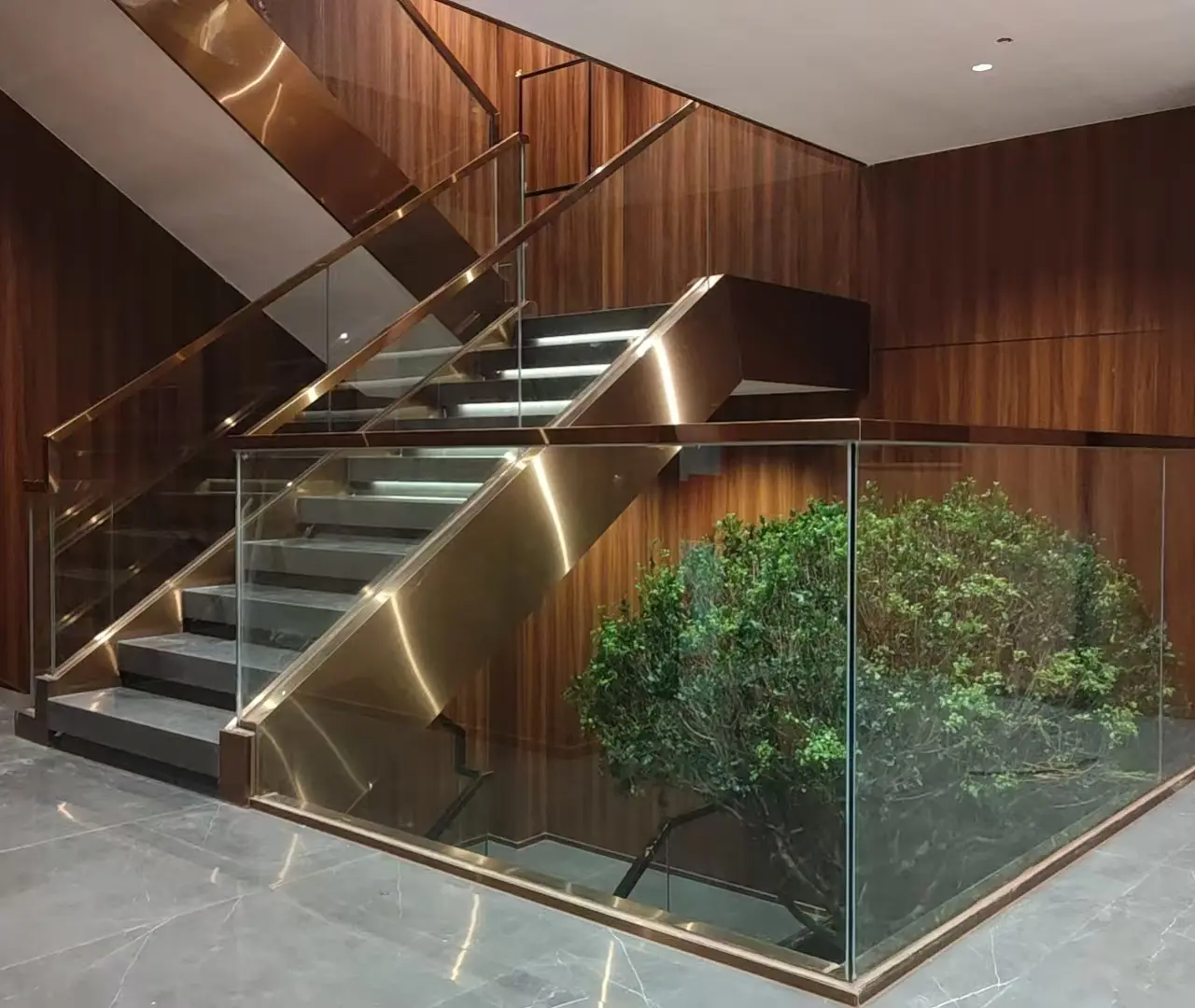
Regional Glass Railing Labor Rates
Labor is the single largest variable. For example, a 20-foot (6,096 mm) installation in New York City can cost $2,500 more than the same installation in Melbourne. Therefore, always get three local quotes before committing.
Order Volume and Glass Railing Cost
Ordering 100 linear feet (30,480 mm) or more typically reduces material costs by 10–15%. Manufacturers offer tiered pricing, and installers pass some of that discount through. Small orders under 20 linear feet (6,096 mm) often carry a minimum order surcharge.
Glass Railing Cost vs Other Railing Types
Glass railing costs more than every other common railing type. But it also offers the best visibility, the lowest maintenance, and the longest lifespan. The question is whether those benefits justify the premium for your specific project.
For a broader pricing benchmark across railing materials, HomeGuide’s railing cost data provides a useful industry baseline.
| Tipo de barandilla | Cost Per Linear Foot (304.8 mm), Installed | Lifespan | Maintenance |
|---|---|---|---|
| Frameless Glass | $200–$600 | 25–30 years | Bajo |
| Semi-Frameless Glass | $200–$400 | 20–25 years | Bajo |
| Barandilla de cables | $75–$200 | 15–20 years | Medium |
| Barandilla de aluminio | $50–$120 | 20–30 years | Bajo |
| Wrought Iron | $60–$150 | 30–50 years | Alto |
| Wood | $40–$100 | 10–15 years | Alto |
How to Save on Glass Railing Installation
You can reduce glass railing costs by 15–40% without compromising safety. The three most effective strategies are choosing semi-frameless instead of fully frameless, installing in the off-season, and ordering materials in bulk.
DIY vs Professional Installation
DIY installation saves 20–30% on labor, but requires a core drill, laser level, suction cups, and torque wrench. It also voids most manufacturer warranties if not installed by a certified installer. For base shoe systems on level concrete, DIY is realistic. For spigot systems on stairs, hire a professional. If you are comparing labor benchmarks, Angi’s cable railing cost data offers a useful reference point for how installation labor scales across railing types.
Bulk Ordering
In addition,ordering 100 linear feet (30,480 mm) or more reduces material costs by 10–15%. If you are railing a large deck or multiple balconies, consolidate into one order. Manufacturers like CRL y Q-railing offer tiered pricing that installers can pass through.
Off-Season Installation
Winter installation (November–February) can save 10–20% on labor because demand drops. However, grout curing times extend in cold weather, and some installers refuse outdoor work below 40°F (4.4°C). Schedule early and confirm the installer’s cold-weather protocol.
Is Glass Railing Worth the Cost?
Although annual maintenance costs $100–$300, mostly for cleaning and hardware inspection, glass railing increases home value by 2–5%, particularly in coastal or modern homes where views are the primary selling point. Por lo tanto, the long-term investment often pays off. Over a 25-year lifespan, the total cost of ownership is often lower than wood or wrought iron because those materials require repainting or rust treatment every 3–5 years. Any installation used as a guard must also satisfy [IBC guardrail requirements], which govern height, load, and opening limits.
Resale Value
Glass railing adds 2–5% to resale value in view-driven markets. Appraisers in coastal markets consistently rank glass railing as a premium feature alongside upgraded kitchens and energy-efficient windows.
Maintenance Savings
Annual maintenance runs $100–$300, compared to $400–$800 for wood or wrought iron. Glass requires only periodic cleaning with a non-ammonia solution and annual hardware inspection. Wood needs repainting every 3–5 years. Wrought iron needs rust treatment at the same interval.
Lifespan
A properly installed frameless glass railing lasts 25–30 years. The glass itself does not degrade, and the hardware is typically 316 stainless steel, which resists corrosion in coastal environments. Wood lasts 10–15 years. Cable railing lasts 15–20 years.
Glass Railing Cost FAQ
Q: How much does frameless glass railing cost per foot?
A:Frameless glass railing costs $200–$600+ per linear foot (304.8 mm) installed. The exact price depends on glass type (monolithic vs laminated), mounting system (base shoe vs spigot vs standoff), and your region’s labor rates.
Q: Does glass railing cost more than cable railing?
A:Yes. Glass railing typically costs $200–$600 per linear foot (304.8 mm), while cable railing costs $75–$200 per linear foot (304.8 mm). Glass is roughly 2–3x the cost of cable, but offers better visibility and lower maintenance.
Q: How much does glass railing cost for a 20-foot deck?
A:A 20-foot (6,096 mm) frameless glass railing costs $4,000–$12,000 installed, depending on glass type and mounting system. This includes materials, labor, and standard hardware.
Q: What is the cheapest type of glass railing?
A:Semi-frameless glass railing is the cheapest option at $200–$400 per linear foot (304.8 mm). It uses aluminum posts and a top rail, which reduces hardware costs compared to fully frameless systems.
Q: How much does glass railing cost per linear foot in 2026?
A:In 2026, frameless glass railing costs $200–$600+ per linear foot (304.8 mm) installed. Prices have increased 5–8% since 2024 due to glass manufacturing and labor costs.
Conclusion: Is Glass Railing Cost Worth It?
Frameless glass railing costs $200–$600+ per linear foot (304.8 mm) installed in 2026, with the final price driven by glass type, mounting system, and regional labor. A 20-foot (6,096 mm) deck typically lands between $4,000 and $12,000.
If budget is the primary constraint, semi-frameless systems at $200–$400 per linear foot (304.8 mm) deliver most of the visual benefit at a lower cost. If code compliance or coastal exposure is a factor, laminated glass is worth the 30–50% premium because it maintains its barrier function after breakage.
Get three local quotes, confirm whether the installer is certified, and verify that the glass thickness meets your local code before signing. The upfront cost is higher than cable or aluminum, but over a 25-year lifespan the maintenance savings and resale premium often close the gap.
With precision manufacturing equipment, rigorous quality control, and a complete quality assurance system, Meizstairs delivers a variety of high-quality, cost-effective glass railings. Contact us today for a quote!