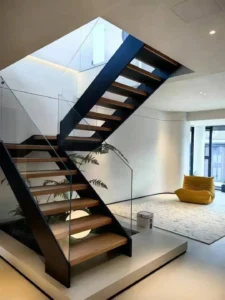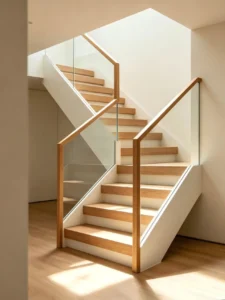


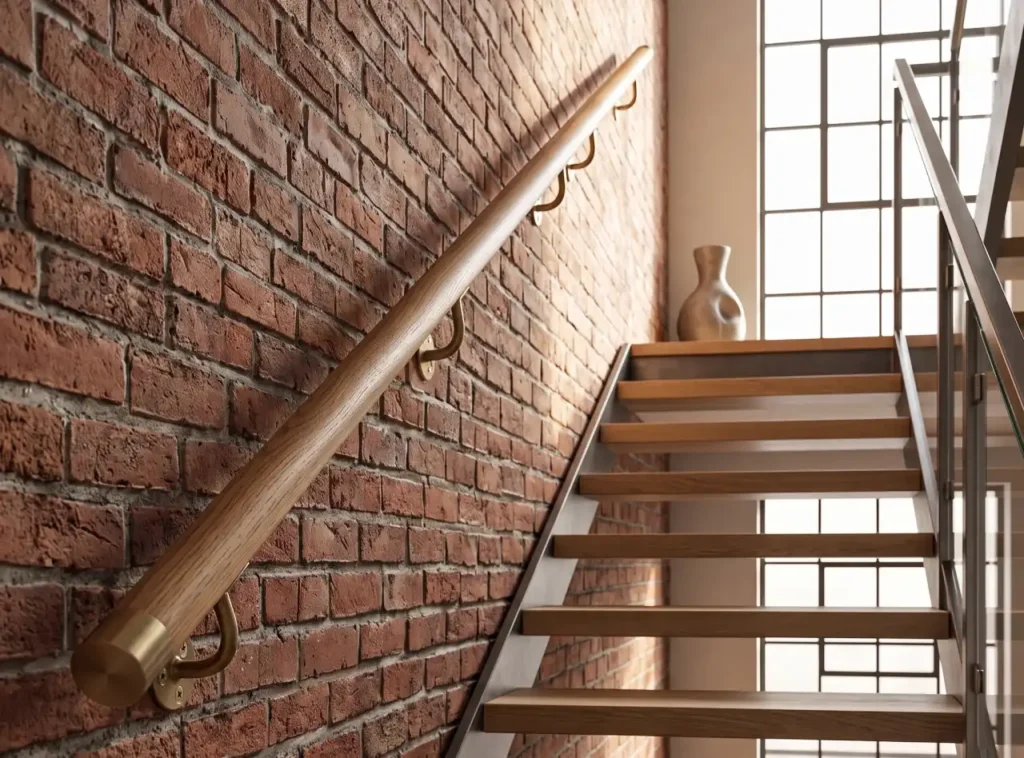

Brass brackets for handrails add a timeless, elegant touch to any staircase or hallway. Whether you are restoring a historic home or adding a touch of luxury to a modern interior, brass offers a warmth and character that stainless steel simply cannot match. In this guide, we will explore the different types of brass brackets, the unique finishes available (including unlacquered), and how to choose, install, and maintain them.
Why Choose Brass Handrail Brackets?
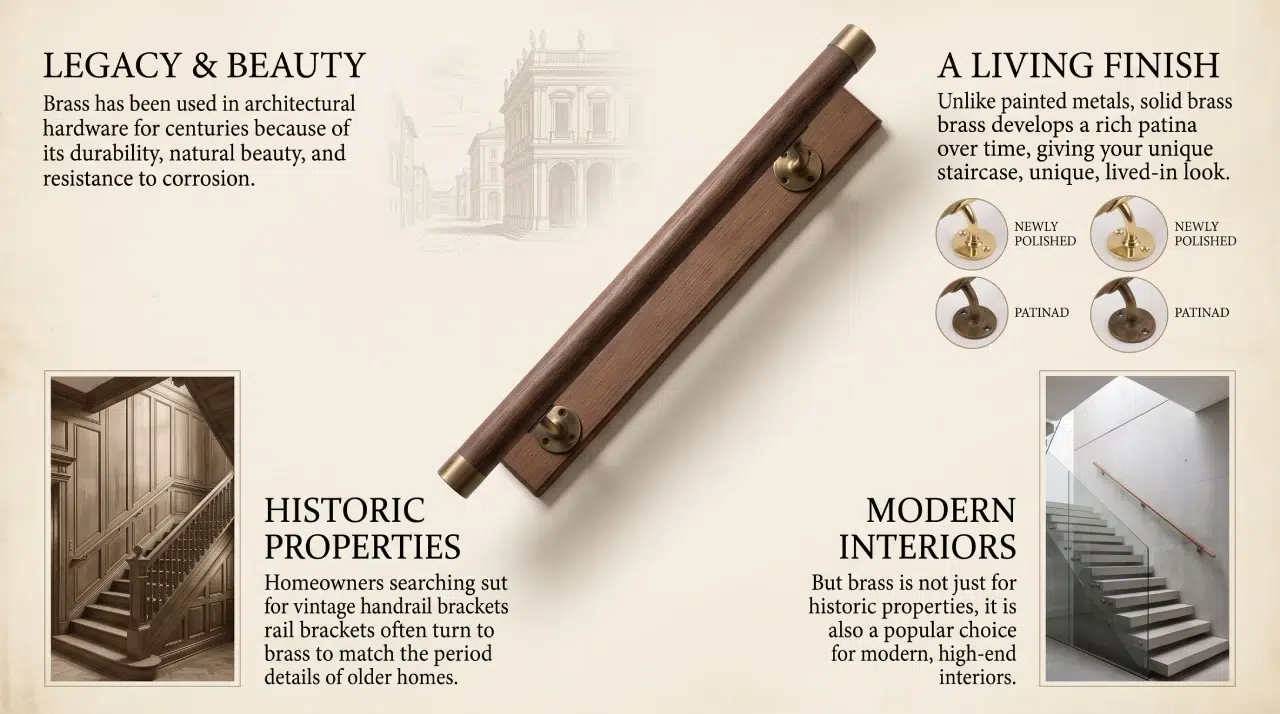
Homeowners searching for vintage handrail brackets or antique stair rail brackets often turn to brass to match the period details of older homes. But brass is not just for historic properties; it is also a popular choice for modern, high-end interiors. When choosing brass brackets for handrails, you are investing in both durability and timeless style.
Types of Brass Brackets for Handrails
Brass brackets come in several configurations to fit different mounting scenarios. Understanding these types will help you find the perfect brass brackets for handrails.
Brass Wall Mounted Brackets
These are the most common types. They attach the handrail directly to a vertical wall. They are ideal for stairwells, hallways, and ramps. Look for solid brass handrail bracket models that feature a swivel or adjustable projection to accommodate uneven walls or sloped stairs.
Brass Top Mount Brackets
Top mount brackets are installed on horizontal surfaces, such as the top of a deck post or a floor. They are commonly used for outdoor steps, though brass is best reserved for covered porches or indoor applications due to its reaction to harsh weather.
Brass Post Brackets
These brass brackets for handrails wrap around or attach to a vertical post to hold the handrail. They are frequently used in porch and deck railings. If you are using them for a post, ensure it matches the profile of your post (round or square).
Understanding Brass Finishes: Polished, Antique, and Unlacquered
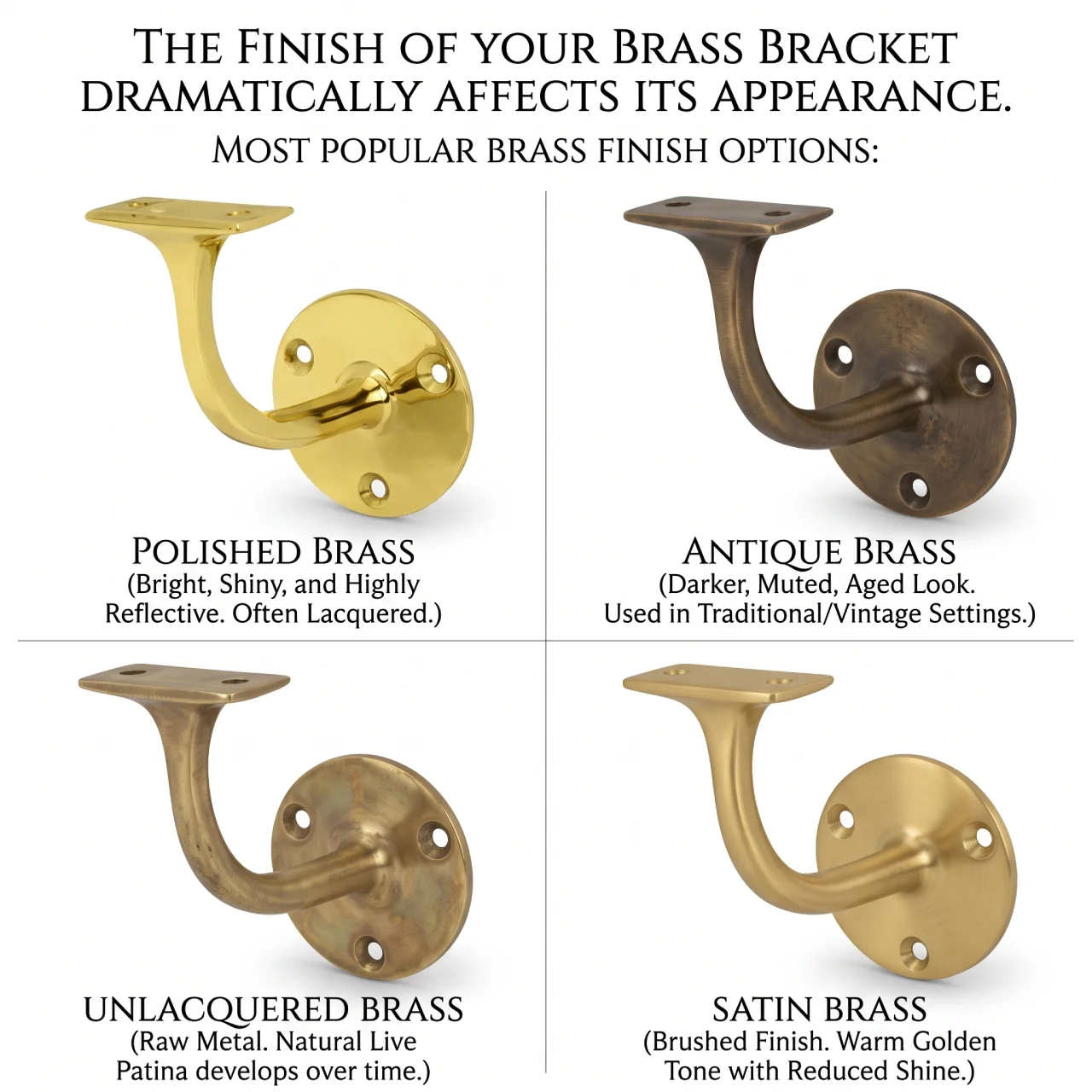
The finish of your brass brackets for handrails dramatically affects their appearance. Here are the most popular options:
- Polished Brass: Bright, shiny, and highly reflective. It looks like gold and is often lacquered to prevent tarnishing.
- Antique Brass: Darker, with a muted, aged look. It is often used in traditional or vintage settings to mimic the look of aged metal.
- Unlacquered Brass: This is raw brass that has not been coated. It will naturally oxidize and develop a living patina over time. If you love the look of unlacquered brass handrail brackets, you will enjoy watching them change color with age.
- Satin Brass: A brushed finish that is less shiny than polished brass but still retains a warm golden tone.
How to Choose the Right Brass Brackets for Handrails
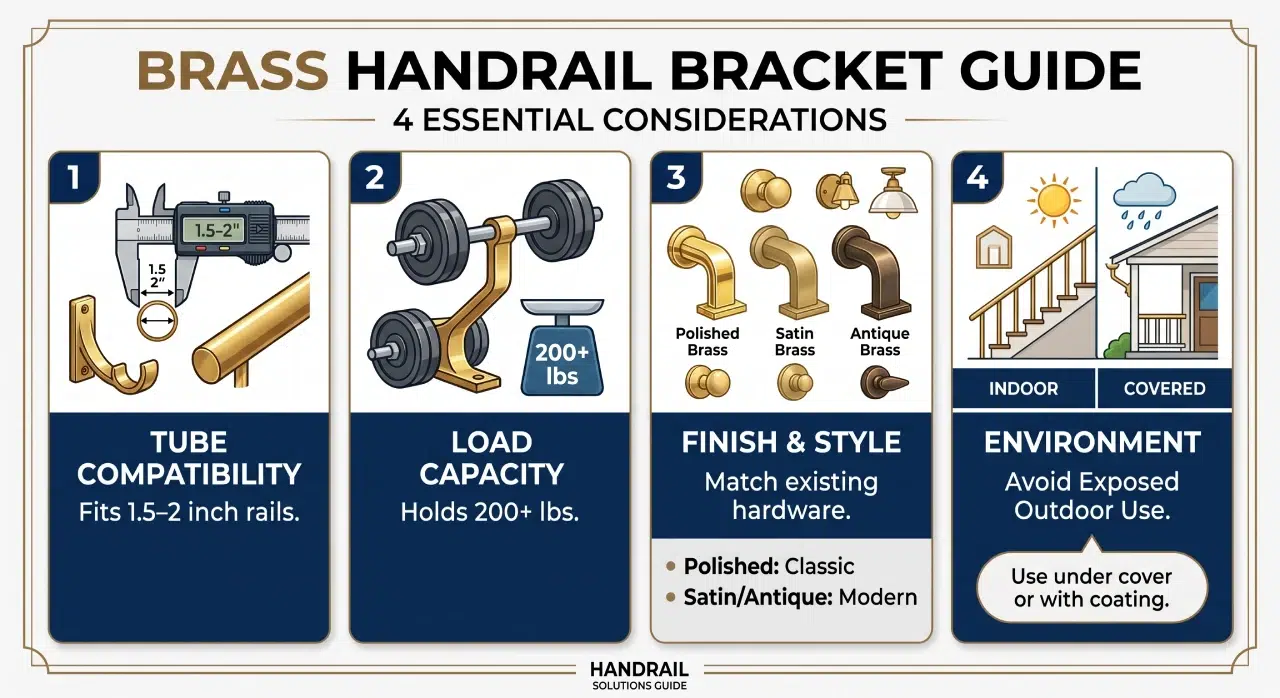
When shopping for brass brackets, keep these four factors in mind:
Tube Diameter Compatibility: Handrails typically range from 1.5 to 2 inches in diameter. Ensure your brass brackets for handrails fit your rail.
Load Capacity: These brass brackets for handrails are strong, but check the weight rating. Residential brackets should hold at least 200 lbs.
Style and Finish: Match the finish to your existing hardware (doorknobs, lighting fixtures). Polished brass pairs well with classic decor, while satin or antique brass suits transitional and modern styles.
Indoor vs. Outdoor: Brass is not ideal for exposed outdoor environments. If using outdoors, ensure it is under a covered porch or consider a clear lacquer coating.
Installation Tips for Brass Brackets for Handrails
Installing brass brackets for handrails is similar to installing any other handrail bracket, but brass requires a gentle touch to avoid scratching the finish.
Mark and Drill: Measure your height and mark the bracket locations. Drill pilot holes. If you are mounting to drywall, locate the studs.
Protect the Finish: Use a screwdriver with a rubberized handle or place a soft cloth between the tool and the brass screw to prevent scratching.
Do Not Overtighten: Brass is softer than steel. Overtightening can strip the threads or crack the bracket. Tighten until snug.
Adjust and Secure: For adjustable models, set the angle to match your stairs, then fully tighten the locking screws.
Maintaining Your Brass Brackets for Handrails
Maintenance of your brass brackets for handrails depends on the finish. Lacquered brass requires only occasional dusting with a soft cloth. Unlacquered brass will tarnish and darken; if you want to restore its shine, use a high-quality brass polish. If you prefer the patina, simply leave it alone. Avoid abrasive cleaners, which can scratch the metal.
Frequently Asked Questions (FAQs)
Q: Do brass brackets for handrails tarnish?
A: Brass does not rust like iron or steel, but it can corrode or tarnish. Unlacquered brass oxidizes naturally, while lacquered brass is protected but may flake over time.
Q: Can I use brass brackets outdoors?
A: It is not recommended for exposed areas. Brass reacts to moisture and pollutants, which accelerates tarnishing. It is best used in covered porches or indoors.
Q: How do I clean unlacquered brass brackets?
A: Use a mixture of lemon juice and baking soda or a commercial brass cleaner. Always test on a small area first.
Conclusion & CTA
Brass brackets for handrails are a beautiful, durable choice for anyone looking to add elegance to their stairs. Whether you prefer the bright shine of polished brass or the evolving beauty of an unlacquered finish, there is a brass bracket to suit your style. Ready to upgrade your staircase? Browse our premium collection of brass brackets for handrails and find the perfect match for your home.