

💡 Expert Insight: Choosing between mono and double floating stair stringer is not just about looks. The real difference lies in fabrication complexity. Welding precision, bending requirements, load paths, cost, and lead time all change with your choice. This guide compares every factor clearly to help you select the right system with confidence.
In my 9 years at Meizstairs, I have seen steel stair stringer projects fail not because the design was flawed, but because the fabricator underestimated the engineering precision required. Double stringer floating stairs support the treads from both sides. This dual-path load distribution makes fabrication more forgiving. A mono stringer puts all loads into one central beam, demanding tighter tolerances on welding, bending, and alignment.
Double stringer systems use more steel, but their fabrication processes are simpler and more standardized. For curved or long-span applications, the floating stair stringer choice becomes even more critical.
From Product Supplier to Problem-Solving Partner
This steel stair stringer comparison covers structural design, fabrication complexity, cost, and application suitability for both mono and double stringer systems. At Meizstairs, we believe understanding these trade-offs helps you choose wisely.Choosing the right floating stair stringer impacts every stage of your project—from design to installation.
- Diagnosis Based on Experience – 15 years of fabrication data help us identify why single stringer floating stairs fail. Common issues include incorrect torsion calculations, poor weld penetration, and bad beam sizing.
- Holistic Approach – We consider your staircase design, load needs, span length, and architectural style to recommend the optimal stringer type.
- Long-Term Partnership – Your staircase’s safety and beauty matter to us. We deliver precision-engineered stringer stair solutions.
What Is a Floating Stair Stringer? Key Functions Explained
A steel stair stringer is the structural backbone of a cantilevered staircase. Often called a stair carriage, it supports the treads while creating the illusion that the steps are floating without visible support. The stringer design affects the visual character, structural performance, fabrication complexity, and overall cost. This steel stair stringer comparison focuses on the two most common configurations: mono-stringer and double-stringer.
Floating Stair Stringers Comparison: Mono vs Double
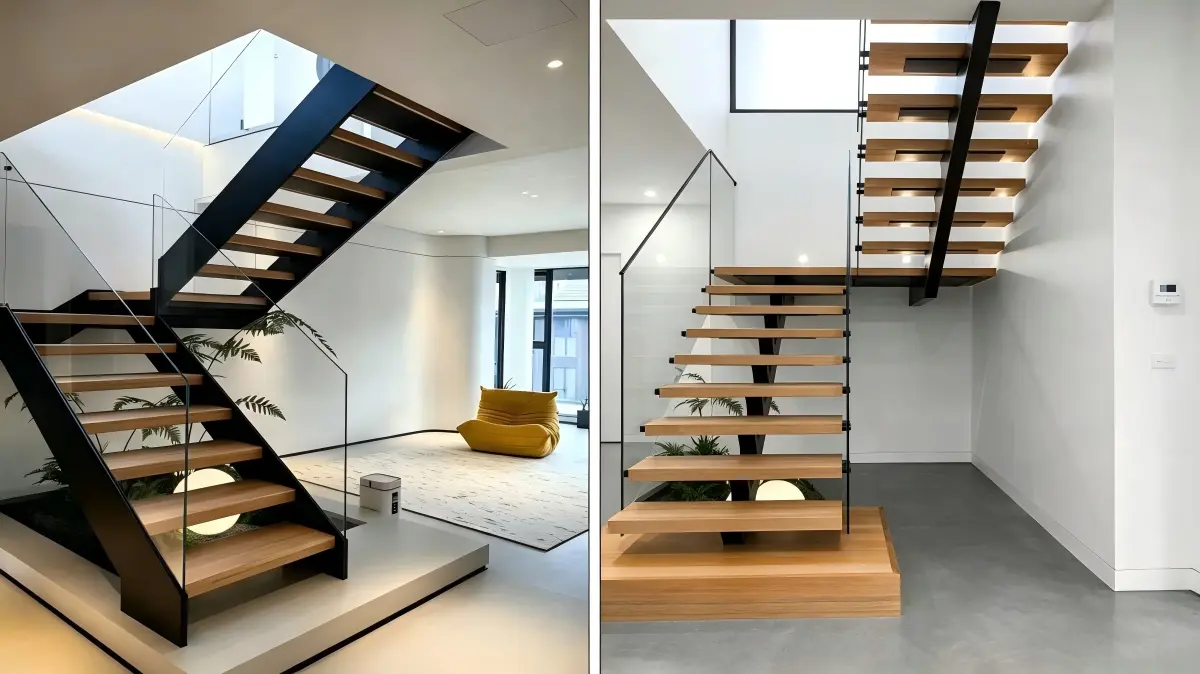
| Floating Stair Stringer Type | Number of Beams | Load Distribution | Best For |
|---|---|---|---|
| Mono-Stringer (Single) | One central beam | Concentrated through the center | Modern, minimalist, open designs |
| Double-Stringer (Dual) | Two beams (both sides) | Split between two members | Traditional, heavy load, long spans |
| Side Stringer | Beams on outer edges | Balanced on both edges | Classic, industrial, heavy-duty |
Understanding this fundamental difference is the first step in choosing between mono and double stringer floating stairs. Each floating stair stringer type has distinct engineering requirements and visual outcomes.
Floating Stair Stringer Design: Mono vs Double Comparison
Mono-Stringer Floating Stairs
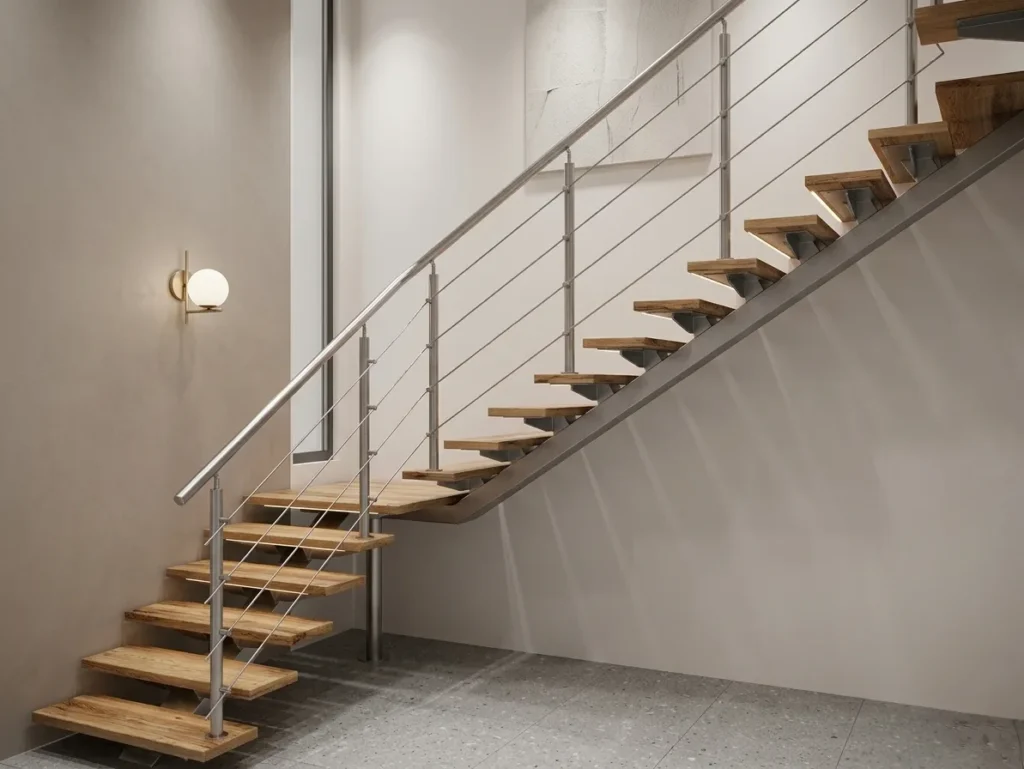
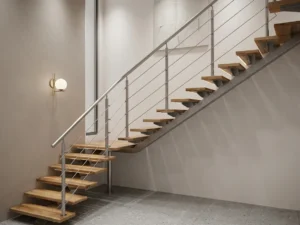
A mono floating stair stringers uses one central steel beam that carries the entire load. Treads are cantilevered or bracketed from this member. The load path goes to the center stringer, then to its end fixings. Good engineering is vital for safety.
Structural challenges for mono floating stair stringer:
- Torsion resistance – The single stringer must resist bending and twisting from vertical loads and lateral forces.
- Vibration – Off-center foot traffic creates eccentric loads that can cause vibration if not engineered properly.
- Anchorage – Robust connections at top and bottom are needed to prevent rotation.
Double-Stringer Floating Stairs
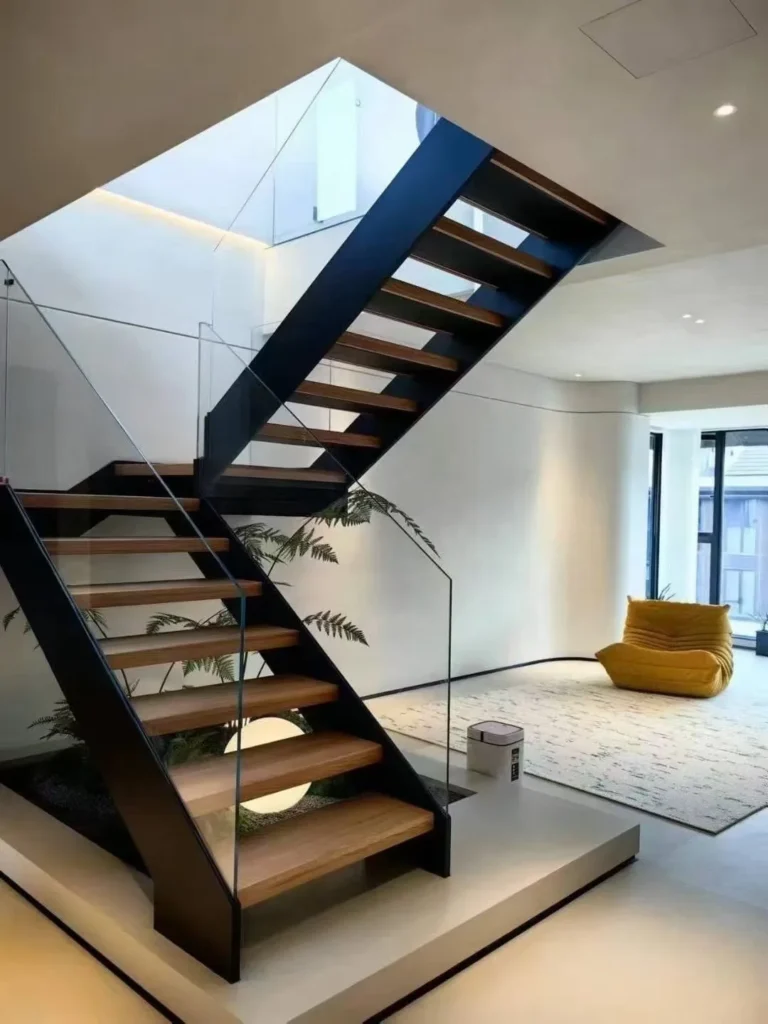
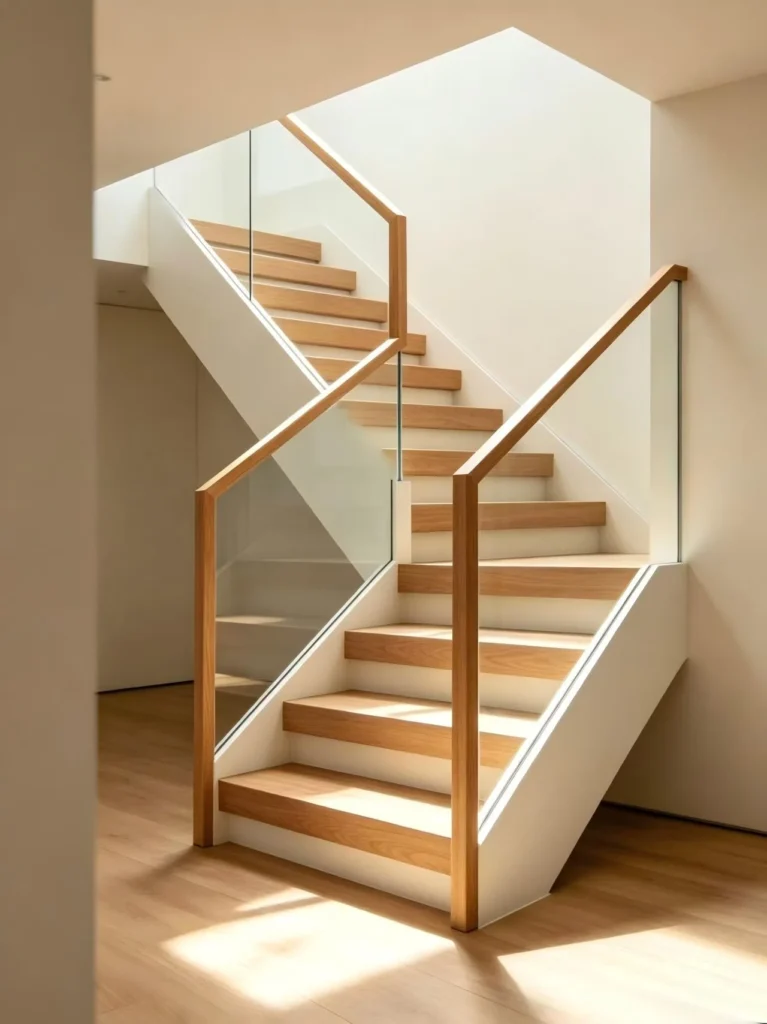
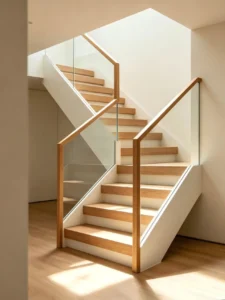
Double stringer floating stairs use two steel beams, one on each side. Loads split evenly between them. Each beam faces lower bending demand. Treads get support at both edges, and torsional effects drop significantly.
Structural advantages of double floating stair stringer:
- Redundancy – If one side connection is compromised, the other still carries some load.
- Greater stiffness – Lower vibration for the same visible slimness.
- Easier engineering – Less demanding on anchor details and beam sizing.
Floating Stair Stringer Fabrication Complexity
Mono-Stringer Fabrication – More Complex
Single steel stair stringer fabrication requires higher precision because the single beam bears all loads. Demands include:
| Fabrication Aspect | Complexity Level | Why |
|---|---|---|
| Engineering | High | Must resist bending, shear, and torsion |
| Beam selection | Critical | Heavier gauge steel required |
| Welding | High precision | Welds must be flawless for concentrated loads |
| Bending | High complexity | Curved mono-stringers require advanced techniques |
| Alignment | Very tight | Out-of-plumb supports translate to uneven treads |
| Installation | More demanding | Heavy lifting, exact alignment needed |
Double-Stringer Fabrication – More Forgiving
Double floating stair stringer fabrication benefits from:
| Fabrication Aspect | Complexity Level | Why |
|---|---|---|
| Engineering | Moderate | Split load reduces bending demand |
| Beam selection | Standard | Standard profiles work well |
| Welding | Standard | Less critical than mono-stringer |
| Bending | Lower complexity | Easier to form two matching curves |
| Alignment | Moderate | Each side can be supported during installation |
| Installation | Simpler | Faster, more forgiving installation |
Cost Comparison: Mono vs Double Steel Stair Stringer
| Cost Factor | Mono-stringer | Double-stringer |
|---|---|---|
| Material cost | Less material volume | More steel required |
| Engineering cost | Higher – specialized torsion calculations | Lower – standard engineering |
| Fabrication cost | Higher – precision welding and bending | Lower – more standardized |
| Installation cost | Higher – more skilled labor | Lower – simpler on-site work |
Your steel stair stringer choice should balance budget, aesthetics, and structural requirements. A well-designed floating stair stringer accounts for all three factors.
Costs vary with span, curves, materials, and finish. Mono steel stair stringer require more engineering, while dual-stringers use more material but less specialized fabrication.Selecting the right floating stair stringer depends on your project priorities.
To summarize this floating stair stringer comparison:
Mono stringers look modern and save space, but need precise engineering and welding. Double stringers are stronger and easier to build, but use more steel. Consider your project needs, budget, and design style. Meizstairs can help you fabricate either type of steel stair stringer.
Ready to Choose Your steel Stair Stringer?
Contact Meizstairs today. We will help you design, engineer, and fabricate your floating stair stringer to exact specifications.